Adhyaya 52
सर्पसत्रे हुतानां नागानां नामपरिगणनम् | Enumeration of Nāgas Consumed in the Sarpasatra Fire
Upa-parva: Sarpasatra (Janamejaya’s Snake-Sacrifice Episode)
Śaunaka asks Sauti to name the serpents that fell into the sacrificial fire at Janamejaya’s Sarpasatra. Sauti first marks the scale of the event as beyond complete counting, then provides an ordered, memory-based listing of prominent nāgas by clan affiliation. The chapter proceeds through major lineages—Vāsuki’s descendants, Takṣaka’s descendants, the Airāvata line, and Kauravya/Dhṛtarāṣṭra-associated lines—each introduced with formulaic transitions (“I will describe…,” “these entered the fire”). The closing verses generalize the destruction: innumerable offspring and descendants, multi-headed and massive-bodied serpents with formidable venom, drawn into the blazing rite under the pressure of sacerdotal power (brahmadaṇḍa). Thematically, the chapter is a catalog (nāma) that serves as ethical indexing: it connects ritual action to collective suffering, and it underscores the narrative’s concern with how remembrance, classification, and authority participate in harm.
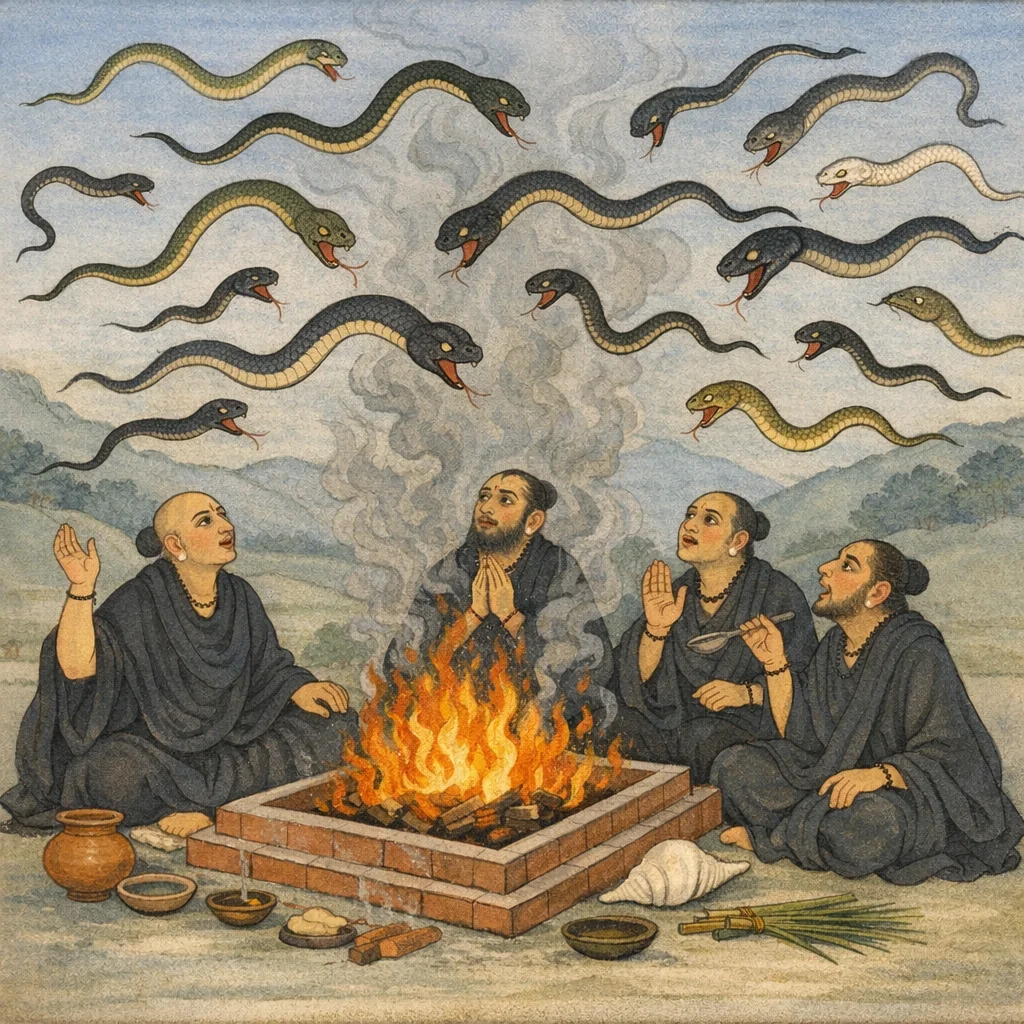
Chapter Arc: सूत उवाच—जनमेजय का सर्पसत्र विधि-विधान से आरम्भ होता है; ऋत्विज् कृष्ण-वस्त्र धारण कर, धूम से रक्त नेत्रों सहित, समिद्ध अग्नि में मंत्रोच्चार के साथ आहुति देने लगते हैं। → मंत्रों की ध्वनि सर्पलोक के हृदयों में कम्पन भर देती है; नाम लेकर आह्वान किए जाते ही विविध वर्ण, आयु और आकार के उरग—श्वेत, कृष्ण, नील; वृद्ध और शिशु—अदृश्य बन्धन से खिंचते हुए यज्ञाग्नि की ओर गिरने लगते हैं। → प्रदीप्त हव्यवाहन के मुख में सर्पों की वर्षा—कोई घोड़े-सा, कोई हाथी-सूँड़-सा, कोई महाकाय और महाबल—तड़फड़ाते, दीन स्वर में एक-दूसरे को पुकारते हुए अग्नि में प्रपात करते हैं; यज्ञ का आकर्षण अजेय बन जाता है। → यज्ञ-क्रिया अपने विधान में स्थिर रहती है—ऋत्विज् निरन्तर आहुति देते हैं और सर्पों का विनाश-चक्र चल पड़ता है; अध्याय यज्ञ की भयावह प्रभावशीलता को स्थापित कर समाप्त होता है। → यह विनाश कहाँ तक जाएगा—क्या कोई रोकने वाला, कोई धर्म-प्रतिरोध, या कोई रक्षक-उपाय प्रकट होगा?
Shlokas
Verse 1
पम्प बछ। अंक द्विपञज्चाशत्तमो<ड ध्याय: सर्पसत्रका आरम्भ और उसमें सर्पोका विनाश सौतिरुवाच ततः कर्म प्रववृते सर्पसत्रविधानत: । पर्यक्रामंश्व विधिवत् स्वे स्वे कर्मणि याजका:,उग्रश्रवाजी कहते हैं--शौनक! तदनन्तर सर्पयज्ञकी विधिसे कार्य प्रारम्भ हुआ। सब याजक विधिपूर्वक अपने-अपने कर्ममें संलग्न हो गये
Ugraśravas, the Sūta, said: “O Śaunaka! Then, in accordance with the prescribed procedure for the serpent-sacrifice, the rite was set in motion. The officiating priests (yājaka), each in his own appointed function, proceeded in due order and became fully engaged in his respective ritual duty.” The narrative underscores the power of correctly executed ritual action—capable of vast consequences—and hints at the ethical tension of employing sacred procedure for destructive ends.
Verse 2
प्रावृत्य कृष्णवासांसि धूमसंरक्तलोचना: । जुहु॒वुर्मन्त्रवच्चैव समिद्धं जातवेदसम्,सबकी आँखें धूएँसे लाल हो रही थीं। वे सभी ऋत्विज् काले वस्त्र पहनकर मन्त्रोच्चारणपूर्वक प्रज्वलित अग्निमें होम करने लगे
Janamejaya said: “Wrapped in black garments, their eyes reddened by the smoke, the officiating priests began to pour oblations—reciting the mantras in due form—into the blazing fire, Jātavedas.”
Verse 3
कम्पयन्तश्न सर्वेषामुरगाणां मनांसि च | सर्पानाजुहुवुस्तत्र सर्वानग्निमुखे तदा,वे समस्त सर्पोंके हृदयमें कैँपकँपी पैदा करते हुए उनके नाम ले-लेकर उन सबका वहाँ आगके मुखमें होम करने लगे
Janamejaya said: “Then, as the rite proceeded, they invoked the snakes by name and poured them as oblations into the mouth of the fire—so terrifying that it made the hearts and minds of all serpents tremble.”
Verse 4
ततः सर्पा: समापेतु: प्रदीप्ते हव्यवाहने । विचेष्टमाना: कृपणमाह्नयन्त: परस्परम्,तत्पश्चात् सर्पगण तड़फड़ाते और दीनस्वरमें एक-दूसरेको पुकारते हुए प्रज्वलित अग्निमें टपाटप गिरने लगे
Then the serpents rushed together toward the blazing fire. Writhing helplessly, they cried out piteously to one another as they fell, one after another, into the kindled flames.
Verse 5
विस्फुरन्त: श्वसन्तश्न॒ वेष्टयन्त: परस्परम् । पुच्छे: शिरोभिश्व भृशं चित्रभानु प्रपेदिरे,वे उछलते, लम्बी साँसें लेते, पूँछ और फनोंसे एक-दूसरेको लपेटते हुए धधकती आगके भीतर अधिकाधिक संख्यामें गिरने लगे
Janamejaya said: “Twitching and writhing, gasping for breath, and coiling tightly around one another with tails and hoods, they plunged in great numbers into the blazing fire.”
Verse 6
श्वेता: कृष्णाश्न नीलाश्व स्थविरा: शिशवस्तथा । नदन्तो विविधान् नादान पेतुर्दीप्ते विभावसौ,सफेद, काले, नीले, बूढ़े और बच्चे सभी प्रकारके सर्प विविध प्रकारसे चीत्कार करते हुए जलती आगमें विवश होकर गिर रहे थे
Janamejaya said: “White, black, and blue serpents—old ones and even the young—uttering many kinds of cries and hisses, were helplessly falling into the blazing fire.”
Verse 7
क्रोशयोजनमात्रा हि गोकर्णस्य प्रमाणत: । पतन्त्यजस्त्रं वेगेन वह्लावग्निमतां वर,कोई एक कोस लम्बे थे, तो कोई चार कोस और किन्हीं-किन्हींकी लम्बाई तो केवल गायके कानके बराबर थी। अनिनिहोत्रियोंमें श्रेष्ठ शौनक! वे छोटे-बड़े सभी सर्प बड़े वेगसे आगकी ज्वालामें निरन्तर आहुति बन रहे थे
Janamejaya said: “Some (serpents) were only a krośa or a yojana in length, while others were no larger than a cow’s ear by measure. O best of the fire-ritualists, they kept falling unceasingly and with great speed into the blazing fire, becoming continual offerings.”
Verse 8
एवं शतसहस्राणि प्रयुतान्यर्बुदानि च । अवशानि विनष्टानि पन्नगानां तु तत्र वै,इस प्रकार लाखों, करोड़ों तथा अरबों सर्प वहाँ विवश होकर नष्ट हो गये
Janamejaya said: “Thus, in that place, hundreds of thousands—indeed tens of millions and even hundreds of millions—of serpents, helpless and unable to resist, were destroyed.”
Verse 9
तुरगा इव तत्रान्ये हस्तिहस्ता इवापरे | मत्ता इव च मातज्रा महाकाया महाबला:,कुछ सर्पोकी आकृति घोड़ोंके समान थी और कुछकी हाथीकी सूँड़के सदृश। कितने ही विशाल-काय महाबली नाग मतवाले गजराजोंको मात कर रहे थे
Janamejaya said: “There, some of those serpents were shaped like horses, while others resembled the trunks of elephants. Many were vast in body and mighty in strength—like intoxicated lordly elephants—overpowering even other great beasts by their sheer force.”
Verse 10
उच्चावचाक्ष बहवो नानावर्णा विषोल्बणा: । घोराश्न॒ परिघप्रख्या दन्न्दशूका महाबला: । प्रपेतुरग्नावुरगा मातृवाग्दण्डपीडिता:,भयंकर विषवाले छोटे-बड़े अनेक रंगके बहु-संख्यक सर्प, जो देखनेमें भयानक, परिघके समान मोटे, अकारण ही डँस लेनेवाले और अत्यन्त शक्तिशाली थे, अपनी माताके शापसे पीड़ित होकर स्वयं ही आगमें पड़ रहे थे
Janamejaya said: “Many serpents of varied appearance and many colors—fierce with potent venom—terrifying to behold, thick like iron clubs, prone to strike, and exceedingly strong, were falling of their own accord into the fire, driven by the punitive force of their mother’s curse.”
Verse 51
इस प्रकार श्रीमहाभारत आदिपव॑के अन्तर्गत आस्तीकपर्वमें यर्पसत्रोपक्रमसम्बन्धी इक्यावनवाँ अध्याय पूरा हुआ
Thus ends the fifty-first chapter of the Āstīka section within the Ādi Parva of the Śrī Mahābhārata, concerning the commencement and preliminaries of Janamejaya’s snake-sacrifice.
Verse 52
इति श्रीमहाभारते आदिपर्वणि आस्तीकपर्वणि सर्पसत्रोपक्रमे द्विपज्चाशत्तमोडध्याय:
Thus ends the fifty-second chapter in the Ādi Parva of the Śrī Mahābhārata, within the Āstīka section, at the commencement of King Janamejaya’s snake-sacrifice. The narrative frames the ethical tension between inherited vengeance and the restraining power of dharma, soon to be voiced through Āstīka’s intervention.
Frequently Asked Questions
The chapter frames a dilemma of collective liability: a retaliatory rite targets an entire class of beings through lineage-based identification, raising the ethical question of whether communal punishment can be justified when the initiating grievance is specific and historically situated.
Institutional power—especially when backed by ritual authority and expert speech—can magnify intention into disproportionate consequence; therefore, dharma requires scrutiny of scope, not only motive, and demands awareness of collateral harm produced by sanctioned procedures.
No explicit phalaśruti is stated; the meta-commentary appears indirectly through Sauti’s insistence that full enumeration is impossible and through the generalized closing depiction of innumerable, diverse nāgas being drawn into the fire, emphasizing the limits of narration and the gravity of the rite within the epic’s moral architecture.