Adhyaya 90
यतिप्रायश्चित्तविधानम् (Ascetic Atonements and Discipline)
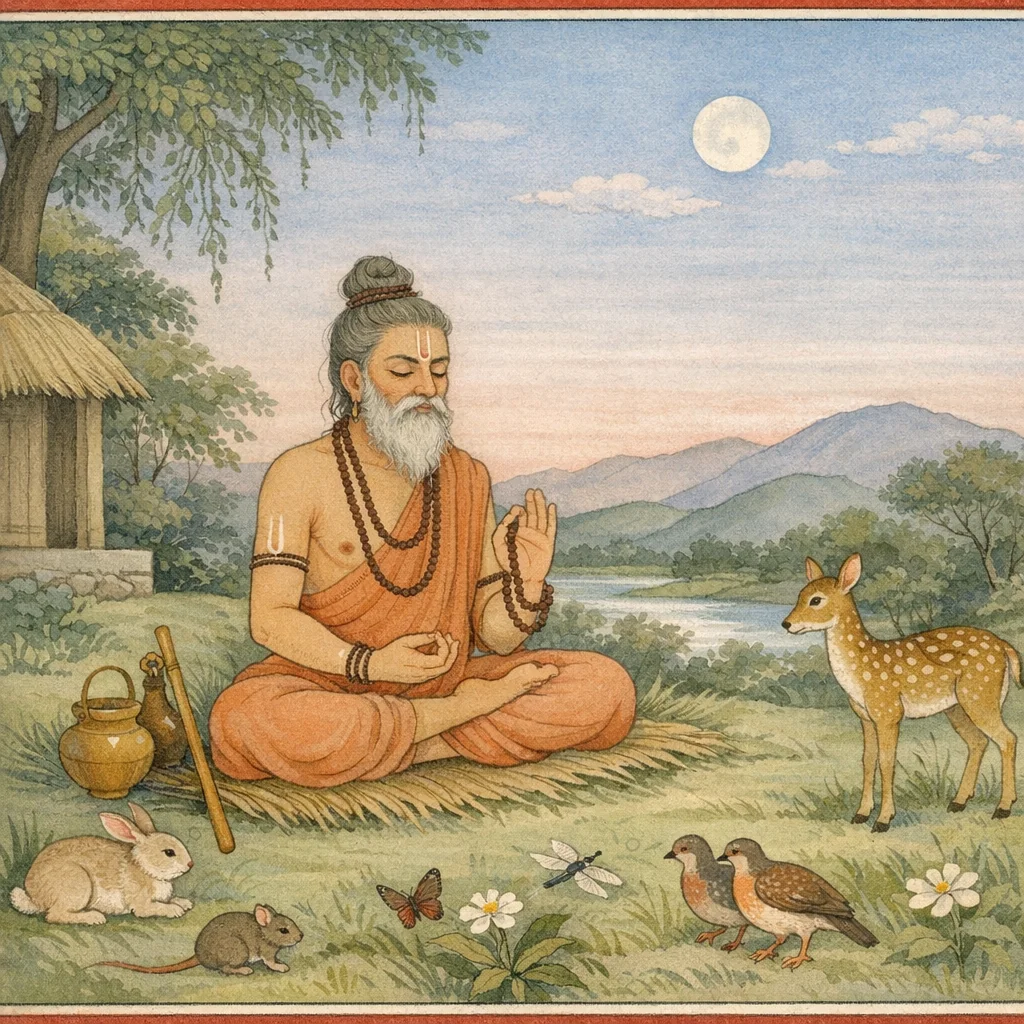
Sūta introduces the prāyaścitta proclaimed by Śiva for yatis, teaching first that sin (pāpa) is threefold—arising from speech, mind, and body—and continually binds worldly life. Yoga is praised as the supreme power for the vigilant seeker, by which the wise conquer avidyā and attain the highest state. The chapter then lays down monastic rules for bhikṣus—vratas and upavratas—with graded atonements for each breach: lust-driven sexual approach requires sāntapana supported by prāṇāyāma, followed by kṛcchra, with repeated purification and return to disciplined āśrama-life stressed. Falsehood is cautioned against, and theft is condemned as grave adharma, equal to violence since wealth is tied to life-breath; severe lapses call for prolonged cāndrāyaṇa. Ahiṃsā in deed, word, and thought is central; accidental harm to small beings demands kṛcchrātikṛcchra or cāndrāyaṇa. Nocturnal and daytime emissions have distinct prāṇāyāma and fasting measures. Forbidden foods are listed, and prājāpatya-kṛcchra is advised for violations. The chapter closes with the purified yati, equal toward clod and gold, intent on the good of all beings, reaching the eternal abode beyond rebirth—preparing the continuation of Śaiva discipline as the foundation for higher realization.
Shlokas
Verse 1
इति श्रीलिङ्गमहापुराणे पूर्वभागे सदाचारकथनं नामैकोननवतितमो ऽध्यायः सूत उवाच अत ऊर्ध्वं प्रवक्ष्यामि यतीनामिह निश्चितम् प्रायश्चित्तं शिवप्रोक्तं यतीनां पापशोधनम्
Thus, in the Śrī Liṅga Mahāpurāṇa, in the Pūrva-bhāga, ends the eighty-ninth chapter called “The Teaching of Right Conduct (Sadācāra).” Sūta said: “Now I shall expound the settled discipline here—the prāyaścitta (atonements) for ascetics (yatīs), taught by Śiva, by which the sins of renunciants are purified.”
Verse 2
पापं हि त्रिविधं ज्ञेयं वाङ्मनःकायसंभवम् सततं हि दिवा रात्रौ येनेदं वेष्ट्यते जगत्
Sin is to be known as threefold—born of speech, mind, and body. Day and night without cease, by this the world is veiled; the bound soul (paśu) is tied by the bond (pāśa) until it takes refuge in Pati, Lord Śiva.
Verse 3
तत्कर्मणा विनाप्येष तिष्ठतीति परा श्रुतिः क्षणमेवं प्रयोज्यं तु आयुष्यं तु विधारणम्
Even without that particular act, this (life-force) still abides—so declares the supreme Śruti. Therefore, one should employ even a single moment in this way: for sustaining and firmly upholding one’s lifespan.
Verse 4
भवेद्योगो ऽप्रमत्तस्य योगो हि परमं बलम् न हि योगात्परं किंचिन् नराणां दृश्यते शुभम्
For the vigilant and undeluded, Yoga truly arises; for Yoga is the supreme strength. Indeed, for human beings no higher auspicious good is seen beyond Yoga—by which the bond (pāśa) is cut and the bound soul (paśu) is led toward the Lord (Pati).
Verse 5
तस्माद् योगं प्रशंसन्ति धर्मयुक्ता मनीषिणः अविद्यां विद्यया जित्वा प्राप्यैश्वर्यमनुत्तमम्
Therefore, the wise who are established in dharma praise Yoga; for, having conquered ignorance (avidyā) by true knowledge (vidyā), the bound soul (paśu) attains unsurpassed lordly power (aiśvarya)—mastery granted by the Supreme Lord (Pati) and culminating in liberation.
Verse 6
दृष्ट्वा परावरं धीराः परं गच्छन्ति तत्पदम् व्रतानि यानि भिक्षूणां तथैवोपव्रतानि च
Having realized the Supreme who is beyond both the higher and the lower (parā–avara), the steadfast ones attain that transcendent state. Likewise are described the vows (vrata) observed by mendicants (bhikṣu), and also their subsidiary disciplines (upavrata).
Verse 7
एकैकातिक्रमे तेषां प्रायश्चित्तं विधीयते उपेत्य तु स्त्रियं कामात् प्रायश्चित्तं विनिर्दिशेत्
For each and every transgression of those rules, an expiatory rite (prāyaścitta) is prescribed. And if, driven by desire, one approaches a woman, an appropriate prāyaścitta should likewise be specifically enjoined.
Verse 8
प्राणायामसमायुक्तं चरेत्सांतपनं व्रतम् ततश्चरति निर्देशात् कृच्छ्रं चान्ते समाहितः
Endowed with prāṇāyāma, one should undertake the Sāṃtapana vow. Thereafter, according to the prescribed injunction, one should perform the Kṛcchra penance as well—remaining composed and inwardly collected at its conclusion.
Verse 9
पुनर् आश्रमम् आगत्य चरेद्भिक्षुरतन्द्रितः न धर्मयुक्तमनृतं हिनस्तीति मनीषिणः
Returning again to the āśrama, the mendicant should move about without negligence. The wise declare that a falsehood spoken in the service of dharma does not wound dharma—because it is yoked to righteousness.
Verse 10
तथापि न च कर्तव्यं प्रसंगो ह्येष दारुणः अहोरात्रोपवासश् च प्राणायामशतं तथा
Even so, it should not be pursued—this involvement is truly dreadful. Instead, one should undertake a day-and-night fast, and likewise perform a hundred cycles of prāṇāyāma.
Verse 11
असद्वादो न कर्तव्यो यतिना धर्मलिप्सुना परमापद्गतेनापि न कार्यं स्तेयमप्युत
A renunciate who longs for dharma must not engage in false or harmful speech; even when overtaken by the gravest calamity, he should not commit theft—nor even approve of it.
Verse 12
इम्पोर्तन्चे ओफ़् पोस्सेस्सिओन् स्तेयादभ्यधिकः कश्चिन् नास्त्यधर्म इति श्रुतिः हिंसा ह्येषा परा सृष्टा स्तैन्यं वै कथितं तथा
Śruti declares that there is no adharma greater than theft born of possessiveness. Such stealing is indeed a supreme form of hiṃsā (harm); therefore it is spoken of as “stainyam” (theft), with violence at its root.
Verse 13
यदेतद्द्रविणं नाम प्राणा ह्येते बहिश्चराः स तस्य हरते प्राणान् यो यस्य हरते धनम्
What is called “wealth” is, in truth, one’s very prāṇa—the life-breath moving outward into the world. Therefore, whoever steals another’s property is said to steal that person’s prāṇa: depriving the paśu (bound soul) of the supports by which life is sustained, and thereby deepening pāśa (bondage) opposed to the law of Pati, Śiva.
Verse 14
एवं कृत्वा सुदुष्टात्मा भिन्नवृत्तो व्रताच्च्युतः भूयो निर्वेदमापन्नश् चरेच्चान्द्रायणं व्रतम्
Having acted in that way, a person of corrupted intent—whose conduct has become fractured and who has fallen away from his vow—should again, with genuine remorse, undertake the Cāndrāyaṇa vow as an expiation, so that the paśu (bound soul) may loosen the pāśa (bondage) and return to the path that leads toward Pati, Śiva.
Verse 15
विधिना शास्त्रदृष्टेन संवत्सरमिति श्रुतिः ततः संवत्सरस्यान्ते भूयः प्रक्षीणकल्मषः पुनर्निर्वेदमापन्नश् चरेद्भिक्षुरतन्द्रितः
Scripture declares that one should follow the prescribed rule, as set forth in the śāstra, for a full year. Then, at the end of that year, with impurities further worn away, the bhikṣu—again established in nirveda (dispassion)—should continue his alms-wandering without negligence.
Verse 16
अहिंसा सर्वभूतानां कर्मणा मनसा गिरा अकामादपि हिंसेत यदि भिक्षुः पशून् कृमीन्
Non-violence toward all beings—by deed, by thought, and by speech—is the rule; yet if a bhikṣu, even without desire to harm, should injure animals or even worms, he is held to have violated that vow. For the paśu (bound soul) seeking Śiva’s grace, such restraint is the doorway to loosening pāśa (bondage) and turning toward Pati (the Lord).
Verse 17
कृच्छ्रातिकृच्छ्रं कुर्वीत चान्द्रायणमथापि वा स्कन्देदिन्द्रियदौर्बल्यात् स्त्रियं दृष्ट्वा यतिर्यदि
If a yati (renunciant), through weakness of the senses, has a seminal fall upon seeing a woman, he should perform the severe expiation called Kṛcchrātikṛcchra, or else undertake the Cāndrāyaṇa vow. By such tapas the paśu (bound soul) disciplines the indriyas, loosens the pāśa (bond), and turns again toward Pati—Lord Śiva.
Verse 18
तेन धारयितव्या वै प्राणायामास्तु षोडश दिवा स्कन्नस्य विप्रस्य प्रायश्चित्तं विधीयते
Therefore, sixteen prāṇāyāmas are indeed to be performed; for a brāhmaṇa who has incurred a lapse during the day, this is prescribed as the expiation. By this discipline the paśu loosens the pāśa of impurity and becomes fit again for Śiva’s worship.
Verse 19
त्रिरात्रमुपवासाश् च प्राणायामशतं तथा रात्रौ स्कन्नः शुचिः स्नात्वा द्वादशैव तु धारणा
One should undertake a fast for three nights and likewise perform a hundred prāṇāyāmas. Then, at night—having observed the prescribed restraint, remaining pure and having bathed—one should perform twelve dhāraṇās (focused concentrations) as part of the discipline for Śiva-worship.
Verse 20
प्राणायामेन शुद्धात्मा विरजा जायते द्विजाः एकान्नं मधुमांसं वा अशृतान्नं तथैव च
O twice-born ones, by the discipline of prāṇāyāma the inner self is purified and becomes viraja, free from the dust of rajas. Likewise, one should keep regulated intake—taking a single meal, or (when prescribed) honey and meat, and also uncooked food—according to rule, as a purificatory regimen supporting yogic steadiness and devotion to Pati (Śiva).
Verse 21
अभोज्यानि यतीनां तु प्रत्यक्षलवणानि च एकैकातिक्रमात्तेषां प्रायश्चित्तं विधीयते
For yatis, certain foods are forbidden, especially those seasoned with perceptible salt. If they transgress any one of these restrictions, an appropriate prāyaścitta (expiation) is prescribed.
Verse 22
प्राजापत्येन कृच्छ्रेण ततः पापात्प्रमुच्यते व्यतिक्रमाश् च ये केचिद् वाङ्मनःकायसंभवाः
By undertaking the Prājāpatya Kṛcchra, the expiatory observance prescribed by Prajāpati, one is then released from sin—indeed, from whatever transgressions have arisen through speech, mind, or body.
Verse 23
सद्भिः सह विनिश्चित्य यद्ब्रूयुस्तत्समाचरेत्
Having carefully ascertained the matter in the company of the virtuous, one should practice exactly what they enjoin. This is the path that, through dharmic discernment, loosens the pāśa (bondage) of the paśu (individual soul) and pleases Pati (Śiva).
Verse 24
चरेद्धि शुद्धः समलोष्टकाञ्चनः समस्तभूतेषु च सत्समाहितः स्थानं ध्रुवं शाश्वतमव्ययं तु परं हि गत्वा न पुनर्हि जायते
One should live in purity, seeing a clod of earth and gold as equal, and remaining rightly collected in awareness toward all beings. Having reached the supreme, fixed, eternal, and imperishable abode of Pati (Śiva), one is not born again.
Frequently Asked Questions
Pāpa is defined as threefold: arising from speech (vāk), mind (manas), and body (kāya), and these continuously shape bondage unless purified through discipline and yogic vigilance.
The chapter prescribes prāṇāyāma combined with fasting and vratas such as sāntapana, kṛcchra (and kṛcchrātikṛcchra), prājāpatya-kṛcchra, and cāndrāyaṇa—applied in graded form depending on the lapse (sexual misconduct, harm, falsehood, theft, and food violations).