Adhyaya 58
ग्रहाद्यधिपत्याभिषेकः (Cosmic Consecrations of Lords of Planets and Domains)
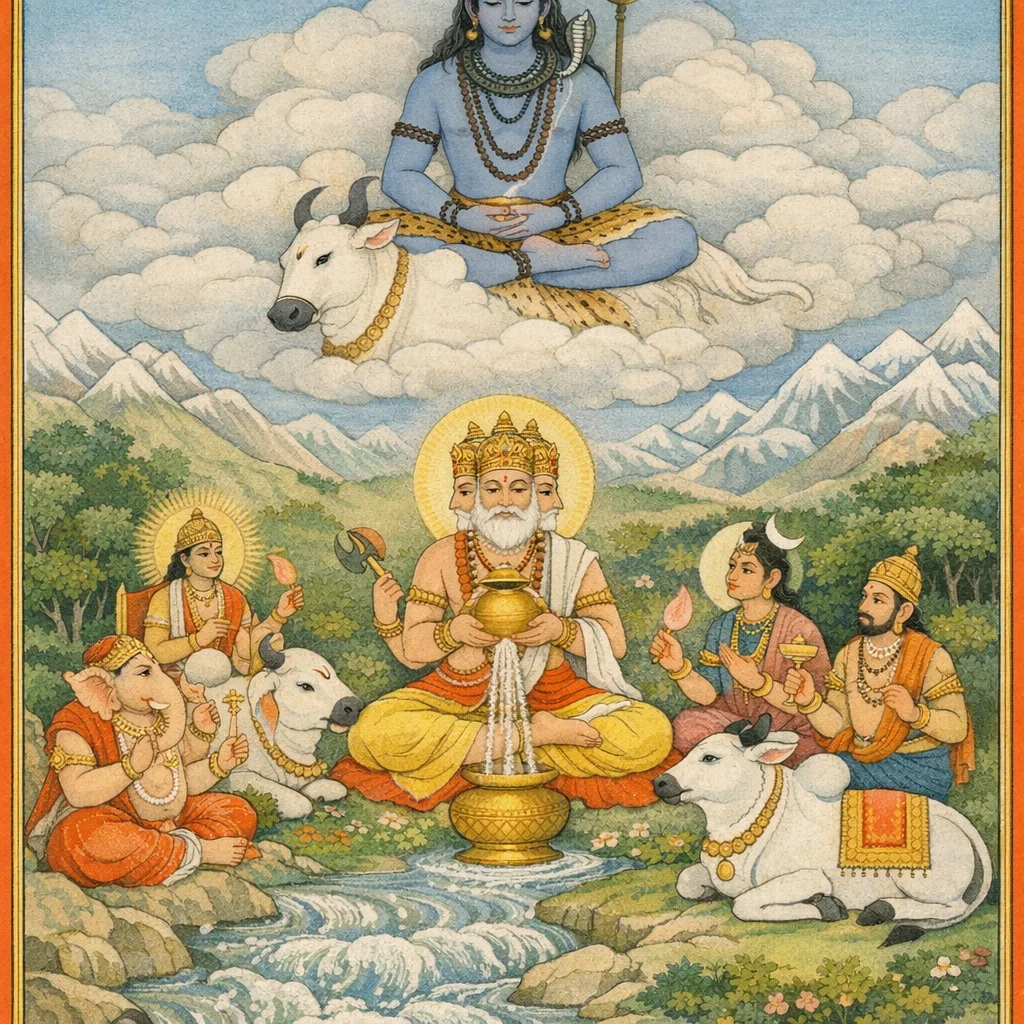
The sages ask Sūta how Brahmā Prajāpati, at creation, performed abhiṣeka and installed gods and Daitya leaders as lords over their respective domains. Sūta replies with a catalogue of cosmic rulerships: Sūrya over the planets; Soma over the lunar mansions and medicinal herbs; Varuṇa over the waters; the foremost Yakṣa over wealth; Viṣṇu over the Ādityas; Pāvaka (Agni) over the Vasus; Dakṣa over the Prajāpatis; Śakra (Indra) over the Maruts; Prahlāda over the Daityas and Dānavas; Dharma over the Pitṛs; Nirṛti over flesh-eaters; Rudra over beasts and bhūtas; Nandī as leader of the gaṇas; Vīrabhadra over heroes; Cāmuṇḍā over the Mothers; Nīlalohita over the Rudras; Vināyaka over obstacles; Umā over women; Sarasvatī over speech; Himavān over mountains; Jāhnavī over rivers; the ocean as the treasury of waters; Aśvattha and Plakṣa among trees; Citraratha over the Gandharvas; Vāsuki and Takṣaka over Nāgas and serpents; Airāvata over the directional elephants; Garuḍa over the flying beings; Uccaiḥśravā as king of horses; the lion over beasts; the bull over cattle; Śarabha surpassing the lords of animals; Guha as commander of armies; and Lakulīśa over Śruti and Smṛti. The chapter concludes by affirming that all consecrations ultimately rest on Śiva’s grace, and that Mahēśvara Śaṅkara—bull-bannered, all-knowing in his four forms—is the supreme foundation and overseer of the entire cosmic order, preparing the teaching that “Śiva is the Lord of all.”
Shlokas
Verse 1
इति श्रीलिङ्गमहापुराणे पूर्वभागे ज्योतिश्चक्रे ग्रहचारकथनं नाम सप्तपञ्चाशत्तमो ऽध्यायः ऋषय ऊचुः अभ्यषिञ्चत्कथं ब्रह्मा चाधिपत्ये प्रजापतिः देवदैत्यमुखान् सर्वान् सर्वात्मा वद सांप्रतम्
Thus, in the Śrī Liṅga Mahāpurāṇa, in the Pūrva-bhāga, within the section on the wheel of luminaries, begins the chapter called “The Account of the Motions (and governing influence) of the Planets.” The sages said: “How did Brahmā, the Prajāpati, consecrate all beings—beginning with the Devas and the Daityas—into their respective lordships? O all-pervading Self, tell us now.”
Verse 2
सूत उवाच ग्रहाधिपत्ये भगवान् अभ्यषिञ्चद्दिवाकरम् ऋक्षाणामोषधीनां च सोमं ब्रह्मा प्रजापतिः
Sūta said: The blessed Prajāpati Brahmā installed the Sun (Divākara) as the lord of the planets, and Soma (the Moon) as the lord of the constellations and of medicinal herbs.
Verse 3
अपां च वरुणं देवं धनानां यक्षपुङ्गवम् आदित्यानां तथा विष्णुं वसूनां पावकं तथा
For the waters He appointed the god Varuṇa; for wealth, the foremost of the Yakṣas; for the Ādityas, Viṣṇu; and for the Vasus likewise, Pāvaka (Agni).
Verse 4
प्रजापतीनां दक्षं च मरुतां शक्रमेव च दैत्यानां दानवानां च प्रह्लादं दैत्यपुङ्गवम्
Among the Prajāpatis, (I invoke) Dakṣa; among the Maruts, Indra; and among the Daityas and Dānavas, Prahlāda—the foremost of the Daityas.
Verse 5
धर्मं पितॄणाम् अधिपं निरृतिं पिशिताशिनाम् रुद्रं पशूनां भूतानां नन्दिनं गणनायकम्
Among the Pitṛs He is Dharma, the sovereign lord; among the flesh-eating beings He is Nirṛti; among the paśus (bound souls and creatures) He is Rudra; and among the bhūtas He is Nandin, commander of the Gaṇas.
Verse 6
वीराणां वीरभद्रं च पिशाचानां भयंकरम् मातॄणां चैव चामुण्डां सर्वदेवनमस्कृताम्
Among the heroic hosts, (I invoke) Vīrabhadra; for the piśācas, the Terrible One who inspires fear; and among the Mothers, (I invoke) Cāmuṇḍā—she who is bowed to by all the gods.
Verse 7
रुद्राणां देवदेवेशं नीललोहितमीश्वरम् विघ्नानां व्योमजं देवं गजास्यं तु विनायकम्
I worship the Lord of the Rudras, the God of gods—Īśvara, Nīlalohita; and I worship Vināyaka, the sky-born deva, elephant-faced, the Lord who governs and removes obstacles.
Verse 8
स्त्रीणां देवीमुमां देवीं वचसां च सरस्वतीम् विष्णुं मायाविनां चैव स्वात्मानं जगतां तथा
Among women, He is revered through the Goddess Umā; among speech, through the Goddess Sarasvatī; among the wielders of māyā, as Viṣṇu; and likewise, for all beings in the worlds, as their own innermost Self—thus is the Lord remembered as the one Reality appearing in many forms.
Verse 9
हिमवन्तं गिरीणां तु नदीनां चैव जाह्नवीम् समुद्राणां च सर्वेषाम् अधिपं पयसां निधिम्
Among mountains, he praises Himavān; among rivers, the Jāhnavī (Gaṅgā); and among all oceans, the sovereign lord—the treasure-house of waters.
Verse 10
वृक्षाणां चैव चाश्वत्थं प्लक्षं च प्रपितामहः
Among trees, the Aśvattha and the Plakṣa are declared foremost; and the Prāpitāmaha—Brahmā, the primordial grandsire—stands as their presiding archetype in the cosmic order.
Verse 11
गन्धर्वविद्याधरकिन्नराणाम् ईशं पुनश् चित्ररथं चकार नागाधिपं वासुकिमुग्रवीर्यं सर्पाधिपं तक्षकमुग्रवीर्यम्
He again appointed Citraratha as the lord of the Gandharvas, Vidyādharas, and Kinnaras; he made Vāsuki, of fierce prowess, the sovereign of the Nāgas, and Takṣaka, of fierce prowess, the sovereign of the serpents.
Verse 12
दिग्वारणानामधिपं चकार गजेन्द्रम् ऐरावतम् उग्रवीर्यम् /* सुपर्णमीशं पततामथाश्वराजानमुच्चैःश्रवसं चकार
He appointed the mighty Airāvata, the lordly elephant, as the sovereign over the elephants of the quarters; and he made Suparṇa (Garuḍa) the ruler of the birds. Likewise, he established Uccaiḥśravas as the king of horses. Thus the Lord (Pati), by His command, assigns stations and powers within creation, binding beings (paśu) to their ordained functions through the order of karma and cosmic law (pāśa).
Verse 13
सिंहं मृगाणां वृषभं गवां च मृगाधिपानां शरभं चकार सेनाधिपानां गुहमप्रमेयं श्रुतिस्मृतीनां लकुलीशमीशम्
He appointed the lion as lord among beasts, and the bull (Vṛṣabha) among cattle; among the rulers of animals He made the Śarabha; among the commanders of hosts He established the unfathomable Guha; and over the Śruti and Smṛti He set Lakulīśa—Īśa, the Sovereign Lord Himself.
Verse 14
अभ्यषिञ्चत्सुधर्माणं तथा शङ्खपदं दिशाम् केतुमन्तं क्रमेणैव हेमरोमाणमेव च
He then duly anointed Sudharmā, and likewise Śaṅkhapada, as guardians of the quarters; in proper order He also consecrated Ketumān and Hemaromā. Thus Pati, the Lord, establishing cosmic governance, binds the worlds to dharma so that embodied souls (paśu) may follow their ordained paths toward liberation.
Verse 15
पृथिव्यां पृथुमीशानं सर्वेषां तु महेश्वरम् चतुर्मूर्तिषु सर्वज्ञं शङ्करं वृषभध्वजम्
On the earth (as the terrestrial principle), He is the vast Lord Īśāna—Mahādeva, the great sovereign of all. In His fourfold manifestations He is omniscient; He is Śaṅkara, whose banner bears the Bull.
Verse 16
प्रसादाद्भगवाञ्छम्भोश् चाभ्यषिञ्चद्यथाक्रमम् पुराभिषिच्य पुण्यात्मा रराज भुवनेश्वरः
By the grace of the Blessed Lord Śambhu, he was anointed in due order; and having been formerly consecrated, that righteous-souled one shone forth as the sovereign of the world.
Verse 17
एतद्वो विस्तरेणैव कथितं मुनिपुङ्गवाः अभिषिक्तास्ततस्त्वेते विशिष्टा विश्वयोनिना
O foremost of sages, this has been explained to you in full detail. Thereafter, these beings were consecrated, and by Viśvayoni—the all-originating Lord (Pati)—they became specially distinguished.
Frequently Asked Questions
Divākara (Sun) is consecrated as grahādhipati, while Soma (Moon) is appointed over ṛkṣas (constellations) and oṣadhīs (herbs), indicating a cosmological linkage between luminaries and life-sustaining rhythms.
Prahlāda represents the ideal of devotion and dharma even within asuric lineages; his appointment signals that governance is anchored in merit and divine order, not merely birth or power.
It culminates by affirming Śaṅkara (Maheshvara, Vṛṣabhadhvaja) as the supreme Lord over all, implying that all delegated authorities function under Shiva’s overarching sovereignty and grace.