Adhyaya 22
Adhyaya 22 — शिवानुग्रहः, ब्रह्मतपः, एकादशरुद्राः तथा प्राणतत्त्वम्
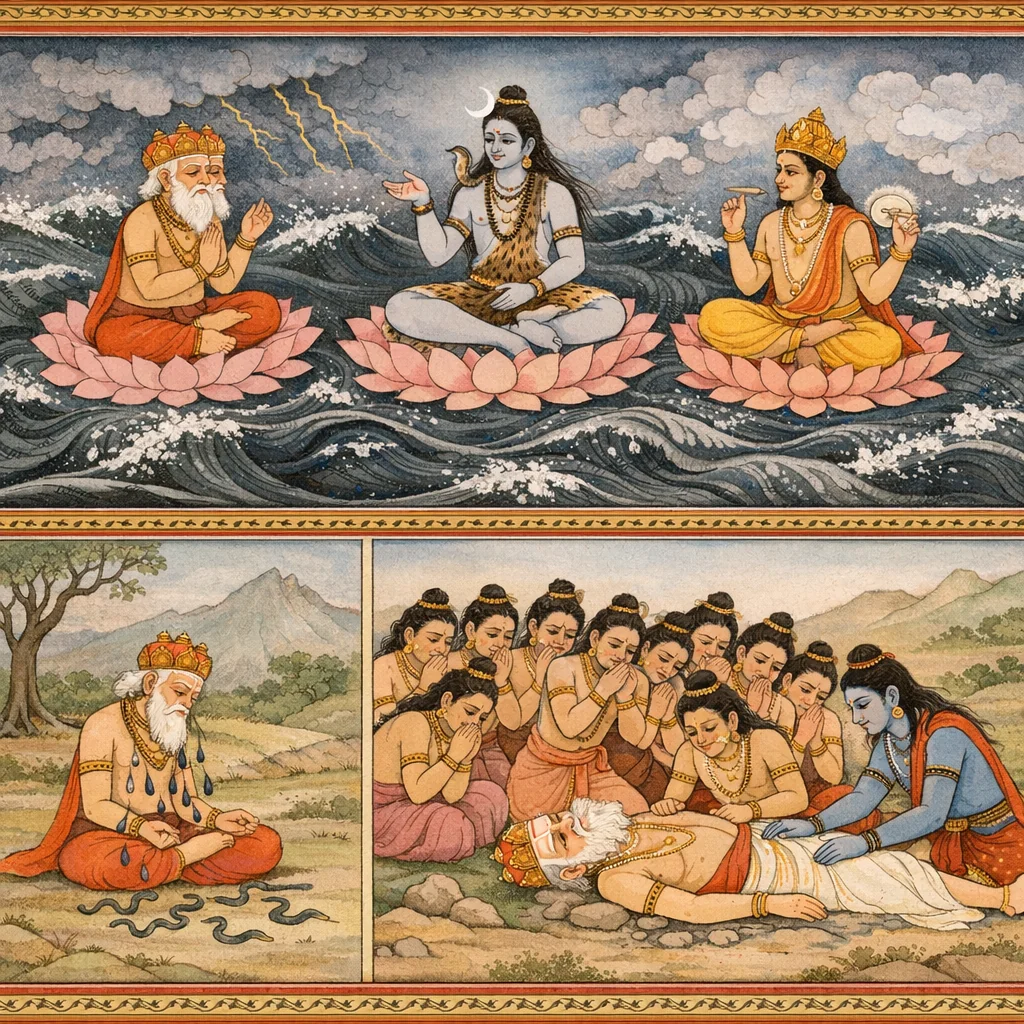
Suta relates that amid a dreadful cosmic flood, Shiva (Umaapati, Trilochana), pleased by truthful praise and humility, playfully questions the two lotus-born, lotus-eyed deities Brahma and Vishnu. Seeing their inner intent, Shiva offers a boon; Vishnu asks only for unwavering bhakti to Shiva, which Shiva grants—affirming Vishnu’s station while grounding supremacy in Shiva’s grace. Shiva then blesses Brahma, touches him, and vanishes. Empowered, Brahma performs fierce tapas to create beings; when no result appears, anger rises, tears fall, and from those tears arise potent serpent-like entities—creation warped by krodha. Overcome by fury and fainting as if dead, Brahma “dies,” and from his body emerge eleven Rudras, so named because they cry; the text equates Rudra with prana present in all beings. Shiva (Nīlalohita, Triśūlin) restores Brahma’s pranas, after which Brahma beholds the all-pervading Lord and asks about Shiva’s primordial nature, setting the stage for deeper theogony and Shaiva ontology.
Shlokas
Verse 1
सूत उवाच अत्यन्तावनतौ दृष्ट्वा मधुपिङ्गायतेक्षणः प्रहृष्टवदनो ऽत्यर्थम् अभवत्सत्यकीर्तनात्
Sūta said: Seeing them bow down in profound humility, he—whose eyes were honey-golden—became exceedingly radiant with joy, for he was praised with truthful words.
Verse 2
उमापतिर्विरूपाक्षो दक्षयज्ञविनाशनः पिनाकी खण्डपरशुः सुप्रीतस्तु त्रिलोचनः
He is Umāpati, Lord of Umā (Śakti); Virūpākṣa, of wondrous and transcendent vision; the Destroyer of Dakṣa’s sacrifice; the Bearer of the bow Pināka; the wielder of the axe that cuts down obstruction; and Trilocana, the Three-eyed Lord, ever perfectly pleased—Pati who, by His grace, frees the paśu from pāśa.
Verse 3
ततः स भगवान्देवः श्रुत्वा वागमृतं तयोः जानन्नपि महादेवः क्रीडापूर्वमथाब्रवीत्
Then the Blessed Lord—Mahādeva—having heard the nectar-like words of the two, though already knowing all, spoke again, first engaging in divine play (līlā).
Verse 4
कौ भवन्तौ महात्मानौ परस्परहितैषिणौ समेतावंबुजाभक्षाव् अस्मिन् घोरे महाप्लवे
Who are you two great-souled ones, each intent on the other’s welfare, who have come together here—living upon lotus-food—in this dreadful, all-engulfing Great Deluge?
Verse 5
तावूचतुर्महात्मानौ संनिरीक्ष्य परस्परम् भगवान् किं तु यत्ते ऽद्य न विज्ञानं त्वया विभो
Then the two great-souled ones, gazing upon each other, said: “O Blessed Lord—yet how is it that today, O all-pervading One, this true discernment has not been attained by You?”
Verse 6
विभो रुद्र महामाय इच्छया वां कृतौ त्वया तयोस्तद्वचनं श्रुत्वा अभिनन्द्याभिमान्य च
“O all-pervading Rudra, O great Māyā! By Your own will You fashioned you both.” Hearing their words, He received them with approval and honoured them.
Verse 7
उवाच भगवान्देवो मधुरं श्लक्ष्णया गिरा भो भो हिरण्यगर्भ त्वां त्वां च कृष्ण ब्रवीम्यहम्
The Blessed Lord spoke in a sweet and gentle voice: “O Hiraṇyagarbha (Brahmā)! And you too, O Kṛṣṇa—listen as I speak.”
Verse 8
प्रीतो ऽहमनया भक्त्या शाश्वताक्षरयुक्तया भवन्तौ हृदयस्यास्य मम हृद्यतरावुभौ
I am pleased with this devotion, joined to the imperishable, eternal sacred syllable. You two are indeed the very heart of my heart—both of you are most dear to me.
Verse 9
युवाभ्यां किं ददाम्यद्य वराणां वरमीप्सितम् अथोवाच महाभागो विष्णुर्भवमिदं वचः
“What boon shall I grant you two today—the most desired of all boons?” Having spoken thus, the illustrious Lord Viṣṇu then addressed Bhava (Śiva) with these words.
Verse 10
सर्वं मम कृतं देव परितुष्टो ऽसि मे यदि त्वयि मे सुप्रतिष्ठा तु भक्तिर्भवतु शङ्करः
O Deva, all this has been done by me. If You are pleased with me, then, O Śaṅkara, let my devotion to You be firmly established and never wavering.
Verse 11
एवमुक्तस्तु विज्ञाय संभावयत केशवम् प्रददौ च महादेवो भक्तिं निजपदांबुजे
Thus addressed, Mahādeva, understanding the matter, honored Keśava and bestowed upon him devotion to His own lotus-feet—granting the soul a sure means to approach Pati beyond all bonds.
Verse 12
भवान्सर्वस्य लोकस्य कर्ता त्वमधिदैवतम् तदेवं स्वस्ति ते वत्स गमिष्याम्यंबुजेक्षण
You are the creator of all worlds; You are the presiding Divinity beyond the gods. Therefore, dear child, may auspiciousness be yours. O lotus‑eyed one, I shall now depart.
Verse 13
एवमुक्त्वा तु भगवान् ब्रह्माणं चापि शङ्करः अनुगृह्यास्पृशद्देवो ब्रह्माणं परमेश्वरः
Having spoken thus, the Blessed Lord Śaṅkara—Parameśvara—then, out of compassion, touched Brahmā, bestowing His grace upon him.
Verse 14
कराभ्यां सुशुभाभ्यां च प्राह हृष्टतरः स्वयम् मत्समस्त्वं न संदेहो वत्स भक्तश् च मे भवान्
With his two splendid hands, he himself—overflowing with joy—spoke: “Child, there is no doubt that you are equal to me in spirit; you are indeed my devotee.”
Verse 15
स्वस्त्यस्तु ते गमिष्यामि संज्ञा भवतु सुव्रत एवमुक्त्वा तु भगवांस् ततो ऽन्तर्धानमीश्वरः
“May auspiciousness be yours. I shall depart; let this be the agreed sign, O you of noble vow.” Having spoken thus, the Blessed Lord—Īśvara—then vanished from sight.
Verse 16
गतवान् गणपो देवः सर्वदेवनमस्कृतः अवाप्य संज्ञां गोविन्दात् पद्मयोनिः पितामहः
The divine Lord of the Gaṇas—revered by all the gods—went forth; and the Lotus-born Grandfather (Brahmā), receiving his appellation and recognition from Govinda (Viṣṇu), became known by that designation.
Verse 17
प्रजाः स्रष्टुमनाश्चक्रे तप उग्रं पितामहः तस्यैवं तप्यमानस्य न किंचित् समवर्तत
Desiring to bring forth beings, Pitāmaha (Brahmā) undertook fierce austerity (tapas); yet, even as he thus performed it, nothing whatsoever came into manifestation.
Verse 18
ततो दीर्घेण कालेन दुःखात्क्रोधो ह्यजायत क्रोधाविष्टस्य नेत्राभ्यां प्रापतन्नश्रुबिन्दवः
Then, after a long time, from sorrow anger indeed arose; and for him who was seized by wrath, drops of tears fell from his eyes.
Verse 19
ततस्तेभ्यो ऽश्रुबिन्दुभ्यो वातपित्तकफात्मकाः महाभागा महासत्त्वाः स्वस्तिकैरप्यलंकृताः
Then, from those drops of tears arose exalted beings—embodying the humors of vāta, pitta, and kapha—greatly fortunate and of immense spiritual potency, adorned even with auspicious svastika marks.
Verse 20
प्रकीर्णकेशाः सर्पास्ते प्रादुर्भूता महाविषाः सर्पांस्तानग्रजान्दृष्ट्वा ब्रह्मात्मानम् अनिन्दयत्
Those serpents—wild-haired and of mighty venom—manifested forth. Seeing those elder-born serpents, Brahmā did not censure himself, but remained steady, established in his own Self.
Verse 21
अहो धिक् तपसो मह्यं फलमीदृशकं यदि लोकवैनाशिकी जज्ञे आदावेव प्रजा मम
Alas—shame upon my austerity, if its fruit is truly of this kind: that my progeny, born at the very beginning, has arisen as a force that brings ruin upon the worlds.
Verse 22
तस्य तीव्राभवन्मूर्च्छा क्रोधामर्षसमुद्भवा मूर्च्छाभिपरितापेन जहौ प्राणान्प्रजापतिः
From that, a fierce swoon arose in him—born of anger and wounded pride. Scorched by the torment of that delusion, Prajāpati abandoned his life-breaths (prāṇas).
Verse 23
तस्याप्रतिमवीर्यस्य देहात्कारुण्यपूर्वकम् अथैकादश ते रुद्रा रुदन्तो ऽभ्यक्रमंस् तथा
Then, from the body of that One of incomparable potency, out of compassion, the eleven Rudras came forth; and, crying aloud, they advanced as well.
Verse 24
रोदनात्खलु रुद्रत्वं तेषु वै समजायत ये रुद्रास्ते खलु प्राणा ये प्राणास्ते तदात्मकाः
Indeed, from their crying (rodana) the state of being Rudra arose in them. Those who are called Rudras are truly the vital breaths (prāṇas); and those prāṇas are of that very nature—Rudra’s own essence.
Verse 25
प्राणाः प्राणवतां ज्ञेयाः सर्वभूतेष्ववस्थिताः अत्युग्रस्य महत्त्वस्य साधुराचरितस्य च
Know that the life-breaths (prāṇas) belong to all embodied beings and abide within every creature. They are also the measure by which one understands the greatness of the exceedingly Ugra—the Terrible yet Auspicious Lord—and the established conduct practiced by the sādhus.
Verse 26
प्राणांस्तस्य ददौ भूयस् त्रिशूली नीललोहितः लब्ध्वासून् भगवान्ब्रह्म देवदेवमुमापतिम्
Then Nīlalohita, the trident-bearing Lord, again bestowed the life-breaths upon him. Having regained his vital airs, the revered Brahmā recognized and praised Umāpati—the Deva of devas—as the supreme Pati (Lord).
Verse 27
प्रणम्य संस्थितो ऽपश्यद् गायत्र्या विश्वमीश्वरम् सर्वलोकमयं देवं दृष्ट्वा स्तुत्वा पितामहः
Having bowed down and standing in reverent composure, Pitāmaha (Brahmā) beheld—through the power of the Gāyatrī—the Lord who is the universe itself. Seeing that Deva who pervades all worlds, he then praised Him.
Verse 28
ततो विस्मयमापन्नः प्रणिपत्य मुहुर्मुहुः उवाच वचनं शर्वं सद्यादित्वं कथं विभो
Then, struck with amazement, he bowed again and again and addressed Śarva: “O all-pervading Lord, how is it that You are ‘immediate from the very beginning’—ever-present and instantly manifest?”
Frequently Asked Questions
The chapter frames Shiva’s omniscience alongside līlā (divine play): the questioning tests humility and mutual welfare-seeking, and publicly establishes that devotion and truth-oriented praise draw Shiva’s anugraha, which supersedes mere status or creative authority.
By stating that the Rudras are pranas and that prana abides in all beings, the text identifies Rudra as the vital, animating principle under Shiva’s sovereignty—linking cosmic divinity to embodied life and making Shiva the regulator and restorer of life-force.
It symbolizes srishti influenced by disturbed guṇas: anger and frustration yield harmful or destabilizing manifestations, contrasting with creation aligned to dharma and grace; it also motivates the need for Shiva’s intervention to restore balance.