Adhyaya 51
Incarnations of Mahādeva in Kali-yuga (Vaivasvata Manvantara) and the Nakulīśa Horizon
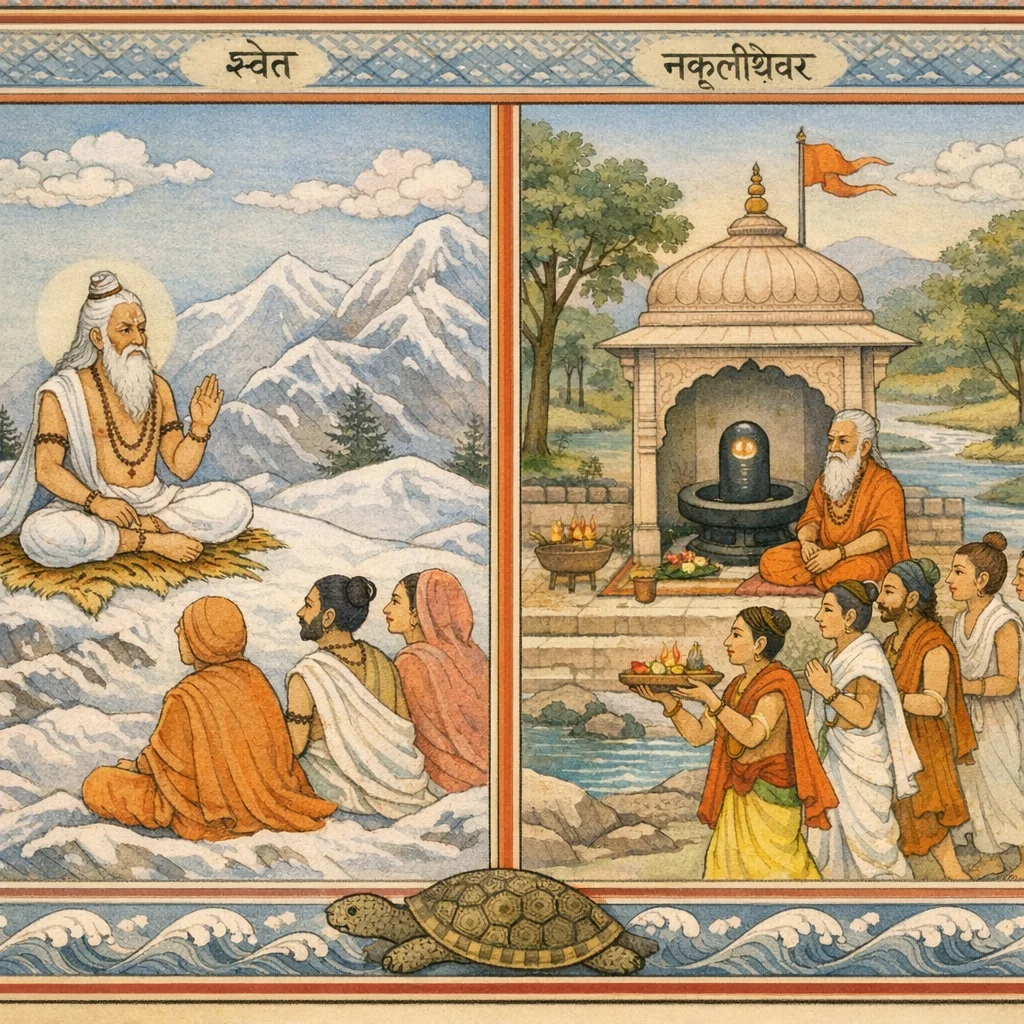
Concluding the prior section on Vyāsa incarnations in the Dvāpara age, Sūta turns to a new catalog: Mahādeva’s manifestations in Kali-yuga within the Vaivasvata Manvantara. The chapter opens with Śaṃbhu’s early Kali appearance as Śveta on the Himalayan summit (Chagala), where radiant, Veda-accomplished brāhmaṇa sages arise as disciples and exemplars. A structured enumeration follows—Śveta-linked figures, successive names and titles tied to sacred sites and epithets—and it states an explicit total of twenty-eight Śaiva incarnations in this Manvantara. The narrative then looks ahead: at Kali’s end the Lord appears bodily at a tīrtha as Nakulīśvara, establishing the Pāśupata horizon and the teacher–disciple transmission. Extensive lists of disciples and ṛṣis stress tapas, yoga, brahmavidyā, and the restoration of Vedic order for brāhmaṇas and dharma. The chapter closes with a brief forecast of future Manus (Sāvarṇas) and a phalaśruti praising recitation and hearing—especially after bathing and at temples or riverbanks—ending in salutations to Nārāyaṇa and to Viṣṇu as Kūrma.
Shlokas
Verse 1
इति श्रीकूर्मपुराणे षट्साहस्त्र्यां संहितायां पूर्वविभागे पञ्चाशो ऽध्यायः सूत उवाच वेदव्यासावताराणि द्वापरे कथितानि तु / महादेवावताराणि कलौ शृणुत सुव्रताः
Thus, in the Śrī Kūrma Purāṇa, in the Ṣaṭ-sāhasrī Saṃhitā, in the Pūrvabhāga, the fiftieth chapter comes to its close. Sūta said: “The incarnations of Veda‑Vyāsa in the Dvāpara age have indeed been told; now, O steadfast in vows, hear the incarnations of Mahādeva in the Kali age.”
Verse 2
आद्ये कलियुगे श्वेतो देवदेवो महाद्युतिः / नाम्ना हिताय विप्राणामभूद् वैवस्वते ऽन्तरे
At the very dawn of the Kali age, the Deva‑deva Mahādeva, supremely radiant, manifested in the Vaivasvata Manvantara under the name Śveta, for the welfare of the brāhmaṇas.
Verse 3
हिमवच्छिखरे रम्ये छगले पर्वतोत्तमे / तस्य शिष्याः शिखायुक्ता वभूवुरमितप्रभाः
Upon the lovely summit of Himavat—on Chagala, the most excellent of mountains—his disciples, wearing the sacred śikhā, became endowed with immeasurable radiance.
Verse 4
श्वेतः श्वेतशिखश्चैव श्वेतास्यः श्वेतलोहितः / चत्वारस्ते महात्मानो ब्राह्मणा वेदपारगाः
Śveta, Śvetasikha, Śvetāsya, and Śvetalohita—these four were great-souled brāhmaṇa sages, fully accomplished in the Vedas.
Verse 5
सुभानो दमनश्चाथ सुहोत्रः कङ्कणस्तथा / लोकाक्षिरथ योगीन्द्रो जैगीषव्यस्तु सप्तमे
Subhāna, Damana, Suhotra, and Kaṅkaṇa; Lokākṣiratha; the Lord of yogins; and Jaigīṣavya—these are reckoned as the seventh series (or group).
Verse 6
अष्टमे दधिवाहः स्यान्नवमे वृषभः प्रभुः / भृगुस्तु दशमे प्रोक्तस्तस्मादुग्रः परः स्मृतः
In the eighth Manvantara there will be Dadhivāha; in the ninth, the Lord Vṛṣabha. In the tenth, Bhṛgu is proclaimed the chief sage; therefore Ugra is remembered as the Supreme in that cycle.
Verse 7
द्वादशे ऽत्रिः समाख्यातो बली चाथ त्रयोदशे / चतुर्दशे गौतमस्तु वेदशीर्षा ततः परम्
In the twelfth cycle Atri is declared (as the presiding sage); and in the thirteenth, Bali. In the fourteenth, Gautama is indeed named; and after that comes Vedaśīrṣa.
Verse 8
गोकर्णश्चाभवत् तस्माद् गुहावासः शिखण्ड्यथ / जटामाल्यट्टहासश्च दारुको लाङ्गली क्रमात्
From that cause the place came to be known as Gokarṇa; thereafter arose the names Guhāvāsa and Śikhaṇḍin. In due sequence, (the sacred sites) were also known as Jaṭāmālya, Aṭṭahāsa, Dāruka, and Lāṅgalī.
Verse 9
श्वेतस्तथा परः शूली डिण्डी मुण्डी च वै क्रमात् / सहिष्णुः सोमशर्मा च नकुलीशो ऽन्तिमे प्रभुः
Next, in due order, come Śveta, then Para, then Śūlī, Ḍiṇḍī, and Muṇḍī; also Sahiṣṇu and Somaśarmā—while Nakulīśa, the Lord, is spoken of as the last in this sequence.
Verse 10
वैवस्वते ऽन्तरे शंभोरवतारास्त्रिशूलिनः / अष्टाविंशतिराख्याता ह्यन्ते कलियुगे प्रभोः / तीर्थे कायावतारे स्याद् देवेशो नकुलीश्वरः
In the Vaivasvata Manvantara, the incarnations of Śaṃbhu, the Trident-bearing Lord, are declared to be twenty-eight. And at the close of the Kali-yuga, in a sacred tīrtha, the Lord of the gods will appear in bodily incarnation as Nakulīśvara.
Verse 11
तत्र देवादिदेवस्य चत्वारः सुतपोधनाः / शिष्या बभूवुश्चान्येषां प्रत्येकं मुनिपुङ्गवाः
There, in the presence of the God of gods, four ascetics—abounding in tapas—became disciples; and for each of the others as well, individually, there were sages foremost among the seers.
Verse 12
प्रसन्नमनसो दान्ता ऐश्वरीं भक्तिमाश्रिताः / क्रमेण तान् प्रवक्ष्यामि योगिनो योगवित्तमान्
With minds made serene and senses disciplined, having taken refuge in devotion to the Lord (Īśvara), I shall now describe—step by step—those yogins who are the best knowers of Yoga.
Verse 13
श्वेतः श्वेतशिखश्चैव श्वेतास्यः श्वेतलोहितः / दुन्दुभिः शतरूपश्च ऋचीकः केतुमांस्तथा / विकेशश्च विशोकश्च विशापश्शापनाशनः
“The White One; the One with a white crest; the White-faced; the White-and-Red One; the Drum-resounding One; the Hundred-formed One; Ṛcīka; the Bannered One; the Unhaired One; the Sorrowless One; the Blameless One; and the Destroyer of curses.”
Verse 14
सुमुखो दुर्मुखश्चैव दुर्दमो दुरतिक्रमः / सनः सनातनश्चैव मुकारश्च सनन्दनः
He is the Auspicious-faced One (Sumukha), and also the Terrible-faced (Durmukha); the Unsubduable (Durdama) and the Untransgressable (Duratikrama). He is Sana and the Eternal (Sanātana); He is the sacred syllable “Mu,” and also Sanandana.
Verse 15
दालभ्यश्च महायोगी धर्मात्मनो महौजसः / सुधामा विरजाश्चैव शङ्खपात्रज एव च
And Dālabhya—the great yogin—along with those righteous-souled and mighty in spiritual splendor: Sudhāmā, Viraja, and also Śaṅkhapātraja.
Verse 16
सारस्वतस्तथा मेघो घनवाहः सुवाहनः / कपिलश्चासुरिश्चैव वोढुः पञ्चशिखो मुनिः
Likewise there were Sārasvata, Megha, Ghanavāha, and Suvāhana; and also Kapila and Āsuri; together with Voḍhu and the sage-muni Pañcaśikha.
Verse 17
पराशरश्च गर्गश्च भार्गवश्चाङ्गिरास्तथा / बलबन्धुर्निरामित्रः केतुशृङ्गस्तपोधनः
Parāśara and Garga were there, Bhārgava and Āṅgirasa as well; Balabandhu, Nirāmitra, and Ketuśṛṅga—ascetics abounding in the wealth of tapas.
Verse 18
लम्बोदरश्च लम्बश्च लाम्बाक्षो लम्बकेशकः / सर्वज्ञः समबुद्धिश्च साध्यः सत्यस्तथैव च
He is the Pot-bellied One, the Tall One, the Wide‑eyed One, and the One with long flowing hair. He is All‑knowing, equal‑minded toward all, the Attainable Goal, and indeed the Truth itself.
Verse 19
शुधामा काश्यपश्चैव वसिष्ठो विरजास्तथा / अत्रिरुग्रस्तथा चैव श्रवणो ऽथ श्रविष्ठकः
Śudhāmā, Kāśyapa, Vasiṣṭha, and Virajā were there; likewise Atri and Ugra; also Śravaṇa and then Śraviṣṭhaka—these are the sages named in this enumeration.
Verse 20
कुणिश्च कुणिबाहुश्च कुशरीरः कुनेत्रकः / कश्यपोह्युशना चैव च्यवनो ऽथ बृहस्पतिः
Also there were Kuṇi, Kuṇibāhu, Kuśarīra, and Kunetraka; and likewise Kāśyapa, Uśanā (Śukra), Cyavana, and then Bṛhaspati.
Verse 21
उतथ्यो वामदेवश्च महाकायो महानिलः / वाचश्रवाः सुपीकश्च श्यावाश्वः सपथीश्वरः
Utathya and Vāmadeva; Mahākāya and Mahānila; Vācaśravā and Supīka; Śyāvāśva and Sapathīśvara—these revered ones too are numbered among the illustrious sages and seers.
Verse 22
हरिण्यनाभः कौशल्यो लोकाक्षिः कुथुमिस्तथा / सुमन्तुर्वर्चरी विद्वान् कबन्धः कुशिकन्धरः
Hariṇyanābha, Kauśalya, Lokākṣi, and likewise Kuthumi; Sumantu, Varcarī the learned, Kabandha, and Kuśikandhara—these sages are enumerated here.
Verse 23
प्लक्षो दार्भायणिश्चैव केतुमान् गौतमस्तथा / भल्लापी मधुपिङ्गश्च श्वेतकेतुस्तपोनिधिः
Plakṣa, and also Dārbhāyaṇi; Ketumān, and likewise Gautama; Bhallāpī, Madhupiṅga, and Śvetaketu—who was a veritable treasure-house of tapas, ascetic power.
Verse 24
उशिजो बृहदुक्थश्च देवलः कपिरेव च / शालिहोत्रो ऽग्निवेश्यश्च युवनाश्वः शरद्वसुः
Uśija, Bṛhaduktha, Devala, and Kapi; likewise Śālihotra and Agniveśya; also Yuvanāśva and Śaradvasu—these sages are enumerated in this lineage list.
Verse 25
छगलः कुण्डकर्णश्च कुम्भश्चैव प्रवाहकः / उलूको विद्युतश्चैव शाद्वलो ह्याश्वलायनः
Chagala, Kuṇḍakarṇa, Kumbha, and Pravāhaka; Ulūka and Vidyuta; and also Śādvala and Āśvalāyana—these are the names enumerated here.
Verse 26
अक्षपादः कुमारश्च उलूको वत्स एव च / कुशिकश्चैव गर्गश्च मित्रको ऋष्य एव च
Akṣapāda, Kumāra, Ulūka, and Vatsa; likewise Kuśika and Garga, as well as Mitraka and Ṛṣya—these are the sages who are named.
Verse 27
शिष्या एते महात्मानः सर्वोवर्तेषु योगिनाम् / विमला ब्रह्मभूयिष्ठा ज्ञानयोगपरायणाः
These are the disciples—great-souled ones—who excel in every discipline of the yogins: stainless in conduct, firmly established in Brahman, and wholly devoted to the yoga of liberating knowledge.
Verse 28
कुर्वन्ति चावताराणि ब्राह्मणानां हिताय हि / योगेश्वराणामादेशाद् वेदसंस्थापनाय वै
Indeed, they undertake incarnations for the welfare of the brāhmaṇas; and, by the command of the Lords of Yoga, they do so for the re-establishment of the Vedas.
Verse 29
ये ब्राह्मणाः संस्मरन्ति नमस्यन्ति च सर्वदा / तर्पयन्त्यर्चयन्त्येतान् ब्रह्मविद्यामवाप्नुयुः
Those brāhmaṇas who constantly remember them, bow to them always, and who satisfy and worship these revered ones attain brahmavidyā—the knowledge of Brahman.
Verse 30
इदं वैवस्वतं प्रोक्तमन्तरं विस्तरेण तु / भविष्यति च सावर्णो दक्षसावर्ण एव च
Thus the Vaivasvata Manvantara has been described in detail. In the future, Sāvarṇa (Manu) will arise, and likewise Dakṣa-Sāvarṇa as well.
Verse 31
दशमो ब्रह्मसावर्णो धर्मसावर्ण एव च / द्वादशो रुद्रसावर्णो रोचमानस्त्रयोदशः / भौत्यश्चतुर्दशः प्रोक्तो भविष्या मनवः क्रमात्
The tenth Manu is Brahma-sāvarṇa, and likewise the eleventh is Dharma-sāvarṇa. The twelfth is Rudra-sāvarṇa; the thirteenth is Rocamāna. The fourteenth is declared to be Bhautyā—thus, in due sequence, the future Manus are spoken of.
Verse 32
अयं वः कथितो ह्यंशः पूर्वो नारायणेरितः / भूतभव्यैर्वर्तमानैराख्यानैरुपबृंहितः
This portion has now been told to you—an ancient teaching proclaimed by Nārāyaṇa—enriched with narratives drawn from the past, the future, and the present.
Verse 33
यः पठेच्छृणुयाद् वापि श्रावयेद् वा द्विजोत्तमान् / स सर्वपापनिर्मुक्तो ब्रह्मणा सह मोदते
Whoever recites this teaching, or hears it, or causes the best of the twice-born to hear it—he becomes freed from all sins and rejoices together with Brahmā.
Verse 34
पठेद् देवालये स्नात्वा नदीतीरेषु चैव हि / नारायणं नमस्कृत्य भावेन पुरुषोत्तमम्
Having bathed, one should recite this sacred text in a temple, and likewise on the banks of rivers; and, bowing to Nārāyaṇa with heartfelt devotion, one should adore Puruṣottama, the Supreme Person.
Verse 35
नमो देवादिदेवाय देवानां परमात्मने / पुरुषाय पुराणाय विष्णवे कूर्मरूपिणे
Salutations to the God of gods, the Supreme Self of all the deities—to the primordial Puruṣa, the Ancient One: to Viṣṇu who has assumed the form of the Tortoise (Kūrma).
Frequently Asked Questions
It explicitly transitions from the Dvāpara-age Vyāsa avatāra cycle to the Kali-age manifestations of Mahādeva, preserving the purāṇic pattern of dharma-maintenance through divinely empowered teachers across yugas.
The lists function as a paramparā-map: they authorize Pāśupata Yoga transmission, portray tapas and yogic discipline as vehicles of Vedic re-establishment, and frame devotion/remembering of these figures as a means toward brahmavidyā.
Nakulīśvara is presented as the culminating bodily manifestation of the Lord at the end of Kali-yuga in a sacred tīrtha, signaling the apex of the chapter’s Śaiva avatāra sequence and the Pāśupata teacher horizon.
While foregrounding Śaṃbhu’s incarnations and Pāśupata lineages, the chapter closes with devotion to Nārāyaṇa and salutations to Viṣṇu as Kūrma, reflecting the text’s consistent integration of Śaiva teaching within a broader Vaiṣṇava-purāṇic frame.