Adhyaya 40
Sūrya’s Celestial Car: Ādityas, Ṛṣis, Gandharvas, Apsarases, Nāgas, and the Two-Month Cosmic Cycle
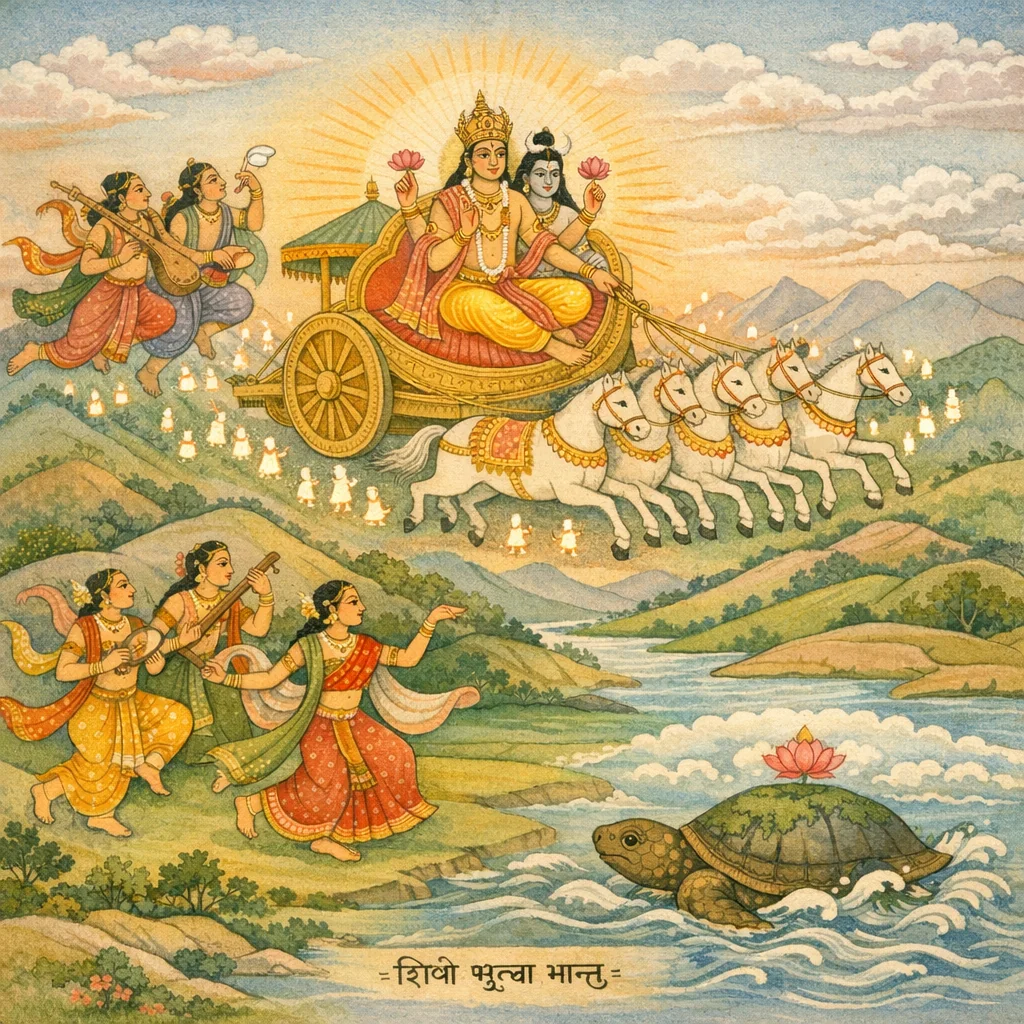
Continuing the Purāṇic account of cosmic governance, Sūta describes the divine retinue that mounts, prepares, and accompanies Sūrya’s chariot. The chapter lists the twelve Ādityas and explains their orderly service through the seasons, showing the Sun’s power sustained by regulated divine ministry. Ṛṣis praise the Sun in Vedic metres, while Gandharvas and Apsarases worship through structured music and dance, moving through notes beginning with Ṣaḍja and performing seasonal tāṇḍava. Charioteers and attendants arrange reins and harness; Nāgas bear the Lord; rākṣasas and other hosts proceed in due sequence, revealing a cosmos where even fearsome beings are integrated into order. The Bālakhilyas escort the Sun from rising to setting and are credited with heat, rain, radiance, winds, and the removal of inauspicious karma. The chapter culminates in a theological synthesis: the radiant Mahādeva/Maheśvara is identified with Bhānu (Sūrya), and the Sun is affirmed as Prajāpati and Veda-embodied—bridging Vedic authority with Śaiva–Vaiṣṇava harmony and preparing for deeper teaching on divine immanence and protection through yuga-time.
Shlokas
Verse 1
इति श्रीकूर्मपुराणे षट्साहस्त्र्यां संहितार्या पूर्वविभागे एकोनचत्वारिंशो ऽध्यायः सूत उवाच स रथो ऽधिष्ठितो देवैरादित्यैर्वसुभिस्तथा / गन्धर्वैरप्सरोभिश्च ग्रामणीसर्पराक्षसैः
Thus, in the Śrī Kūrma Purāṇa, in the Ṣaṭsāhasrī Saṃhitā, in the Pūrvabhāga, the fortieth chapter begins. Sūta said: That chariot was mounted by the gods—by the Ādityas and the Vasus as well—along with Gandharvas and Apsarases, and also by leaders of hosts, Nāgas, and Rākṣasas.
Verse 2
धातार्ऽयमाथ मित्रश्च वरुणः शक्र एव च / विवस्वानथ पूषा च पर्जन्यश्चांशुरेव च
Dhātṛ, Aryaman, Mitra, Varuṇa, and Śakra; and also Vivasvān, Pūṣan, Parjanya, and Aṃśu—these deities are proclaimed here.
Verse 3
भगस्त्वष्टा च विष्णुश्च द्वादशैते दिवाकराः / आप्यायन्ति वै भानुं वसन्तादिषु वै क्रमात्
Bhaga, Tvaṣṭṛ, and Viṣṇu—these, among the twelve solar Ādityas—nourish and strengthen the Sun, in due order, through the seasons beginning with spring.
Verse 4
पुलस्त्यः पुलहश्चात्रिर्वसिष्ठश्चाङ्गिरा भृगुः / भरद्वाजो गौतमश्च कश्यपः क्रतुरेव च
Pulastya, Pulaha, Atri, Vasiṣṭha, Aṅgiras, Bhṛgu, Bharadvāja, Gautama, Kaśyapa, and also Kratu—these sages are enumerated here.
Verse 5
जमदग्निः कौशिकश्च मुनयो ब्रह्मवादिनः / स्तुवन्ति देवं विविधैश्छन्दोभिस्ते यथाक्रमम्
Jamadagni and Kauśika—sages who proclaim Brahman—praise the Lord, each in due order, with various Vedic metres.
Verse 6
रथकृच्च रथौज्श्च रथचित्रः सुबाहुकः / रथस्वनो ऽथ वरुणः सुषेणः सेनजित् तथा
And (there were) Rathakṛt and Rathaujā; Rathacitra and Subāhuka; then Rathasvana; also Varuṇa; Suṣeṇa and likewise Senajit.
Verse 7
तार्क्ष्यश्चारिष्टनेमिश्च रथजित् सत्यजित् तथा / ग्रामण्यो देवदेवस्य कुर्वते ऽभीशुसंग्रहम्
Tārkṣya, Ariṣṭanemi, Rathajit, Satyajit, and also Grāmaṇya—attendants of the God of gods—gather and set in order the reins (and harness) for the Lord’s chariot.
Verse 8
अथ हेतिः प्रहेतिश्च पौरुषेयो वधस्तथा / सर्पो व्याघ्रस्तथापश्च वातो विद्युद् दिवाकरः
Next are weapons and counter-weapons, and also death brought about by human agency; likewise the serpent, the tiger, and cattle; the wind, lightning, and the sun.
Verse 9
ब्रह्मोपेतश्च विप्रेन्द्रा यज्ञोपेतस्तथैव च / राक्षसप्रवरा ह्येते प्रयान्ति पुरतः क्रमात्
O foremost of brāhmaṇas, those who are endowed with brahma-rites (Vedic discipline) and likewise those established in sacrificial observances—these eminent rākṣasas proceed in front, in due order, one after another.
Verse 10
वासुकिः कङ्कनीरश्च तक्षकः सर्पपुङ्गवः / एलापत्रः शङ्खपालस्तथैरावतसंज्ञितः
Vāsuki, Kaṅkanīra, and Takṣaka—the foremost among the nāgas—together with Elāpatra, Śaṅkhapāla, and the one known as Airāvata, are named.
Verse 11
धनञ्जयो महापद्मस्तथा कर्कोटको द्विजाः / कम्बलाश्वतरश्चैव वहन्त्येनं यथाक्रमम्
O twice-born sages, Dhanañjaya, Mahāpadma, and Karkoṭaka, and likewise Kambala and Aśvatara—these great nāgas—bear him in due order.
Verse 12
तुम्बुरुर्नारदो हाहा हूहूर्विश्वावसुस्तथा / उग्रसेनो वसुरुचिरर्वावसुरथापरः
Tumburu and Nārada were there; so too Hāhā and Hūhū, and Viśvāvasu. Also present were Ugrasena, Vasuruci, and moreover Vāvasuratha.
Verse 13
चित्रसेनस्तथोर्णायुर्धृतराष्ट्रो द्विजोत्तमाः / सूर्यवर्चा द्वादशैते गन्धर्वा गायतां वराः / गायन्ति विविधैर्गानैर्भानुं षड्जादिभिः क्रमात्
Citraseṇa, Orṇāyu, Dhṛtarāṣṭra, and Sūryavarcā—O best of the twice-born—these twelve Gandharvas, foremost among singers, hymn Bhānu (the Sun) with many kinds of songs, proceeding in order through the notes beginning with Ṣaḍja.
Verse 14
क्रतुस्थलाप्सरोवर्या तथान्या पुञ्जिकस्थला / मेनका सहजन्या च प्रम्लोचा च द्विजोत्तमाः
O best of the twice-born sages, the foremost Apsarā named Kratusthalā is mentioned, and also another—Puñjikasthalā; likewise Menakā, Sahajanyā, and Pramlocā.
Verse 15
अनुम्लोचा घृतीची च विश्वाची चोर्वशी तथा / अन्या च पूर्वचित्तिः स्यादन्या चैव तिलोत्तमा
Anumlocā, Ghṛtācī, Viśvācī, and also Urvaśī; likewise another is Pūrvacitti, and yet another is Tilottamā.
Verse 16
ताण्डवैर्विविधैरेनं वसन्तादिषु वै क्रमात् / तोषयन्ति महादेवं भानुमात्मानमव्ययम्
By performing many kinds of tāṇḍava dances, in due order through the seasons beginning with spring, they delight Mahādeva—who is the Sun (Bhānu) Himself, the imperishable Self (Ātman).
Verse 17
एवं देवा वसन्त्यर्के द्वौ द्वौ मासौ क्रमेण तु / सूर्यमाप्याययन्त्येते तेजसा तेजसां निधिम्
Thus, in due order, the gods dwell within the Sun for two months at a time; and by their own radiance they nourish the Sun—who is the very treasury of all splendour.
Verse 18
ग्रथितैः स्वैर्वचोभिस्तु स्तुवन्ति मुनयो रविम् / गन्धर्वाप्सरसश्चैनं नृत्यगेयैरुपासते
With their own well-composed utterances, the sages praise Ravi (the Sun); and the Gandharvas and Apsarases worship him through dance and song.
Verse 19
ग्रामणीयक्षभूतानि कुर्वते ऽभीषुसंग्रहम् / सर्पा वहन्ति देवेशं यातुधानाः प्रयान्ति च
Bands of yakṣas and bhūtas, led by their chiefs, gather together the radiances (as if marshalling rays). Serpents bear the Lord of the gods, and the yātudhānas also move along in the procession.
Verse 20
बालखिल्या नयन्त्यस्तं परिवार्योदयाद् रविम् / एते तपन्ति वर्षन्ति भान्ति वान्ति सृजन्ति च / भूतानामशुभं कर्म व्यपोहन्तीह कीर्तिताः
The Bālakhilya sages, encircling the Sun at his rising, lead him on until his setting. They give heat, send rain, shine forth, blow as winds, and also bring creation to manifestation. Here they are praised as those who dispel the inauspicious karma of living beings.
Verse 21
एते सहैव सूर्येण भ्रमन्ति दिवि सानुगाः / विमाने च स्थितो नित्यं कामगे वातरंहसि
These attendants, together with Sūrya, ceaselessly roam through the heavens. And Sūrya, ever stationed in his celestial car, moves at will—swift as the wind—traversing the sky.
Verse 22
वर्षन्तश्च तपन्तश्च ह्लादयन्तश्च वै प्रजाः / गोपयन्तीह भूतानि सर्वाणीहायुगक्षयात्
Raining, giving heat, and gladdening the creatures, they protect all beings here—safeguarding them in this world until the yuga comes to its end.
Verse 23
एतेषामेव देवानां यथावीर्यं यथातपः / यथायोगं यथासत्त्वं स एष तपति प्रभुः
In accord with the strength and austerity of these very gods—according to their discipline and innate capacity—this Lord, the Sovereign, apportions and sustains them through his own governing tapas.
Verse 24
अहोरात्रव्यवस्थानकारणं स प्रजापतिः / पितृदेवमनुष्यादीन् स सदाप्यायेद् रविः
He is Prajāpati, the very cause that establishes the order of day and night; and that Sun, Ravi, continually nourishes the Pitṛs, the Devas, human beings, and all the rest.
Verse 25
तत्र देवो महादेवो भास्वान् साक्षान्महेश्वरः / भासते वेदविदुषां नीलग्रीवः सनातनः
There Mahādeva shines—radiant, Maheśvara manifest in person—revealing himself to the knowers of the Veda: the eternal Nīlagrīva, the Blue-throated Lord.
Verse 26
स एष देवो भगवान् परमेष्ठी प्रजापतिः / स्थानं तद् विदुरादित्यं वेदज्ञा वेदविग्रहम्
He indeed is that God—the Blessed Lord—Parameṣṭhin, Prajāpati, Lord of beings. The knowers of the Veda recognize that abode as Āditya, the Sun: knower of the Veda, whose very form is the Veda itself.
Frequently Asked Questions
It depicts a regulated cosmic liturgy: Ādityas, sages, Gandharvas, Apsarases, Nāgas, and attendant hosts serve in ordered cycles (notably a two-month rotation), and by their radiance, praise, and disciplined functions they sustain Sūrya’s splendour and his capacity to heat, rain, and protect beings.
The identification is a samanvaya move: Sūrya is not only a luminary but a manifestation of Maheśvara and Prajāpati, “Veda-formed” and Veda-knowing. This integrates Vedic solar theology with Śaiva metaphysics while remaining compatible with Purāṇic devotion to Viṣṇu and the broader unity-of-Īśvara theme.