Adhyaya 23
Genealogies of Yadus and Vṛṣṇis; Navaratha’s Refuge to Sarasvatī; Rise of Sāttvata Tradition; Prelude to Kṛṣṇa-Balarāma Incarnation
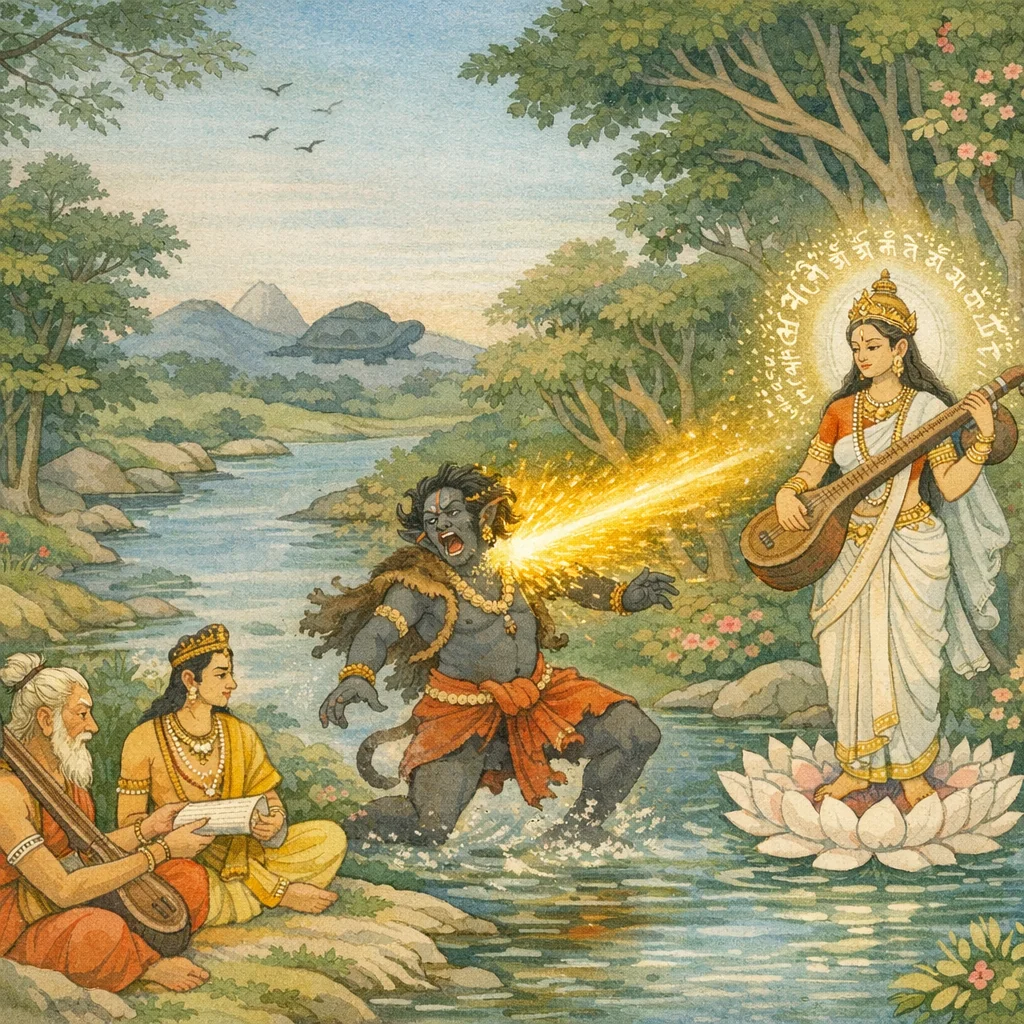
The chapter continues the purāṇic transmission by extending a long dynastic chain of kings and clans, culminating in the Yādava/Vṛṣṇi milieu. It then turns to a dharma exemplar: King Navaratha, chased by a rākṣasa, finds a hidden supreme abode guarded by Sarasvatī and takes refuge through a hymn praising her as Vāc (sacred speech), yogic power, and cosmic source. The attacker is destroyed by a radiant protector, and Navaratha establishes Sarasvatī worship in his capital, linking royal legitimacy with devotion and śakti. Returning to lineage, the text reaches Sattvata who, under Nārada’s guidance, promulgates a Vāsudeva-centered sacred treatise and inaugurates the “Sāttvata” tradition. The genealogical arc converges on the births of Saṅkarṣaṇa (Balarāma) and Kṛṣṇa (Vāsudeva), integrating sectarian strands: Viṣṇu’s descent, Devī’s yoganidrā as Kauśikī, and Śiva’s role as boon-granter. The chapter closes by foreshadowing Kṛṣṇa’s austerity to obtain Rudra as a son, preparing the next chapter’s continuation.
Shlokas
Verse 1
इति श्रीकूर्मपुराणे षट्साहस्त्र्यां संहितायां पूर्वविभागे द्वाविशो ऽध्यायः सूत उवाच क्रोष्टोरेको ऽभवत् पुत्रो वृजिनीवानिति श्रुतिः / तस्य पुत्रो महान् स्वातिरुशद्गुस्तत्सुतो ऽभवत्
Thus, in the Śrī Kūrma Purāṇa, in the six-thousand-verse Saṃhitā, in the Pūrva-bhāga, ends the twenty-second chapter (colophon). Sūta said: “Kroṣṭu had a single son—Vṛjinīvān, as is heard in tradition. His son was the illustrious Svāti, and Svāti’s son was Uśadgu.”
Verse 2
उशद्गोरभवत् पुत्रो नाम्ना चित्ररथो बली / अथ चैत्ररथिर्लोके शशबिन्दुरिति स्मृतः
From Uśadgu was born a mighty son named Citraratha. And in the world that same one (of the line), known as Caitrarathi, is remembered by the name Śaśabindu.
Verse 3
तस्य पुत्रः पृथुयशा राजाभूद् धर्मतत्परः / पृथुकर्मा च तत्पुत्रस्तस्मात् पृथुजयो ऽभवत्
His son was King Pṛthuyaśā, devoted to dharma. His son was Pṛthukarmā, and from him was born Pṛthujaya.
Verse 4
पृथुकीर्तिरभूत् तस्मात् पृथुदानस्ततो ऽभवत् / पृथुश्रवास्तस्य पुत्रस्तस्यासीत् पृथुसत्तमः
From him was born Pṛthukīrti; from Pṛthukīrti arose Pṛthudāna. His son was Pṛthuśravā, and of Pṛthuśravā was born Pṛthusattama, the best among the Pṛthus.
Verse 5
उशना तस्य पुत्रो ऽबूत् सितेषुस्तत्सुतो ऽभवत् / तस्याभूद् रुक्मकवचः परावृत् तस्य सत्तमाः
Uśanā was his son; and Siteṣu was born as his son. From Siteṣu was born Rukmakavaca; and from Rukmakavaca the excellent Parāvṛt was born.
Verse 6
परावृतः सुतो जज्ञे ज्यामघो लोकविश्रुतः / तस्माद् विदर्भः संजज्ञे विदर्भात् क्रथकैशिकौ
From Parāvṛta was born a son, Jyāmagha, renowned throughout the world. From him was born Vidarbha; and from Vidarbha were born Kratha and Kaiśika.
Verse 7
रोमपादस्तृतीयस्तु बभ्रुस्तस्यात्मजो नृपः / धृतिस्तस्याभवत् पुत्रः संस्तस्तस्याप्यभूत् सुतः
Romapāda was the third in that line. His son was the king Babhrū. Dhṛti was born as his son, and Saṃsta, in turn, was born as Dhṛti’s son.
Verse 8
संस्तस्य पुत्रो बलवान् नाम्ना विश्वसहस्तु सः / तस्य पुत्रो महावीर्यः प्रजावान् कौशिकस्ततः / अभूत् तस्य सुतो धीमान् सुमन्तुस्तत्सुतो ऽनलः
From Saṃsta was born a mighty son named Viśvasahas. His son was Mahāvīrya; thereafter came Kauśika, rich in progeny. Kauśika’s son was the wise Sumantu, and Sumantu’s son was Anala.
Verse 9
कैशिकस्य सुतश्चेदिश्चैद्यास्तस्याभवन् सुताः / तेषां प्रधानो ज्योतिष्मान् वपुष्मांस्तत्सुतो ऽभवत्
Kaiśika had a son named Cedi; from him arose the Caidya line. Among his sons, the foremost was Jyotiṣmān, and Jyotiṣmān’s son was Vapuṣmān.
Verse 10
वपुष्मतो बृहन्मेधा श्रीदेवस्तत्सुतो ऽभवत् / तस्य वीतरथो विप्रा रुद्रभक्तो महाबलः
From Vapuṣmān was born Bṛhanmedhā; and his son was Śrīdeva. O brāhmaṇas, Śrīdeva’s son was Vītaratha—mighty in strength and devoted to Rudra (Śiva).
Verse 11
क्रथस्याप्यभवत् कुन्ती वृष्णी तस्याभवत् सुतः / वृष्णेर्निवृत्तिरुत्पन्नो दशार्हस्तस्य तु द्विजाः
From Kratha was born Kuntī; and from her was born the son Vṛṣṇi. From Vṛṣṇi arose Nivṛtti; and from him, O twice-born sages, was born Daśārha.
Verse 12
दशार्हपुत्रोप्यारोहो जीमूतस्तत्सुतो ऽभवत् / जैमूतिरभवद् वीरो विकृतिः परवीरहा
From Upyāroha, the son of Daśārha, was born Jīmūta; and his son was Jaimūti. From him arose the heroic Vikṛti, a slayer of enemy-champions.
Verse 13
तस्य भीमरथः पुत्रः तस्मान्नवरथो ऽभवत् / दानधर्मरतो नित्यं सम्यक्शीलपरायणः
His son was Bhīmaratha; and from him was born Navaratha—ever devoted to the dharma of giving, constantly intent on right conduct and noble character.
Verse 14
कदाचिन्मृगयां यातो दृष्ट्वा राक्षसमूर्जितम् / दुद्राव महातविष्टो भयेन मुनिपुङ्गवाः
Once, having gone out on a hunt, the foremost of sages saw a mighty Rākṣasa, brimming with power; seized by great terror, he fled in fear into the vast forest.
Verse 15
अन्वधावत संक्रुद्धो राक्षसस्तं महाबलः / दुर्योधनो ऽग्निसंकाशः शूलासक्तमहाकरः
Then the mighty rākṣasa Duryodhana, enraged, pursued him—blazing like fire, his great hand gripping a śūla spear.
Verse 16
राजा नवरथो भीत्या नातिदूरादनुत्तमम् / अपश्यत् परमं स्थानं सरस्वत्या सुगोपितम्
King Navaratha, driven by fear, not far away beheld an unsurpassed, supreme abode—well concealed and guarded by the river-goddess Sarasvatī.
Verse 17
स तद्वेगेन महता संप्राप्य मतिमान् नृपः / ववन्दे शिरसा दृष्ट्वा साक्षाद् देवीं सरस्वतीम्
Carried along by that mighty impulse, the wise king reached the place; and on beholding the Goddess Sarasvatī manifest before him, he bowed his head in reverent homage.
Verse 18
तुष्टाव वाग्भिरिष्टाभिर्बद्धाञ्जलिरमित्रजित् / पपात दण्डवद् भूमौ त्वामहं शरणं गतः
Amitrajit, with palms joined in reverence, praised the Lord with cherished words; then he fell upon the earth like a staff and declared, “In You I have taken refuge.”
Verse 19
नमस्यामि महादेवीं साक्षाद् देवीं सरस्वतीम् / वाग्देवतामनाद्यन्तामीश्वरीं ब्रह्मचारिणीम्
I bow to the Great Goddess—Sarasvatī herself, directly manifest—the deity of sacred speech, without beginning or end, the sovereign Lady, the Brahmacāriṇī devoted to brahmanic discipline.
Verse 20
नमस्ये जगतां योनिं योगिनीं परमां कलाम् / हिरण्यगर्भमहिषीं त्रिनेत्रां चन्द्रशेखराम्
I bow to the Womb of all worlds—the supreme Yoginī, the highest divine Power. I bow to her, the royal consort of Hiraṇyagarbha, three-eyed and crowned with the moon.
Verse 21
नमस्ये परमानन्दां चित्कलां ब्रह्मरूपिणीम् / पाहि मां परमेशानि भीतं शरणमागतम्
I bow to You—Supreme Bliss itself, a radiant portion of pure Consciousness, whose very form is Brahman. O Parameśānī, protect me—frightened as I am, having come to You for refuge.
Verse 22
एतस्मिन्नन्तरे क्रुद्धो राजानं राक्षसेश्वरः / हन्तुं समागतः स्थानं यत्र देवी सरस्वती
Meanwhile, enraged, the lord of the Rākṣasas came to the very place where the Goddess Sarasvatī was, intending to slay the king.
Verse 23
समुद्यम्य तदा शूलं प्रवेष्टुं बलदर्पितः / त्रिलोकमातुस्तत्स्थानं शशाङ्कादित्यसंन्निभम्
Then, swollen with pride in his own strength, he raised his spear and sought to force his way into the abode of the Mother of the three worlds—an abode resplendent like the Moon and the Sun.
Verse 24
तदन्तरे महद् भूतं युगान्तादित्यसन्निभम् / शूलेनोरसि निर्भिद्य पातयामास तं भुवि
Meanwhile, a mighty being—radiant like the sun at the end of an age—appeared. Piercing its chest with his trident, he struck it down to the earth.
Verse 25
गच्छेत्याह महाराज न स्थातव्यं त्वया पुनः / इदानीं निर्भयस्तूर्णं स्थाने ऽस्मिन् राक्षसो हतः
“Go,” he said, “O great king; you should not remain here any longer. Now, quickly be without fear—at this very place the rākṣasa has been slain.”
Verse 26
ततः प्रणम्य हृष्टात्मा राजा नवरथः पराम् / पुरीं जगाम विप्रेन्द्राः पुरन्दरपुरोपमाम्
Then, having bowed down, King Navaratha—his heart filled with joy—set out for his splendid capital, O best of Brahmins, a city comparable to Purandara’s (Indra’s) own abode.
Verse 27
स्थापयामास देवेशीं तत्र भक्तिसमन्वितः / ईजे च विविधैर्यज्ञैर्हेमैर्देवीं सरस्वतीम्
Endowed with devotion, he established the Goddess—the supreme Lady—there; and he worshipped Goddess Sarasvatī with various sacrificial rites and offerings of gold.
Verse 28
तस्य चासीद् दशरथः पुत्रः परमधार्मिकः / देव्या भक्तो महातेजाः शकुनिस्तस्य चात्मजः
From him was born Daśaratha, a son supremely devoted to dharma. And his son was Śakuni—mighty in tejas and radiant, a devoted worshipper of the Goddess (Devī).
Verse 29
तस्मात् करम्भः संभूतो देवरातो ऽभवत् ततः / ईजे स चाश्वमेधेन देवक्षत्रश्च तत्सुतः
From him was born Karambha; and from Karambha arose Devarāta. Devarāta performed the Aśvamedha (horse-sacrifice), and his son was Devakṣatra.
Verse 30
मधुस्तस्य तु दायादस्तस्मात् कुरुवशो ऽभवत् / पुत्रद्वयमभूत् तस्य सुत्रामा चानुरेव च
Madhu was his heir; from Madhu was born Kuruvaśa. Kuruvaśa had two sons—Sutrāmā and Anu.
Verse 31
अनोस्तु पुरुकुत्सो ऽभूदंशुस्तस्य च रिक्थभाक् / अथांशोः सत्त्वतो नाम विष्णुभक्तः प्रतापवान् / महात्मा दाननिरतो धनुर्वेदविदां वरः
From Anu was born Purukutsa, and his heir was Aṁśu. Then from Aṁśu arose one named Sattvata—devoted to Viṣṇu, mighty in valor, great-souled, devoted to charity, and foremost among those skilled in Dhanurveda, the science of archery.
Verse 32
स नारदस्य वचनाद् वासुदेवार्चनान्वितम् / शास्त्रं प्रवर्तयामास कुण्डगोलादिभिः श्रुतम्
Acting on Nārada’s instruction, he set in motion a sacred śāstra endowed with the worship of Vāsudeva—one he had heard and learned from teachers such as Kuṇḍagola and others.
Verse 33
तस्य नाम्ना तु विख्यातं सात्त्वतं नाम शोभनम् / प्रवर्तते महाशास्त्रं कुण्डादीनां हितावहम्
Renowned by his very name, the splendid doctrine called “Sāttvata” came into circulation—a great sacred śāstra, beneficial for the rites beginning with the consecrated fire-pit (kuṇḍa) and related observances.
Verse 34
सात्त्वतस्तस्य पुत्रो ऽभूत् सर्वशास्त्रविशारदः / पुण्यश्लोको महाराजस्तेन वै तत्प्रवर्तितम्
From that Sāttvata was born a son, fully proficient in all the śāstras. That great king, famed for holy renown, indeed established and set that very tradition in motion.
Verse 35
सात्त्वतः सत्त्वसंपन्नः कौशल्यां सुषुवे सुतान् / अन्धकं वै महाभोजं वृष्णिं देवावृधं नृपम् / ज्येष्ठं च भजमानाख्यं धनुर्वेदविदां वरम्
Sāttvata, endowed with noble virtue, begot sons upon Kauśalyā—namely Andhaka, the great Bhoja; Vṛṣṇi; Devāvṛdha, the king; and the eldest, called Bhajamāna, foremost among those skilled in the science of archery (Dhanurveda).
Verse 36
तेषां देवावृधो राजा चचार परमं तपः / पुत्रः सर्वगुणोपेतो मम भूयादिति प्रभुः
Among them, King Devāvṛdha, the mighty lord, undertook the highest austerity, desiring: “May a son endowed with every virtue be born to me.”
Verse 37
तस्य बभ्रुरिति ख्यातः पुण्यश्लोको ऽभवन्नृपः / धार्मिको रूपसंपन्नस्तत्त्वज्ञानरतः सदा
From him was born a king renowned as Babhrū—celebrated by sacred fame—righteous in conduct, endowed with beauty and excellence, and ever devoted to the knowledge of reality (tattva-jñāna).
Verse 38
भजमानस्य सृञ्जय्यां भजमाना विजज्ञिरे / तेषां प्रधानौ विख्यातौ निमिः कृकण एव च
In the Sṛñjaya line of Bhajamāna, a woman named Bhajamānā bore sons. Among them, the two foremost and widely renowned were Nimi and Kṛkaṇa.
Verse 39
महाभोजकुले जाता भोजा वैमार्तिकास्तथा / वृष्णेः सुमित्रो बलवाननमित्रः शिनस्तथा
From the great Bhoja lineage were born the Bhojas, including the Vaimārtikas. From Vṛṣṇi also came Sumitra, the mighty Balavān, Anamitra, and likewise Śina.
Verse 40
अनमित्रादभून्निघ्नो निघ्नस्य द्वौ बभूवतुः / प्रसेनस्तु महाभागः सत्राजिन्नाम चोत्तमः
From Anamitra was born Nighna. Nighna had two sons: the illustrious Prasena, and the eminent one named Satrājit.
Verse 41
अनमित्राच्छिनिर्जज्ञे कनिष्ठाद् वृष्णिनन्दनात् / सत्यवान् सत्यसंपन्नः सत्यकस्तत्सुतो ऽभवत्
From Anamitra was born Chini; and from the younger son, the delight of the Vṛṣṇis, there arose Satyavān, endowed with truthfulness; and his son was Satyaka.
Verse 42
सात्यकिर्युयुधानस्तु तस्यासङ्गो ऽभवत् सुतः / कुणिस्तस्य सुतो धीमांस्तस्य पुत्रो युगन्धरः
From Sātyaki (also known as Yuyudhāna) was born a son named Asaṅga. Asaṅga’s son was the wise Kuṇi, and Kuṇi’s son was Yugandhara.
Verse 43
माद्रया वृष्णेः सुतो जज्ञे पृश्निर्वै यदुनन्दनः / जज्ञाते तनयौ पृश्नेः श्वफल्कश्चित्रकश्च ह
From Mādrā, Vṛṣṇi begot a son—Pṛśni, the delight of the Yadus. And Pṛśni, in turn, had two sons: Śvaphalka and Citraka.
Verse 44
श्वफल्कः काशिराजस्य सुतां भार्यामविन्दत / तस्यामजनयत् पुत्रमक्रूरं नाम धार्मिकम् / उपमङ्गुस्तथा मङ्गुरन्ये च बहवः सुताः
Śvaphalka married the daughter of the king of Kāśī. Through her he begot a son named Akrūra, renowned for righteousness; and also Upamaṅgu, Maṅgu, and many other sons.
Verse 45
अक्रूरस्य स्मृतः पुत्रो देववानिति विश्रुतः / उपदेवश्च पुण्यात्मा तयोर्विश्वप्रमाथिनौ
Akrūra is remembered to have a son renowned as Devavān; and another virtuous-souled son named Upadeva. Those two are described as subduers of the world’s adversities.
Verse 46
चित्रकस्याभवत् पुत्रः पृथुर्विपृथुरेव च / अश्वग्रीवः सुबाहुश्च सुपार्श्वकगवेषणौ
Chitraka had sons—Prithu and Viprithu; also Ashvagriva and Subahu, along with Suparshvaka and Gaveshana.
Verse 47
अन्धकात् काश्यदुहिता लेभे च चतुरः सुतान् / कुकुरं भजमानं च शुचिं कम्बलबर्हिषम्
From Andhaka, the daughter of Kaśyapa bore four sons—Kukura, Bhajamāna, Śuci, and Kambalabarhiṣ.
Verse 48
कुकुरस्य सुतो वृष्णिर्वृष्णेस्तु तनयो ऽभवत् / कपोतरोमा विपुलस्तस्य पुत्रो विलोमकः
Kukura’s son was Vṛṣṇi; and Vṛṣṇi in turn had a son. That son was Kapotaromā; from him was born Vipula; and Vipula’s son was Vilomaka.
Verse 49
तस्यासीत् तुम्बुरुसखा विद्वान् पुत्रो नलः किल / ख्यायते तस्य नामानुरनोरानकदुन्दुभिः
He indeed had a learned son named Nala, a companion of Tumburu; and his renown is proclaimed everywhere, resonant like the rolling beat of kettle-drums and great war-drums.
Verse 50
स गोवर्धनमासाद्य तताप विपुलं तपः / वरं तस्मै ददौ देवो ब्रह्मा लोकमहेश्वरः
Having reached Govardhana, he performed abundant austerity; and the god Brahmā—Lord of the worlds—granted him a boon.
Verse 51
वंशस्य चाक्षयां कीर्ति गानयोगमनुत्तमम् / गुरोरभ्यधिकं विप्राः कामरूपित्वमेव च
And (he attains) imperishable renown for his lineage, the unsurpassed discipline of sacred song and yogic absorption; and, O brāhmaṇas, even powers surpassing those of one’s teacher—indeed, the ability to assume forms at will.
Verse 52
स लब्ध्वा वरमव्यग्रो वरेण्यं वृषवाहनम् / पूजयामास गानेन स्थाणुं त्रिदशपूजितम्
Having obtained the boon, he became free from agitation and worshipped the excellent Bull-bannered Lord (Śiva), the venerable Sthāṇu adored by the gods, through hymns of praise.
Verse 53
तस्य गानरतस्याथ भगवानम्बिकापतिः / कन्यारत्नं ददौ देवो दुर्लभं त्रिदशैरपि
Then, to him who delighted in sacred song, the Blessed Lord—Ambikā’s consort—bestowed a jewel among maidens: a divine maiden so rare that even the Thirty-Three gods scarcely obtain her.
Verse 54
तया स सङ्गतो राजा गानयोगमनुत्तमम् / अशिक्षयदमित्रघ्नः प्रियां तां भ्रान्तलोचनाम्
United with her, the king—slayer of enemies—taught his beloved, whose eyes wandered in bewilderment, the unsurpassed discipline of gāna-yoga, yoga through sacred song.
Verse 55
तस्यामुत्पादयामास सुभुजं नाम शोभनम् / रूपलावण्यसंपन्नां ह्रीमतीमपि कन्यकाम्
Through her he begot a handsome son named Subhuja; and he also begot a maiden named Hrīmatī, endowed with beauty and grace.
Verse 56
ततस्तं जननी पुत्रं बाल्ये वयसि शोभनम् / शिक्षयामास विधिवद् गानविद्यां च कन्यकाम्
Then the mother, following proper tradition, trained her handsome son while he was still in childhood; and she also duly instructed the young maiden in the science of music.
Verse 57
कृतोपनयनो वेदानधीत्य विधिवद् गुरोः / उद्ववाहात्मजां कन्यां गन्धर्वाणां तु मानसीम्
Having undergone the upanayana (sacred-thread) rite and, in due form, studied the Vedas at the teacher’s side, he married a maiden of the Gandharvas, a ‘mind-born’ daughter (mānasī).
Verse 58
तस्यामुत्पादयामास पञ्च पुत्राननुत्तमान् / वीणावादनतत्त्वज्ञान् गानशास्त्रविशारदान्
In her he begot five unsurpassed sons—men who knew the true principles of vīṇā-playing and were fully accomplished in the sacred science of song.
Verse 59
पुत्रैः पौत्रैः सपत्नीको राजा गानविशारदः / पूजयामास गानेन देवं त्रिपुरनाशनम्
With his sons and grandsons, and together with his queen, the king—skilled in sacred song—worshipped the Lord, the Destroyer of Tripura, through devotional singing.
Verse 60
ह्रीमती चापि या कन्या श्रीरिवायतलोचना / सुबाहुर्नाम गन्धर्वस्तामादाय ययौ पुरीम्
And that maiden Hrīmatī—whose long eyes were like those of Śrī (Lakṣmī)—was taken away by a Gandharva named Subāhu, who then departed for his city.
Verse 61
तस्यामप्यभवन् पुत्रा गन्धर्वस्य सुतेजसः / सुषेणवीरसुग्रीवसुभोजनरवाहनाः
From her too were born the sons of that radiant Gandharva: Suṣeṇa, Vīra, Sugrīva, Subhojana, and Ravāhana.
Verse 62
अथासीदभिजित् पुत्रो वीरस्त्वानकदुन्दुभेः / पुनर्वसुश्चाभिजितः संबभूवाहुकः सुतः
Then Anakadundubhi had a valiant son named Abhijit; from Abhijit was born Punarvasu, and Punarvasu’s son was Ahuka.
Verse 63
आहुकस्योग्रसेनश्च देवकश्च द्विजोत्तमाः / देवकस्य सुता वीरा जज्ञिरे त्रिदशोपमाः
O best of the twice-born, from Āhuka were born Ugrasena and Devaka; and to Devaka were born heroic daughters, excellent and godlike in splendor.
Verse 64
देववानुपदेवश्च सुदेवो देवरक्षितः / तेषां स्वसारः सप्तासन् वसुदेवाय ता ददौ
Devavān, Upadeva, Sudeva, and Devarakṣita were also born. They had seven sisters; Vasudeva gave those sisters in marriage.
Verse 65
वृकदेवोपदेवा च तथान्या देवरक्षिता / श्रीदेवा शान्तिदेवा च सहदेवा सहदेवा च सुव्रता / देवकी चापि तासां तु वरिष्ठाभूत् सुमध्यमा
Vṛkadevopadevī, and another named Devarakṣitā; Śrīdevā, Śāntidevā, Sahadevā, again Sahadevā, and Suvratā. Among them, Devakī—fair-waisted—was the most eminent.
Verse 66
अग्रसेनस्य पुत्रो ऽभून्न्यग्रोधः कंस एव च / सुभूमी राष्ट्रपालश्च तुष्टिमाञ्छङ्कुरेव च
Agrasena had sons—Nyagrodha, and Kaṁsa as well; also Subhūmī, Rāṣṭrapāla, Tuṣṭimān, and Chaṅku.
Verse 67
भजमानादबूत् पुत्रः प्रख्यातो ऽसौ विदूरथः / तस्य शूरः शमिस्तस्मात् प्रतिक्षत्रस्ततो ऽभवत्
From Bhajamāna was born a son renowned as Vidūratha. From him came Śūra; from Śūra came Śami; and from Śami thereafter was born Pratikṣatra.
Verse 68
स्वयंभोजस्ततस्तस्माद् हृदिकः शत्रुतापनः / कृतवर्माथ तत्पुत्रो देवरस्तत्सुतः स्मृतः / स शूरस्तत्सुतो धीमान् वसुदेवो ऽथ तत्सुतः
From Svayaṃbhoja arose Hṛdika, the scorcher of foes. From him was born Kṛtavarmā; his son is remembered as Devara. Devara’s son was the valiant and wise Śūra, and from Śūra came Vasudeva—and then his son was born.
Verse 69
वसुदेवावन्महाबाहुर्वासुदेवो जगद्गुरुः / बभूव देवकीपुत्रो देवैरभ्यर्थितो हरिः
That mighty-armed Hari—Vāsudeva, the Guru of the world—became Devakī’s son, incarnating in the line of Vasudeva, earnestly entreated by the gods.
Verse 70
रोहिणी च महाभागा वसुदेवस्य शोभना / असूत पत्नी संकर्षं रामं ज्येष्ठं हलायुधम्
Rohiṇī, the illustrious and auspicious wife of Vasudeva, gave birth to Saṅkarṣaṇa—Rāma, the eldest, the wielder of the plough-weapon.
Verse 71
स एव परमात्मासौ वासुदेवो जगन्मयः / हलायुधः स्वयं साक्षाच्छेषः संकर्षणः प्रभुः
He alone is that Supreme Self—Vāsudeva, pervading the entire universe. He is the wielder of the plough-weapon; indeed, he is Śeṣa himself, Saṅkarṣaṇa, the sovereign Lord, directly manifest.
Verse 72
भृगुशापच्छलेनैव मानयन् मानुषीं तनुम् / बभूत तस्यां देवक्यां रोहिण्यामपि माधवः
Under the pretext of Bhṛgu’s curse, honoring the assumption of a human body, Mādhava manifested there—both in Devakī and also in Rohiṇī.
Verse 73
उमादेहसमुद्भूता योगनिद्रा च कौशीकी / नियोगाद् वासुदेवस्य यशोदातनया ह्यभूत्
Born from the body of Umā, that very Yogic Slumber—Kauśikī—by the command of Vāsudeva, indeed became the daughter of Yaśodā.
Verse 74
ये चान्ये वसुदेवस्य वासुदेवाग्रजाः सुताः / प्रागेव कंसस्तान् सर्वान् जघान मुनिपुङ्गवाः
And those other sons of Vasudeva who were elder brothers of Vāsudeva (Kṛṣṇa)—Kamsa had already slain them all earlier, O best of sages.
Verse 75
सुषेणश्च तथोदायी भद्रसेनो महाबलः / ऋजुदासो भद्रदासः कीर्तिमानपि पूर्वजः
And (there were) Suṣeṇa; likewise Udāyī; Bhadrasena, mighty in strength; Ṛjudāsa; Bhadradāsa; and also Kīrtimān, an ancestor of old renown.
Verse 76
हतेष्वेतेषु सर्वेषु रोहिणी वसुदेवतः / असूत रामं लोकेशं बलभद्रं हलायुधम्
When all those had been slain, Rohiṇī, by Vasudeva, gave birth to Rāma—lord of the worlds—Balabhadra, the bearer of the plough-weapon.
Verse 77
जाते ऽथ रामे देवानामादिमात्मानमच्युतम् / असूत देवकी कृष्णं श्रीवत्साङ्कितवक्षसम्
Then, after Rāma was born, Devakī gave birth to Kṛṣṇa—Acyuta, the primordial Self of the gods—whose chest is marked with the Śrīvatsa sign.
Verse 78
रेवती नाम रामस्य भार्यासीत् सुगुणान्विता / तस्यामुत्पादयामास पुत्रौ द्वौ निशठोल्मुकौ
Rāma’s wife was named Revatī, endowed with noble virtues. Through her he begot two sons—Niśaṭha and Olmuka.
Verse 79
षोडशस्त्रीसहस्त्राणि कृष्णस्याक्लिष्टकर्मणः / बभूवुरात्मजास्तासु शतशो ऽथ सहस्त्रशः
Kṛṣṇa—whose deeds are effortless and unstained—had sixteen thousand wives; through them he fathered sons in great number, in hundreds and even in thousands.
Verse 80
चारुदेष्णः सुचारुश्च चारुवेषो यशोधरः / चारुश्रवाश्चारुयशाः प्रद्युम्नः शङ्ख एव च
“(They are) Cārudeṣṇa; Sucāru, the most charming; Cāruveṣa, of lovely form and raiment; Yaśodhara, bearer of glory; Cāruśravas, of fair renown; Cāruyaśas, of radiant fame; Pradyumna; and also Śaṅkha.”
Verse 81
रुक्मिण्य वासुदेवस्यां महाबलपराक्रमाः / विशिष्टाः सर्वपुत्राणां संबभूवुरिम् सुताः
From Rukmiṇī and Vāsudeva were born these sons, foremost among all his children, endowed with great strength and heroic prowess.
Verse 82
तान् दृष्ट्वा तनयान् वीरान् रौक्मिणेयाञ्जनार्दनम् / जाम्बवत्यब्रवीत् कृष्णं भार्या तस्य शुचिस्मिता
Seeing those heroic sons—the son of Rukmiṇī and Janārdana—Jāmbavatī, his wife of pure smile, spoke to Kṛṣṇa.
Verse 83
मम त्वं पुण्डरीकाक्ष विशिष्टं गुणवत्तमम् / सुरेशसदृशं पुत्रं देहि दानवसूदन
O Lotus-eyed Lord, O slayer of the Dānavas—grant me a son: one exceptional, supremely endowed with virtues, and comparable to the king of the gods.
Verse 84
जात्बवत्या वचः श्रुत्वा जगन्नाथः स्वयं हरिः / समारेभे तपः कर्तुं तपोनिधिररिन्दमः
Hearing Jātbavatī’s words, Jagannātha—Hari Himself—began to undertake austerity; that treasury of tapas, the subduer of foes, resolved to perform penance.
Verse 85
तच्छृणुध्वं मुनिश्रेष्ठा यथासौ देवकीसुतः / दृष्ट्वा लेभे सुतं रुद्रं तप्त्वा तीव्रं महत् तपः
Hear this, O best of sages—how that son of Devakī, having performed intense and great austerity, beheld Rudra and obtained him as a son.
Frequently Asked Questions
It converts lineage into lived dharma: royal succession is not merely biological but validated by śaraṇāgati and the establishment of Devī worship, showing that sovereignty is secured through divine protection, right conduct, and ritual patronage.
In this chapter it is presented as a Vāsudeva-centered sacred treatise/tradition set in motion under Nārada’s instruction, supporting rites and observances and functioning as an early theological-ritual framework for Vaiṣṇava devotion within the Purāṇic world.
Viṣṇu’s descent as Kṛṣṇa is central, yet Devī appears as Sarasvatī (refuge and speech-power) and as Kauśikī (yoganidrā), while Śiva is invoked as the Bull-bannered Lord who grants boons—depicting complementary divine agencies rather than sectarian rivalry.
It explicitly announces Kṛṣṇa’s austerity and the vision of Rudra culminating in obtaining him as a son, functioning as a cliffhanger that the subsequent chapter is expected to narrate in detail.