Adhyaya 17
Bāṇa’s Śiva-bhakti and the Genealogy of Kaśyapa’s Descendants (Manvantara Lineages)
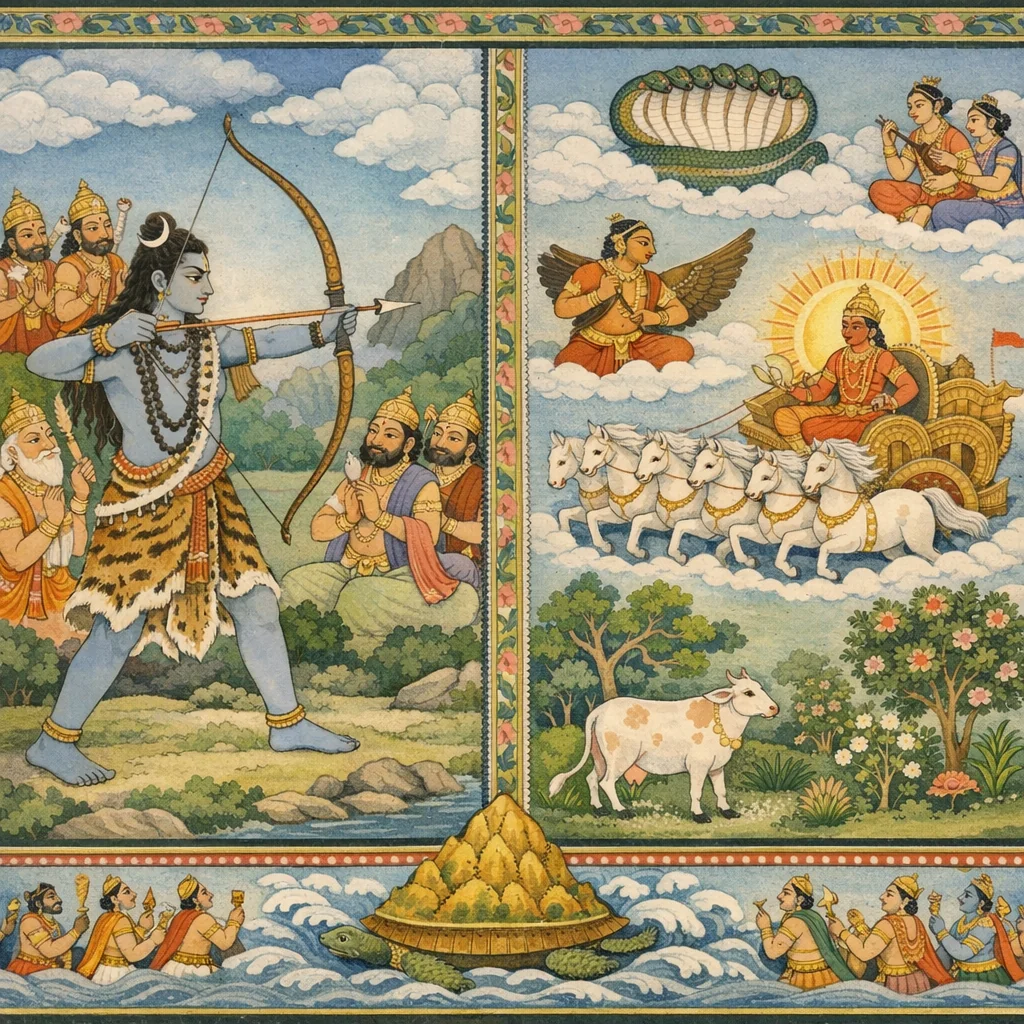
Continuing the Pūrva-bhāga’s cosmological and ancestral narration, this adhyāya introduces Bali’s son Bāṇa as a mighty asura whose fierce devotion to Śaṅkara (Śiva) strangely coexists with his oppression of Indra and the devas. The gods appeal to Mahādeva, who in divine sport burns Bāṇa’s city with a single arrow; yet Bāṇa’s taking refuge in Rudra and his liṅga-centered worship recast the episode as a revelation of Śiva’s sovereignty and the protective power of bhakti even for an asura. The chapter then turns to ordered genealogies: Danu’s formidable sons (e.g., Tārā, Śambara), Surasā’s serpents and multi-headed aerial beings, Ariṣṭā’s Gandharvas, Kadrū’s Nāgas (beginning with Ananta), and Tāmrā’s six daughters. It also lists Surabhi’s bovine lineages and Ira’s vegetal creation, along with Khasā’s Yakṣa/Rākṣasa origins. Vinatā’s sons Garuḍa and Aruṇa exemplify tapas yielding cosmic offices—Garuḍa as Viṣṇu’s mount and Aruṇa as Sūrya’s charioteer by Rudra’s favor. The adhyāya closes by praising the sin-destroying merit of hearing these accounts at the end of a manvantara, and by noting recurring cosmic functionaries (Devapraharaṇas) reborn each yuga-cycle, linking these genealogies to the Purāṇic theme of pralaya, recurrence, and cyclical restoration.
Shlokas
Verse 1
इति श्रीकूर्मपुराणे षट्साहस्त्र्यां संहितायां पूर्वविभागे षोडशो ऽध्याय बलेः पुत्रशतं त्वासीन्महाबलपराक्रमम् / तेषां प्रधानो द्युतिमान् बाणो नाम महाबलः
Thus, in the Śrī Kūrma Purāṇa—within the Ṣaṭsāhasrī Saṃhitā, in the Pūrva-bhāga—it is said: Bali had a hundred sons, endowed with great strength and heroism. Foremost among them was the radiant and mighty one named Bāṇa.
Verse 2
सो ऽतीव शङ्करे भक्तो राजा राज्यमपालयत् / त्रैलोक्यं वशमानीय बाधयामास वासवम्
That king, intensely devoted to Śaṅkara (Śiva), ruled his kingdom; and, having brought the three worlds under his control, he went on to harass Vāsava (Indra).
Verse 3
ततः शक्रादयो देवा गत्वोचुः कृत्तिवाससम् / त्वदीयो बाधते ह्यस्मान् बाणो नाम महासुरः
Then Indra and the other gods went to Kṛttivāsa (Śiva) and said: “A great asura named Bāṇa—one who belongs to you—indeed afflicts and oppresses us.”
Verse 4
व्याहृतो दैवदैः सर्वैर्देवदेवो महेश्वरः / ददाह बाणस्य पुरं शरेणैकेन लीलया
Summoned by all the gods, the God of gods—Mahādeva Maheśvara—playfully, in divine līlā, burned Bāṇa’s city with a single arrow.
Verse 5
दह्यमाने पुरे तस्मिन् बाणो रुद्रं त्रिशूलिनम् / ययौ शरणमीशानं गोपतिं नीललोहितम्
As that city was being consumed by flames, Bāṇa went for refuge to Rudra—the trident-bearing Lord Īśāna, Gopati the Protector of beings, the blue-and-reddish Nīlalohita.
Verse 6
मूर्धन्याधाय तल्लिङ्गं शांभवं भीतवर्जितः / निर्गत्य तु पुरात् तस्मात् तुष्टाव परमेश्वरम्
Placing that Śāmbhava liṅga upon his head, free from fear, he went out from that city and praised Parameśvara, the Supreme Lord.
Verse 7
संस्तुतो भगवानीशः शङ्करो नीललोहितः / गाणपत्येन बाणं तं योजयामास भावतः
Thus praised, the Blessed Lord—Śaṅkara, Nīlalohita—sincerely empowered that arrow with Gaṇapatya might, the force of Gaṇeśa.
Verse 8
अथाभवन् दनोः पुत्रास्ताराद्या ह्यतिभीषणाः / तारस्तथा शम्बरश्च कपिलः शङ्करस्तथा / स्वर्भानुर्वृषपर्वा च प्राधान्येन प्रकीर्तिताः
Then were born to Danu exceedingly dreadful sons, beginning with Tārā. Chief among them are proclaimed: Tārā, Śambara, Kapila, Śaṅkara, Svarbhānu, and Vṛṣaparvan.
Verse 9
सुरसायाः सहस्त्रं तु सर्पाणामभवद् द्विजाः / अनेकशिरसां तद्वत् खेचराणां महात्मनाम्
O twice-born sages, from Surasā were born a thousand serpents; likewise she became the mother of great-souled aerial beings with many heads.
Verse 10
अरिष्टा जनयामास गन्धर्वाणां सहस्त्रकम् / अनन्ताद्या महानागाः काद्रवेयाः प्रकीर्तिताः
Ariṣṭā brought forth a thousand Gandharvas; and the great Nāgas—beginning with Ananta—are praised as the offspring of Kadrū.
Verse 11
ताम्रा च जनयामास षट् कन्या द्विजपुङ्गवाः / शुकीं श्येनीं च भासीं च सुग्रीवाङ्गृध्रिकां शुचिम्
O best of the twice-born, Tāmrā gave birth to six daughters—Śukī, Śyenī, Bhāsī, Sugrīvā, Āṅgṛdhrikā, and Śuci.
Verse 12
गास्तथा जनयामास सुरभिर्महिषीस्तथा / इरा वृक्षलतावल्लीस्तृणजातीश्च सर्वशः
Likewise Surabhi gave birth to cows, and also to buffalo-cows; and Ira, in every way, brought forth trees, creepers, climbing vines, and all varieties of grasses.
Verse 13
खसा वै यक्षरक्षांसि मुनिरप्सरसस्तथा / रक्षोगणं क्रोधवशा जनयामास सत्तमाः
Khasā, indeed, gave rise to the Yakṣas and the Rākṣasas, as well as sages and Apsarases; and, when overcome by wrath, she produced the hosts of Rākṣasas—O best of the virtuous.
Verse 14
विनतायाश्च पुत्रौ द्वौ प्रख्यातौ गरुडारुणौ / तयोश्च गरुडो धीमान् तपस्तप्त्वा सुदुश्चरम् / प्रसादाच्छूनिलः प्राप्तो वाहनत्वं हरेः स्वयम्
Vinatā had two renowned sons—Garuḍa and Aruṇa. Of the two, the wise Garuḍa, having undertaken extremely difficult austerities, by divine grace attained for himself the very status of being Hari’s mount.
Verse 15
आराध्य तपसा रुद्रं मह्देवं तथारुणः / सारथ्ये कल्पितः पूर्वं प्रीतेनार्कस्य शंभुना
Having worshipped Rudra, the Great God, through austerity, Aruṇa was in former times appointed by Śambhu—pleased with Arka, the Sun—as the charioteer of the solar car.
Verse 16
एते कश्यपदायादाः कीर्तिताः स्थाणुजङ्गमाः / वैवस्वते ऽन्ते ह्यस्मिञ्छृण्वतां पापनाशनाः
Thus have been recounted the descendants of Kaśyapa—both the immovable and the moving orders of beings. Indeed, at the close of this Vaivasvata (Manvantara), this narration becomes a destroyer of sins for those who listen.
Verse 17
सप्तविंशत् सुताः प्रोक्ताः सोमपत्न्यश्च सुव्रताः / अरिष्टनेमिपत्नीनामपत्यानीह षोडश
Twenty-seven daughters are said to be the virtuous wives of Soma, the Moon. And here, sixteen offspring are declared to have been born from the wives of Ariṣṭanemi.
Verse 18
बहुपुत्रस्य विदुषश्चतस्त्रो विद्युतः स्मृताः / तद्वदङ्गिरसः पुत्रा ऋषयो ब्रह्मसत्कृताः
Of the wise sage Bahuputra, four sons are remembered as the Vidyutas. In the same way, the sons of Aṅgiras became ṛṣis, honored and revered by Brahmā.
Verse 19
कुशाश्वस्य तु देवर्षेर्देवप्रहरणाः सुताः / एते युगसहस्त्रान्ते जायन्ते पुनरेव हि / मन्वन्तरेषु नियतं तुल्यैः कार्यैः स्वनामभिः
But of the divine seer Kuśāśva, the sons known as the “Devapraharaṇas” are born. Indeed, at the close of each thousand-yuga cycle they are born again; and in every Manvantara, unfailingly, they carry out comparable functions, bearing the same names.
Frequently Asked Questions
The narrative holds both together: Śiva’s arrow demonstrates sovereign corrective power, while Bāṇa’s refuge, liṅga-devotion, and praise show that sincere bhakti can secure protection and reorientation even amid consequences.
It situates all moving and unmoving beings within a manvantara framework, showing cosmic order as lineage-based and role-based, where tapas and grace determine offices (e.g., Garuḍa as Viṣṇu’s vāhana; Aruṇa as Sūrya’s charioteer) and where certain functionaries recur across yuga cycles.