Adhyaya 80
Vidruma (Coral): Origin, Color-Types, Qualities, and the Introduction to Testing Pulaka, Rudhirākṣa, Sphaṭika, and Vidruma
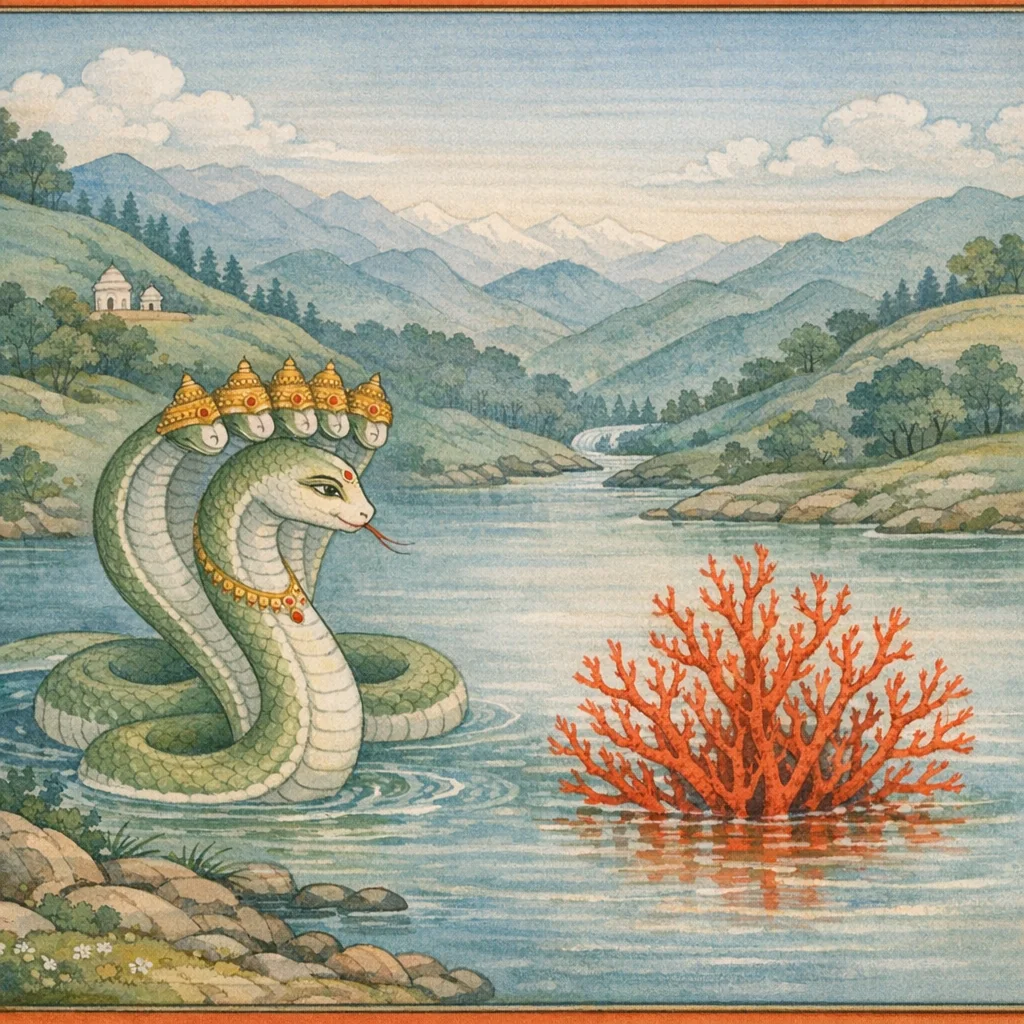
Continuing the Brahma Khanda’s practical teaching on ratna-lakṣaṇa (gem characteristics), Sūta names this chapter and recounts a mythic origin: Śeṣa casts Bala’s intestines upon Mount Kelā and other mountains, and from this vidruma (coral) arises. The account then turns to classification, praising as foremost the hare’s-blood red coral—like guñjā seeds or the japā flower—while also noting other hues and regional kinds. A rule of valuation is given: coral from inferior sources cannot attain the highest grade, though skilled workmanship may increase its worth. The chapter closes by stating coral’s worldly benefits (prosperity, grain, protection as an antidote) and by promising to teach the methods for testing Pulaka and Rudhirākṣa, as well as sphaṭika and vidruma, preparing the way for the next chapter(s) on diagnostic procedures.
Shlokas
Verse 1
नामैकोनाशीतितमो ऽध्यायः सूत उवाच / आदाय शेषस्तस्यान्त्रं बलस्य केलादिषु / चिक्षेप तत्र जायन्ते विद्रुमाः सुभहागुणाः
Sūta said: “This is the seventy-ninth chapter. Śeṣa took the intestines of Bala and cast them upon the Kelā and other mountains; from there corals (vidruma) arise, endowed with auspicious qualities.”},{
Verse 2
तत्र प्रधानं शशलोहिताभं गुञ्जाजपापुष्पनिभं प्रदिष्टम् / सुनीलकं देवकरोमकञ्च स्थानानि तेषु प्रभवं सुरागम्
There, the foremost region is described as hare’s-blood red, resembling the blossoms of guñjā and japā. Other places are said to be deep blue, and some like the hair of the gods; among them, the source of origin is declared richly colored and radiant.
Verse 3
अन्यत्र जातं च न तत्प्रधानं मूल्यं भवेच्छिल्पिविशेषयोगात् / प्रसन्नं कोमलं स्निग्धं सुरागं विद्रुमं हि तत्
If produced elsewhere, it does not attain the foremost value—its worth depends on the particular excellence of craftsmanship. Truly, genuine coral (vidruma) is clear, tender, lustrous, and richly colored.
Verse 4
धनधान्यकरं लोके विषार्तिभयनाशनम् / परीक्षा पुलकस्योक्ता रुधिराक्षस्य वै मणेः / स्फटिकस्य विद्रुमस्य रत्नज्ञानाय शौनक !
That gem is said to bring wealth and grain in the world and to remove the fear arising from poisoning. O Śaunaka, for the sake of knowledge of gems, the method of testing the Pulaka-gem and the Rudhirākṣa jewel—along with crystal (sphaṭika) and coral (vidruma)—is being set forth.
Frequently Asked Questions
Because the text explicitly ranks that hue as the premier description—likening it to guñjā and japā blossoms—and associates the ‘foremost’ status with radiance and richly colored clarity, implying an ideal standard for ratna-lakṣaṇa.
It presents a direct phala-śruti style claim: vidruma grants wealth and grain and removes fear born of poisoning. In Purāṇic ratna discourse, such effects function as both devotional validation and practical rationale for discerning authentic, high-grade stones.