Adhyaya 41
Viśvāvasu-Prayoga (Marriage Mantra), Kālarātri/Ṛkṣakarṇī Invocation, and Yantra-Rakṣā at Twilight
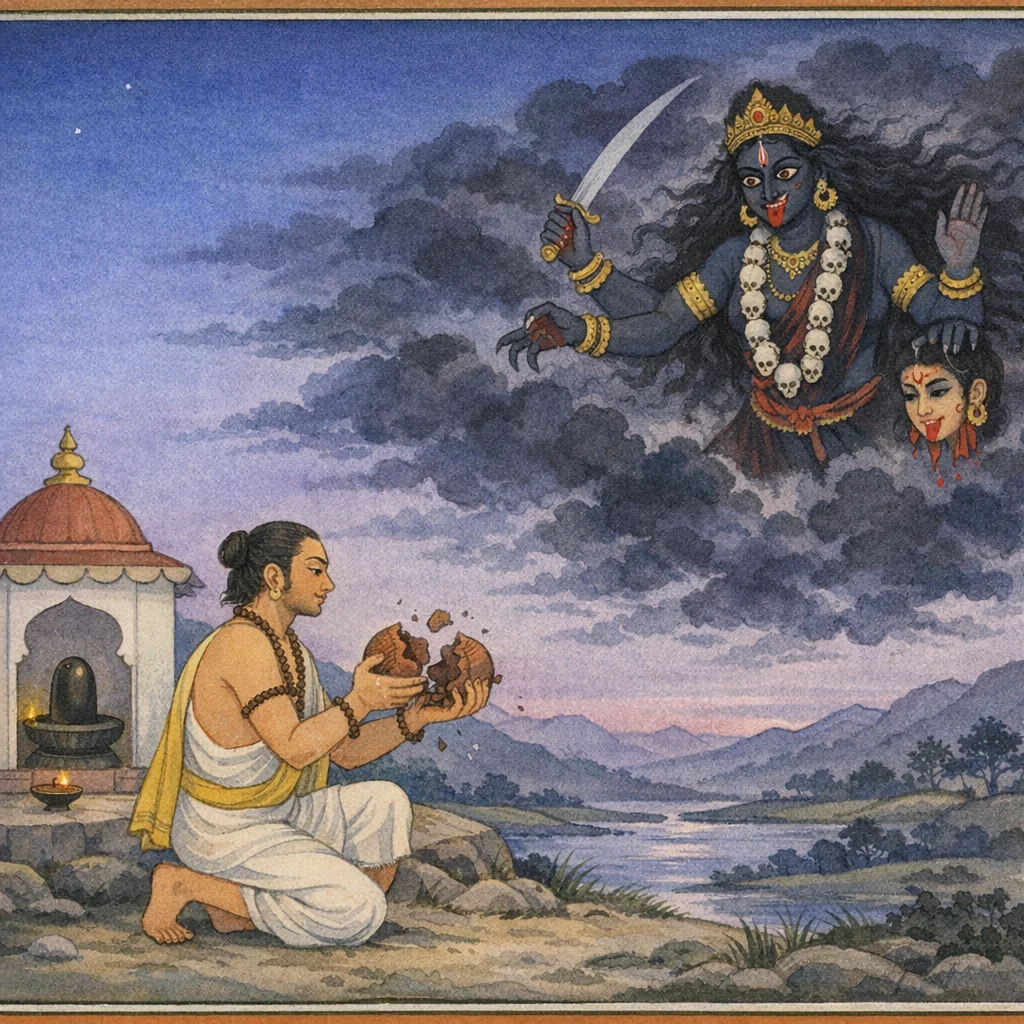
In a Purāṇic dialogue that teaches practical mantra-vidhi, Vāsudeva first gives a formula to Viśvāvasu, the Gandharva “lord over maidens,” presenting mantra-japa as a means to obtain a wife. The teaching then turns to the fierce goddess Kālarātri, identified with Ṛkṣakarṇī, whose invocation seeks time-bound death or destructive power against a specified target and states that no tithi, nakṣatra, or fasting is required. The rite is performed at twilight: the practitioner, in anger, smears the hands with blood, mutters over a liṅga, and breaks an unbaked earthen vessel—symbolic acts of subjugation and the shattering of obstacles. A final utterance salutes protective yantras and petitions a power that “stuns, deludes, and tears apart enemies” to guard the reciter from fear and calamity. The chapter closes by foreshadowing the next topic, an astrological condition in which Śukra (Venus) is afflicted, linking ritual efficacy with planetary omens.
Shlokas
Verse 1
चत्वारिंशो ऽध्यायः वासुदेव उवाच / ॐ विश्वावसुर्नाम गन्धर्वः कन्यानामधिपतिर्लभामि ते कन्यां समुत्पाद्य तस्मै विश्ववासवे स्वाहा / स्त्रीलाभो मन्त्रजाप्याच्च कालरात्रिं वदाम्यहम्
Vāsudeva said: “Om. There is a Gandharva named Viśvāvasu, lord over maidens. I obtain for you a maiden; having brought her forth, I offer her unto that Viśvāvasu—svāhā. By repeated recitation of this mantra one gains a wife; and now I shall speak of Kālarātri.”
Verse 2
ॐ नमो भगवति ऋक्षकर्णि चतुर्भुजे ऊर्ध्वकेशि त्रिनयने कालरात्रि मानुषाणां वसारुधिरभोजने अमुकस्य प्राप्तकालस्य मृत्युप्रदे हुं फट् हनहन दहदह मांसरुधिरं पचपच ऋक्षपत्नि स्वाहा / न तिथिर्न च नक्षत्रं नोपवासो विधीयते
Om. Salutations to the Blessed Goddess Ṛkṣakarṇī—four-armed, with upraised hair, three-eyed, Kālarātri, the Night of Time—who feeds upon the fat and blood of humans; O giver of death at the appointed time for such-and-such a person: huṃ, phaṭ! Strike, strike; burn, burn; cook the flesh and blood; O Ṛkṣapatnī, consort of Ṛkṣa, svāhā. For this rite, no tithi, no nakṣatra, and no upavāsa (fasting) is prescribed.
Verse 3
क्रुद्धो रक्तेन संमार्ज्य करौ ताभ्यां प्रगृह्य च / प्रदोषे संजपेल्लिङ्गमामपात्रं च मारयेत् / ॐ नमः सर्वतोयन्त्राण्येतद्यथा जम्भनि मोहनि सर्वशत्रुविदारिणि रक्षरक्ष माममुकं सर्वभयोपद्रवेभ्यः स्वाहा / शुक्रे नष्टे महादेव वक्ष्ये ऽहं द्विजपादिह
In wrath, having smeared his hands with blood and clasped them, at twilight (pradoṣa) he should mutter the mantra over the liṅga and strike down the unbaked earthen vessel. (He recites:) “Oṁ, homage—O yantras that guard on every side: so be it! O power that stuns, deludes, and rends all enemies—protect, protect me, such-and-such, from every fear and calamity. Svāhā.” “When Śukra (Venus) is afflicted, O Mahādeva, I shall declare it here, O twice-born.”
Frequently Asked Questions
Its stated aim is spouse-acquisition: repeated recitation is said to ‘gain a wife.’ The deity addressed is Viśvāvasu, presented as having authority over maidens, aligning the prayoga with kāmya (desired-result) ritual logic.
In mantra-idiom, such syllables function as forceful ‘activation’ and ‘severing/striking’ markers, commonly appearing in protective and coercive contexts. Here they match the requested actions—strike, burn, and neutralize—typical of ugra prayogas.
The twilight setting (sandhyā) is ritually charged, and the liṅga serves as a concentrated locus for japa. The accompanying act of breaking an unbaked earthen vessel externalizes the intent to shatter obstacles or hostile forces, culminating in a yantra-oriented plea for protection from fear and calamity.
It signals a transition from mantra-prayoga to omen/astrological framing—introducing planetary affliction (Śukra-pīḍā) as a condition that may require explanation or remedial measures, thereby bridging ritual action with jyotiṣa-based diagnostics.