Adhyaya 14
Lalitopākhyāna: Devagaṇa-samāgamaḥ and Śrīnagaryāḥ Nirmāṇam (Assembly of Devas; Construction and Splendor of the Divine City)
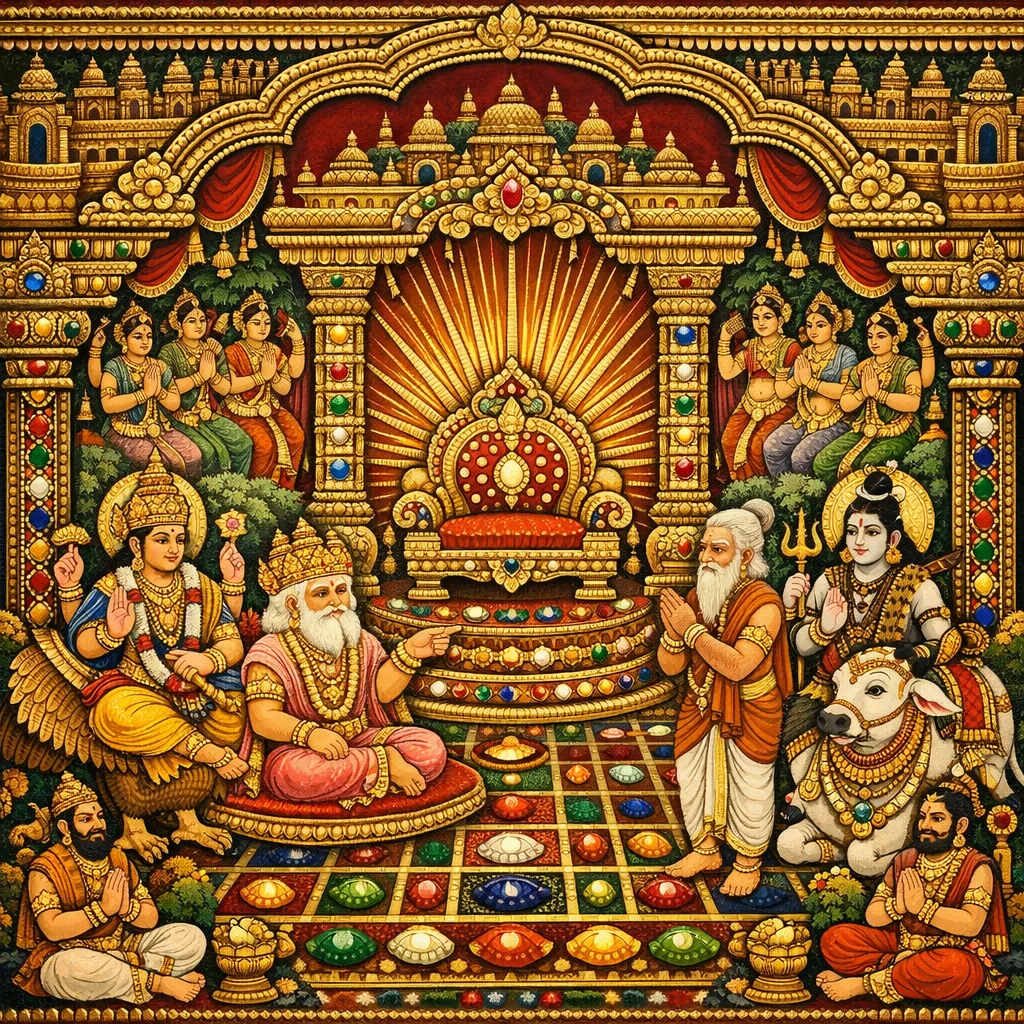
This Adhyaya, within the Hayagrīva–Agastya dialogue of the Lalitopākhyāna, describes a majestic gathering of the gods: Brahmā arrives with sages to behold the Devī; Viṣṇu comes riding Garuḍa (Vinatāsuta), and Śiva arrives upon the bull (vṛṣa). Devarṣis led by Nārada, along with apsarases, gandharvas (such as Viśvāvasu), and yakṣas assemble around the Mahādevī. Brahmā then commissions Viśvakarmā to build a divine city like Amarāvatī, with ramparts, gateways, royal roads, stables, and dwellings for officials, soldiers, dvijas, and attendant classes. The narrative turns to “cosmic court” architecture: a radiant central palace and a navaratna (nine-gem) hall with a cintāmaṇi-made throne, self-luminous like the rising sun. Brahmā reflects on sovereignty and the throne’s potency—hinting that nearness to this seat elevates rank across worlds—and the chapter closes with a normative vision of kingship and abhiṣeka, joining auspicious preceptors and ideal marks with the presence of a supportive consort, presenting rule as ritually and cosmically co-constituted.
Shlokas
Verse 1
इति श्रीब्रह्माण्डमहापुराणे उत्तरभागे हयग्रीवागस्त्यसंवादे ललितोपाख्याने ललितास्तवराजो नाम त्रयोदशो ऽध्यायः हयग्रीव उवाच एतस्मिन्नेव काले तु ब्रह्मा लोकपितामहः / आजगामाथ देवेशीं द्रष्टुकामो महर्षिभिः
Thus, in the Śrī Brahmāṇḍa Mahāpurāṇa, in the Uttara section… the thirteenth chapter called “Lalitāstavarāja.” Hayagrīva said: At that very time Brahmā, the Pitāmaha of the worlds, came with the great ṛṣis, desiring to behold the Devīśī.
Verse 2
आजगाम ततो विष्णुरारूढो विनतासुतम् / शिवो ऽपि वृषमारूढः समायातो ऽखिलेश्वरीम्
Then Viṣṇu came, mounted upon Garuḍa, the son of Vinatā; and Śiva too, riding the Bull, arrived before Akhileśvarī, the Sovereign of all.
Verse 3
देवर्षयो नारदाद्याः समाजग्मुर्महेश्वरीम् / आययुस्तां महादेवीं सर्वे चाप्सरसां गणाः
The devarṣis—Nārada and the rest—gathered before Maheśvarī; and all the hosts of apsarās came as well to that Mahādevī.
Verse 4
विश्वावसुप्रभृतयो गन्धर्वाश्चैव यक्षकाः / ब्रह्मणाथ समादिष्टो विश्वकर्मा विशांपतिः
Gandharvas led by Viśvāvasu, and the Yakṣas as well, were there; by Brahmā’s command, Viśvakarmā, lord among beings, was appointed.
Verse 5
चकार नगरं दिव्यं यथामरपुरं तथा / ततो भगवती दुर्गा सर्वमन्त्राधिदेवता
He fashioned a wondrous city, like Amarapurī itself; then Bhagavatī Durgā, the presiding deity of all mantras, appeared.
Verse 6
विद्याधिदेवता श्यामा समाजग्मतुरंबिकाम् / ब्राहयाद्या मातरश्चैव स्वस्वभूतगणावृताः
Śyāmā, the presiding goddess of Vidyā, came to Ambikā; and the Mothers beginning with Brāhmī arrived as well, each surrounded by her own hosts of bhūtas.
Verse 7
सिद्धयो ह्यणिमाद्याश्च योगिन्यश्चैव कोटिशः / भैरवाः क्षेत्रपालाश्च महाशास्ता गणाग्रणीः
Siddhis beginning with Aṇimā, and Yoginīs by countless koṭis; Bhairavas, Kṣetrapālas, and Mahāśāstā, leader of the gaṇas, were there as well.
Verse 8
महागणेश्वरः स्कन्दो बटुको वीरभद्रकः / आगत्य ते महादेवीं तुष्टुवुः प्रणतास्तदा
Mahāgaṇeśvara Skanda, Baṭuka, and Vīrabhadra came as well; then, bowing in reverence, they hymned the praise of the Mahādevī.
Verse 9
तत्राथ नगरीं रम्यां साट्टप्राकारतोरणाम् / गजाश्वरथशालाढ्यां राजवीथिविराजिताम्
Then he beheld a lovely city, adorned with lofty ramparts and splendid gateways, rich in halls for elephants, horses, and chariots, and radiant with royal avenues.
Verse 10
सामन्तानाममात्यानां सैनिकानां द्विजन्म नाम् / वेतालदासदासीनां गृहाणि रुचिराणि च
There were also charming homes of the feudatories, ministers, soldiers, and the twice-born, as well as of Vetāla-servants, slaves, and maidservants.
Verse 11
मध्यं राजगृहं दिव्यं द्वारगोपुरभूषितम् / शालाभिर्बहुभिर्युक्तं सभा भिरुषशोभितम्
In the city’s midst stood a divine royal palace, adorned with gates and lofty gopura-towers, furnished with many halls and splendid with assembly chambers.
Verse 12
सिंहासनसभां चैव नवरत्नमयीं शुभाम् / मध्ये सिंहासनं दिव्यं चिन्तामणिवीनिर्मितम्
There was an auspicious throne-hall wrought of the nine gems; and in its center stood a divine throne fashioned from the wish-fulfilling jewel, Cintāmaṇi.
Verse 13
स्वयं प्रकाशमद्वन्द्वमुदयादित्यसंनिभम् / विलोक्य चिन्तयामास ब्रह्मा लोकपितामहः
Beholding that radiance—self-luminous, beyond all duality, like the rising sun—Brahmā, the Pitāmaha of the worlds, fell into deep contemplation.
Verse 14
यस्त्वेतत्समधिष्ठाय वर्तते बालिशो ऽपिवा / पुरस्यास्य प्रभावेण सर्वलोकाधिको भवेत्
Whoever abides, taking refuge in this sacred city, even if simple-minded, by the power of this purī becomes superior among all worlds.
Verse 15
न केवला स्त्री राज्यार्हा पुरुषो ऽपि तया विना / मङ्गलाचार्यसंयुक्तं महापुरुषलक्षणम् / अनुकूलाङ्गनायुक्तमभिषिञ्चेदिति श्रुतिः
Not the woman alone is fit for sovereignty; without her, the man also is not. Śruti declares that one should anoint for kingship a man bearing the marks of a Mahāpuruṣa, attended by auspicious ācāryas, and joined with a harmonious consort.
Verse 16
विभातीयं वरारोहा भूर्ता शृङ्गारदेवता / वरो ऽस्यास्त्रिषु लोकेषु न चान्यः शङ्करादृते
This noble maiden shines forth, as though the very deity of Śṛṅgāra had taken form. In the three worlds she has no bridegroom other than Śaṅkara.
Verse 17
जडिलो मुण्डधारी च विरूपाक्षः कपालभृत् / कल्माषी भस्मदिग्धाङ्गः श्मशानास्थिविभूषणः
He is matted-haired and shaven-headed, Virūpākṣa, bearer of the skull; mottled, his limbs smeared with sacred ash, and adorned with bones from the cremation ground.
Verse 18
अमङ्गलास्पदं चैनं वरयेत्सा सुमङ्गला / इति चिन्तयमानस्य ब्रह्मणो ऽग्रे महेश्वरः
“He seems a seat of inauspiciousness; yet that Sumangalā will choose him as her bridegroom”—as Brahmā pondered thus, Maheśvara appeared before him.
Verse 19
कोटिकन्दर्पलावण्ययुक्तो दिव्य शरीरवान् / दिव्यांबरधरः स्रग्वी दिव्यगन्धानुलेपनः
Endowed with the beauty of crores of Kandarpa, he bore a divine body; clad in celestial garments, garlanded, and anointed with heavenly fragrances.
Verse 20
किरीटहारकेयूरकुण्डलाद्यैरलङ्कृतः / प्रादुर्बभूव पुरतो जगन्मोहन रुपधृक्
Adorned with crown, necklace, armlets, earrings and the like, he manifested before them, bearing a form that enchanted the whole world.
Verse 21
तं कुमारमथालिङ्ग्य ब्रह्मा लोकपितामहः / चक्रे कामेश्वरं नाम्ना कमनीयवपुर्धरम्
Then Brahmā, the grandsire of the worlds, embraced that youth and established him by the name “Kāmeśvara,” bearer of a most charming form.
Verse 22
तस्यास्तु परमाशक्तेरनुरूपो वरस्त्वयम् / इति निश्चित्य तेनैव सहितास्तामथाययुः
Determining, “This indeed is the bridegroom befitting that Supreme Śakti,” they went to her thereafter, taking him along.
Verse 23
अस्तुवंस्ते परां शक्तिं ब्रह्मविष्णुमहेश्वराः / तां दृष्ट्वा मृगशावाक्षीं कुमारो नीललोहितः / अभवन्मन्मथाविष्टो विस्मृत्य सकलाः क्रियाः
Brahmā, Viṣṇu, and Maheśvara hymned that Supreme Śakti. Seeing her, doe-eyed like a fawn, the youth Nīlalohita was seized by Manmatha and forgot all his duties and acts.
Verse 24
सापि तं वीक्ष्य तन्वङ्गो मूर्तिंमन्तमिव स्मरम् / मदनाविष्टसर्वाङ्गी स्वात्मरूपममन्यत / अन्योन्यालोकनासक्तौ तावृभौ मदनातुरौ
She too, beholding him—like Smara, Love made manifest—was seized by Madana in every limb and deemed him as her very own likeness. The two, absorbed in one another’s gaze, were tormented by desire.
Verse 25
सर्वभावविशेषज्ञौ धृतिमन्तौ मनस्विनौ / परैरज्ञातचारित्रौ मुहूर्तास्वस्थचेतनौ
Both were discerning of every subtle mood, steadfast and high-minded; their conduct was unknown to others, and for a brief while their minds were not at ease.
Verse 26
अथोवाच महादेवीं ब्रह्मा लोकैकनायिकाम् / इमे देवाश्च ऋषयो गन्धर्वाप्सरसां गणाः / त्वामीशां द्रष्टुमिच्छन्ति सप्रियां परमाहवे
Then Brahmā spoke to Mahādevī, the sole sovereign of the worlds: “These gods, these ṛṣis, and the hosts of gandharvas and apsarases, O Lady, long to behold you with your beloved in the supreme assembly.”
Verse 27
को वानुरूपस्ते देवि प्रियो धन्यतमः पुमान् / लोकसंरक्षणार्थाय भजस्व पुरुषं परम्
O Goddess, who is the man most blessed—worthy of you and dear to you? For the safeguarding of the worlds, choose the Supreme Puruṣa.
Verse 28
राज्ञी भव पुरस्यास्य स्थिता भव वरासने / अभिषिक्तां महाभागैर्देवार्षे भिरकल्मषैः
Become the queen of this city; abide upon the finest throne. Let the stainless, most fortunate devarṣis anoint you with the sacred abhiṣeka.
Verse 29
साम्राज्यचिह्नसंयुक्तां सर्वाभरणसंयुताम् / सप्रियामासनगतां द्रष्टुमिच्छामहे वयम्
We long to behold the Goddess, bearing the emblems of sovereignty, adorned with every ornament, seated upon the throne together with her beloved.
Frequently Asked Questions
It is narrated by Hayagrīva within the Hayagrīva–Agastya saṃvāda of the Lalitopākhyāna, describing a ceremonial convergence of deities and attendant beings around the Mahādevī.
The chapter enumerates layered divine classes—Trimūrti, devarṣis, apsarases, gandharvas, yakṣas, mātr̥kās, siddhis, yoginīs, bhairavas, kṣetrapālas, and major gaṇa leaders (Gaṇeśa, Skanda, Vīrabhadra). This functions as cosmological metadata, mapping the Devī’s court as a totalizing hierarchy of beings.
The divine city (built by Viśvakarmā) and the self-luminous cintāmaṇi throne encode Shākta sovereignty: the Devī’s seat becomes a cosmogram of authority, where ritual enthronement, auspicious order, and the presence of the consort motif articulate sacral kingship and cosmic legitimacy.