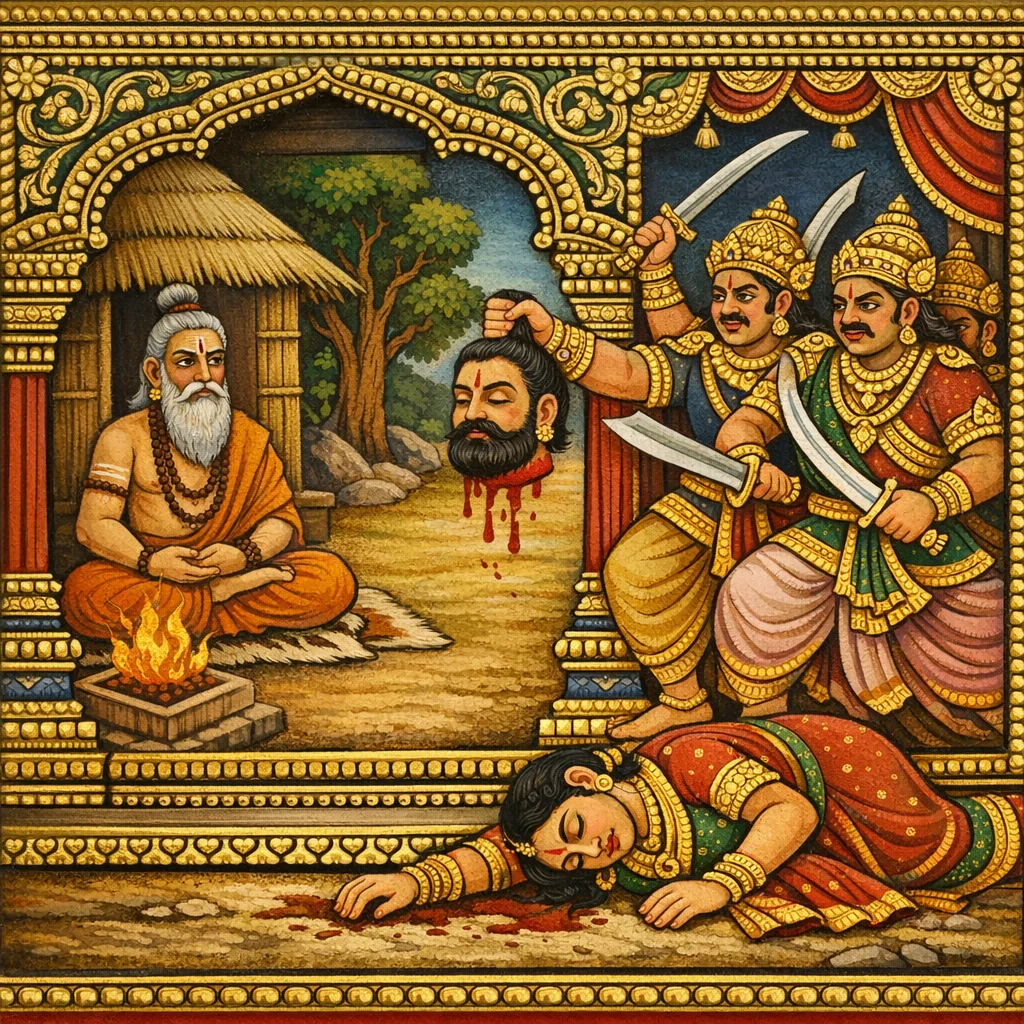
Adhyaya 45
Jamadagni-Āśrama-Ākramaṇa (Attack on Jamadagni’s Hermitage) / जमदग्न्याश्रमाक्रमणम्
Vasiṣṭha narrates how a Kshatriya hunting party, accompanied by an army, rested by the Narmadā river. Upon discovering Jamadagni's hermitage and hearing his son is Rāma (Paraśurāma), old enmities resurfaced. Seeking revenge, they attacked the defenseless ashram, beheaded Jamadagni, and fled. Reṇukā died of shock. The sons performed the funeral rites for their parents.
Shlokas
Verse 1
इति श्रीब्रह्माण्डे महापुराणे वायुप्रोक्ते मध्यमभागे तृतीय उपोद्धातपादे सगरोपाख्याने भार्गवचरिते चतुश्चत्वारिंशत्तमो ऽध्यायः // ४४// वसिष्ठ उवाच ततः कदाचिद्विपिने चतुरङ्गबलान्वितः / मृगयामगमच्छूरः शूरसेनादिभिः सह
Thus ends the forty-fourth chapter of the Śrī Brahmāṇḍa Mahāpurāṇa, in the middle section spoken by Vāyu, in the third Upoddhāta-pāda, within the Sagara narrative and the Bhārgava account. Vasiṣṭha said: Then, on one occasion, that hero—accompanied by the fourfold army—went into the forest for the hunt together with Śūrasena and others.
Verse 2
ते प्रविश्य महारण्यं हत्वा बहुविधान्मृगान् / जग्मुस्तृषार्त्ता मध्याह्ने सरितं नर्मदामनु
Entering the great forest, they slew many kinds of deer; then, tormented by thirst, at midday they made for the river Narmadā.
Verse 3
तत्र स्नात्वा च पीत्वा च वारि नद्या गतश्रमाः / गच्छन्तो ददृशुर्मार्गो जमदग्नेरथाश्रमम्
There they bathed and drank the river’s water, and their weariness was dispelled. As they went on, they beheld on the way the hermitage of Jamadagni.
Verse 4
द्दष्ट्वाश्रमपदं रम्यं मुनीनागच्छतः पथि / कस्येदमिति पप्रच्छुर्भाविकर्मप्रचोदिताः
As the sages went along the path, they beheld a lovely hermitage-site and, urged by destiny’s karma, asked, “Whose is this?”
Verse 5
ते प्रोचुरतिशान्तात्मा जमदग्नेर्महातपाः / वसत्यस्मिन्सुतो यस्य रामः शस्त्रभृतां वरः
They replied, “This is the hermitage of the great ascetic Jamadagni, of supremely tranquil soul; here dwells his son Rama, foremost among weapon-bearers.”
Verse 6
तछ्रुत्वा भीरभूत्तेषां रामनामानुकीर्त्तनात् / क्रोधं प्रसङ्यानृशंस्यं पूर्ववैरमनुस्मरन्
Hearing this, they were seized with fear at the very utterance of Rama’s name; remembering their former enmity, they flared up in ruthless wrath.
Verse 7
अथ ते प्रोचुरन्योन्यं पितृहन्तुर्वधात्पितुः / वैर निर्यातनं किं तु करिष्यामो दिशाधुना
Then they said to one another, “For our father’s slaying, the feud against the slayer of fathers must be paid back; but what are we to do now?”
Verse 8
इत्यक्त्वा खड्गहस्तास्ते संप्रविश्य तदाश्रमम् / प्रजाघ्निरे प्रयातेषु मुनिवीरेषु सर्वतः
So saying, swords in hand, they burst into that hermitage; and when the heroic sages had gone off in every direction, they slew (those who remained there).
Verse 9
तं हत्वास्य शिरो हृत्वा निषादा इव निर्दयाः / प्रययुस्ते दुरात्मानः सबलाः स्वपुरीं प्रति
Having killed him and severed his head, those wicked souls, merciless like hunters, departed towards their city with their army.
Verse 10
पुत्रास्तस्य महात्मानौ दृष्ट्वा स्वपितरं हतम् / परिवार्य महाराज रुरुदुः शोककर्शिताः
O Great King, seeing their father slain, his noble sons surrounded him and wept, emaciated by grief.
Verse 11
भर्त्तारं निहतं भूमौ पतितं वीक्ष्य रेणुका / पपात मूर्च्छिता सद्यो लतेवाशनिताडिता
Seeing her husband slain and fallen upon the ground, Renuka instantly collapsed in a faint, like a vine struck by lightning.
Verse 12
सा स्वचेतसि संमूच्छ्य शोकपावकदीपिताः / दूरप्रनष्टसंज्ञेव सद्यः प्राणैर्व्ययुज्यत
Overwhelmed within her mind and inflamed by the fire of grief, she immediately parted with her life-breath, as if her consciousness had completely vanished.
Verse 13
अनालपन्त्यां तस्यां तु संज्ञां याता हि ते पुनः / न्यपतन्मूर्च्छिता भूमौ निमग्नाः शोकसागरे
When she did not speak, they regained consciousness, but immersed in an ocean of grief, they fell fainting to the ground once more.
Verse 14
ततस्तपोधना ये ऽन्ये तत्त पोवनवासिनः / समेत्याश्वासयामासुस्तुल्यदुःखाः सुतान्मुने
Then other sages, rich in austerity and dwelling in that sanctified forest, gathered and came to console those sons, who were burdened with the same sorrow, O Muni.
Verse 15
सांत्व्यमाना मुनिगणैर्जामदग्न्या यथाविधि / आधक्षुर्वचसा तेषामग्नौ पित्रोः कलेवरे
When they had been consoled by the hosts of sages in due rite, the descendants of Jamadagni, at their word, consigned the bodies of their father and mother to the sacred fire.
Verse 16
चक्रुरेव तदूर्द्ध्वं वै यत्कर्त्तव्यमनन्तरम् / पित्रोर्मरणदुःखेन पीड्यमाना दिवानिशम्
Thereafter they did at once what had to be done next; yet, stricken by the sorrow of their parents’ death, they were afflicted day and night.
Verse 17
ततः काले गते रामः समानां द्वादशावधौ / निवृत्तस्तपसः सख्या सहागादाश्रमं पितुः
Then, when time had passed and the span of twelve years was complete, Rama withdrew from his austerities and, with his companion, went to his father’s āśrama.
Frequently Asked Questions
The Bhārgava/Jāmadagnya cycle: the killing of Jamadagni and the collapse of Reṇukā function as the catalytic event that propels Paraśurāma’s subsequent lineage-defining actions.
The episode is placed in a mahāraṇya (great forest) and explicitly along the Narmadā River, with the route (mārga) leading to Jamadagni’s āśrama serving as the narrative locator.
No. The sampled verses are firmly within a Bhārgava/Paraśurāma-linked genealogical narrative and āśrama-violation motif, not the Lalitopākhyāna’s Śākta-vidyā or yantra discourse.