Adhyaya 4
Jayā-devāḥ Mantraśarīratvaṃ, Vairāgya, and Brahmā’s Śāpa (The Jayas’ Refusal of Progeny)
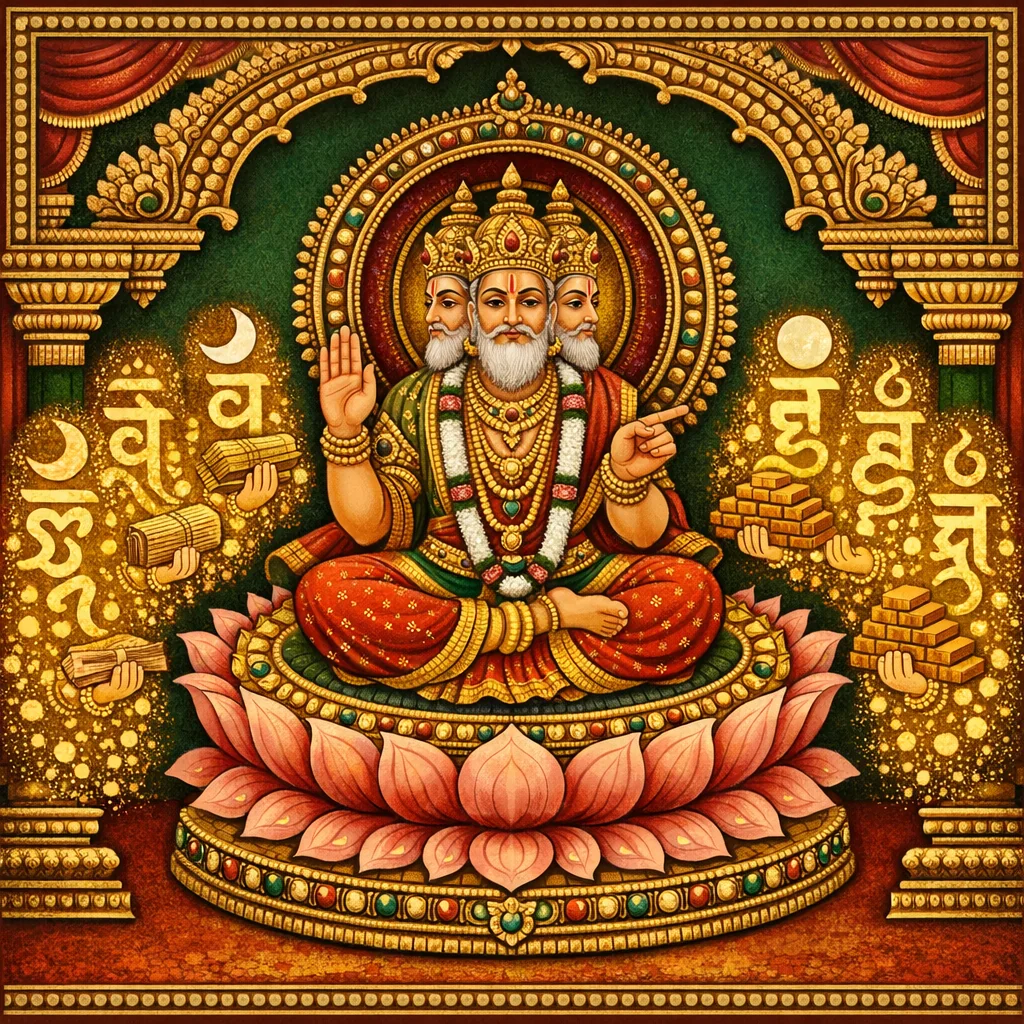
This chapter, framed as Sūta’s narration, tells how Brahmā creates a class of deities called the Jayas, expressly “mantra-bodied” (mantraśarīra) and meant for prajā—the continuation of creation. A list-like run of ritual/cosmic names and functions (Darśa, Paurṇamāsa, Bṛhatsāman, Rathantara; Citi/Suciti; Ākūti/Kūti; Vijñāta/Vijñātā; Manā; and Yajña as a twelfth) suggests they embody Vedic sacrificial structures rather than merely humanlike forms. Yet the Jayas, reflecting on karma’s decay-bound fruits and the burden of birth and continuity, grow disenchanted: they renounce artha, dharma, and kāma, seek ajanmā (non-birth), and turn toward supreme knowledge. Brahmā takes this as refusal of their creative mandate, reproaches them, and curses them to undergo “return” (āvṛtti) seven times. The Jayas submit and ask forgiveness, and Brahmā restates the cosmic principle that beings are not autonomous, but experience auspicious and inauspicious results within the order proceeding from him. The chapter thus highlights the tension between nivṛtti (renunciation) and pravṛtti (procreative/ritual activity) within the Sṛṣṭi program.
Shlokas
Verse 1
इति श्रीब्रह्माण्डे महापुराणे वायुप्रोक्ते मध्यभागे तृतीय उपोद्धातपादे स्वयंभूत्रैगुण्यस्वरूपवर्णनं नाम तृतीयो ऽध्यायः सूत उवाच ब्रह्मणा वै मुखात्सृष्टा जया देवाः प्रजेप्सया / सर्वे मन्त्रशरीरास्ते स्मृता मन्वन्तरेष्विह
Thus, in the Śrī Brahmāṇḍa Mahāpurāṇa, in the middle section proclaimed by Vāyu, within the third Upoddhāta-pāda, is the third chapter called “The Description of Svayambhū’s Form as the Three Guṇas.” Sūta said: Desiring progeny, Brahmā created from his mouth the deities named Jayā. All of them are remembered as having bodies of mantra, and are recalled here across the Manvantaras.
Verse 2
दर्शश्च पौर्णमासश्च बृहत्साम रथन्तरम् / चितिश्च सुचितिश्चैव ह्याकूतिः कूतिरेव च
Darśa and Paurṇamāsa, Bṛhatsāma and Rathantara; also Citi and Suciti, and likewise Ākūti and Kūti.
Verse 3
विज्ञातश्चैव विज्ञाता मना यज्ञश्च द्वादशः / दाराग्निहोत्रसंबन्धं वितत्य यजतेति च
Vijñāta and Vijñātā, Manā, and the twelfth, Yajña; and it is said that, extending the bond of wife (dārā) and the Agnihotra rite, he performs the act of sacrifice.
Verse 4
एवमुक्त्वा तु तान्ब्रह्मा तत्रैवान्तरधात्प्रभुः / ततस्ते नाभ्यनन्दन्त तद्वाक्यं परमेष्ठिनः
Having spoken thus, the Lord Brahmā vanished there itself. Then they did not rejoice in, nor gladly accept, the words of Parameṣṭhin.
Verse 5
संन्यस्येह च कर्माणि वासनाः कर्मजाश्च वै / यमेष्वंवावन्तिष्ठन्ते दोषं दृष्ट्वा तु कर्मसु
Here they renounced actions, and also the impressions born of karma; seeing the fault within deeds, they remained established in yama and niyama.
Verse 6
क्षयाति शययुक्तं च ते दृष्ट्वा कर्मणां फलम् / जुगुप्संतः प्रसूतिं च निःसत्त्वा निर्ममाभवन्
Seeing that the fruits of karma are bound to decline and excess, they grew disgusted with rebirth; becoming unattached and free from the sense of ‘mine’.
Verse 7
अजन्म काङ्क्षमाणास्ते निर्मुक्ता दोषदर्शिनः / अर्थं धर्मं च कामं च हित्वा ते वै व्यवस्थिताः
Longing for the unborn state, freed and discerning faults, they abandoned artha, dharma, and kama, and stood firmly established.
Verse 8
परमं ज्ञानमास्थाय तत्संक्षिप्य सुसंस्थिताः / तेषां तु तमभिप्रायं ज्ञात्वा ब्रह्मा तु कोपितः
Taking refuge in supreme knowledge, they gathered it into essence and stood well established; knowing their intent, Brahmā became angered.
Verse 9
तानब्रवीत्ततो ब्रह्मा निरुत्साहान्सुरानथ / प्रजार्थमिह यूयं वै मया सृष्टाः स्थ नान्यथा
Then Brahmā spoke to those disheartened devas: “For the sake of progeny you were created by me here—never otherwise.”
Verse 10
प्रसूयध्वं यजध्वं चेत्युक्तवानस्मि वः पुरा / यस्माद्वाक्यमनादृत्य मम वैराग्यमास्थिताः
Long ago I told you, “Beget offspring and perform sacrifice (yajña).” Yet, disregarding my word, you have taken refuge in vairāgya, the path of renunciation.
Verse 11
जुगुप्समानाः स्वं जन्म संततिं नाभ्यनन्दत / कर्मणां न कृतो ऽभ्यासो ह्यमृतत्वाभिकाङ्क्षया
Loathing their own birth and lineage, they took no joy in it. And though they yearned for immortality, they did not cultivate the practice of sacred action (karma).
Verse 12
तस्माद्यूयमिहावृत्तिं सप्तकृत्वो ह्यवाप्स्यथ / ते शप्ता ब्रह्मणा देवा जयास्तं वै प्रसादयन्
Therefore, here you shall undergo the return (āvṛtti) seven times—seven rounds of rebirth. The devas called Jaya, cursed by Brahmā, sought to appease him.
Verse 13
क्षमास्माकं महादेव यदज्ञानात्मकं प्रभो / प्रणतान्वै सानुनयं ब्रह्मा तानब्रवीत्पुनः
O Mahādeva, O Lord, forgive what has arisen from our ignorance. As they bowed in humble supplication, Brahmā spoke to them again.
Verse 14
लोके ऽप्यथानुभुञ्जीत कः स्वातन्त्र्यमिहार्हति / मयागतं तु सर्वं हि कथमच्छन्दतो मम
Even in the world, one experiences only what is allotted; who here is worthy of absolute freedom? All things have come from Me—how could anything occur against My will?
Verse 15
प्रतिपत्स्यन्ति भूतानि शुभं वा यदि वोत्तरम् / लोके यदपि किञ्चिद्वैशं वा शं वा व्यवस्थितम्
Beings will meet with the auspicious or the inauspicious—whatever the final outcome may be; in this world, whatever is ordained as welfare or woe comes to pass.
Verse 16
बुद्ध्यात्मना मया व्याप्तं को मां लोके ऽतिवर्त्तयेत् / भूताना मीहितं यच्च यच्चाप्येषां विचिन्तितम्
As the Self in the form of awakened intelligence, I pervade all; who in this world could surpass Me? Whatever beings desire and whatever they ponder within—(all is within My knowing).
Verse 17
तथोपचरितं यच्च तत्सर्वं विदितं मम / मया बद्धमिदं सर्वं चजगत्स्थावरजङ्गमम्
Whatever is carried out in deed and conduct—of all that I am aware; this entire world, the unmoving and the moving alike, is bound together by Me.
Verse 18
आशामयेन बन्धेन कस्तं छेत्तुमिहोत्सहेत् / यस्माद्वहति दृप्तो वै सर्वार्थमिह नान्यथा
Who here would dare to sever the bond made of hope? For it, swollen with pride, bears along every aim in this world—never otherwise.
Verse 19
इति कर्माण्यनारभ्य कामं छन्दाद्विमोक्षते / एवं संभाष्य तान्देवान् जयानध्यात्मचेतसः
“Thus, without setting actions in motion, one is freed from desire by one’s own resolve.” Having spoken so, Jaya—his mind established in the inner Self—addressed those Devas.
Verse 20
अथ वीक्ष्य पुनश्चाह ध्रुवं दड्यान्प्रजापतिः / यस्मान्मानभिसंधाय सन्यासादिः कृतः सुराः
Then, looking again, Prajāpati spoke once more to Dhruva: “For, with pride in view, the Devas have undertaken sannyāsa and other sacred disciplines.”
Verse 21
तस्मात्स विपुलायत्तो व्यापारस्त्वथ मत्कृतः / भविता च सुखोदर्के दिव्यभावेन जायताम्
Therefore this vast undertaking has been ordained by me; and its outcome shall be blissful—be born endowed with a divine nature.
Verse 22
आत्मच्छन्देन वो जन्म भविष्यति सुरोत्तमाः / मन्वन्तरेषु संसिद्धाः सप्तस्वाविर्भविष्यथ
O best of the Devas, your birth shall come by your own free will; and, perfected in the Manvantaras, you shall manifest seven times.
Verse 23
वैवस्वतान्तेषु सुरास्तथा स्वायंभुवादिषु / एवं च ब्रह्मणा तत्र श्लोको गीतः पुरातनः
At the close of the Vaivasvata Manvantara, and likewise in the Svāyambhuva and other Manvantaras, the Devas shall be the same; thus did Brahmā there sing this ancient verse.
Verse 24
त्रयी विद्या ब्रह्ममयप्रसूतिः श्राद्धं तपो यज्ञमनुप्रदानम् / एतानि नित्यैः महसा रजोभिर्भूत्वा विभुर्वसते ऽन्यत्प्रशस्तम्
The Trayi-vidyā, the lore of the three Vedas, is a birth wrought of Brahman; śrāddha, austerity, yajña, and sacred giving—becoming these eternal splendors, the all-pervading Lord abides; yet beyond this, another is praised as most excellent.
Verse 25
एवं श्लोकार्थमुक्त्वा तु जयान्देवानथाब्रवीत् / वैवस्वतेंऽतरेतीते मत्समीपमिहैष्यथ
Thus, having spoken the meaning of the verse, he said to the gods called Jaya: “When the Vaivasvata Manvantara has passed, you shall come here into my presence.”
Verse 26
ततो देवस्तिरोभूत ईश्वरो ङ्यकुतोभयः / प्रपन्नाधारणामाद्यां युक्त्वा योगबलान्विताम्
Then that god—the Lord, wholly fearless—vanished from sight; and, endowed with yogic power, he entered the primordial dhāraṇā, the support of those who seek refuge.
Verse 27
ततस्तेन रुषा शप्तास्ते ऽभवन्द्वादशाजिताः / जया इति समाख्याताः कृता एवं विसन्निभाः
Then, cursed by him in wrath, they became the twelve Ajitas; they were renowned by the name Jaya, and thus their condition was ordained.
Verse 28
ततः स्वायंभुवे तस्मिन्सर्गे ऽतीते तु वै सुराः / पुनस्ते तुषिता देवा जाताः स्वारोचिषेंऽतरे
Thereafter, when that creation in the Svāyambhuva Manvantara had passed, those suras were born again as the Tuṣita gods in the Svārociṣa Manvantara.
Verse 29
उत्तमस्य मनोः पुत्राः सत्यायां जज्ञिरे तदा / ततः सत्याः स्मृता देवा औत्तमे चान्तरे मनोः
Then the sons of Manu Uttama were born of Satyā; therefore, in the Manvantara of Uttama, those gods are remembered by the name Satya.
Verse 30
हरिण्यां नाम तुषिता जज्ञिरे द्वादशेव तु / हरयोनाम ते देवा यज्ञभाजस्तदाभवन्
In the Manvantara called Harinyā, twelve Tuṣita Devas were born. Then those gods were known as the Harayas and became entitled to their share in the yajña.
Verse 31
ततस्ते हरयो देवाः प्राप्ते चारिष्ठवेन्तरे?// विकुण्ठायां पुनस्ते वै वरिष्ठा जज्ञिरे सुराः
Then, when the Cāriṣṭa Manvantara arrived, those Haraya Devas were born again in Vikuṇṭhā as the most excellent of the Suras.
Verse 32
वैकुण्ठा नाम ते देवाः पञ्चमस्यान्तरे मानोः / ततस्ते वै पुनर्देवा वैकुण्ठाः प्राप्य चाक्षुषम्
In the Manvantara of the fifth Manu, those gods were called the Vaikuṇṭhas. Thereafter, the Vaikuṇṭha Devas attained the Cākṣuṣa Manvantara.
Verse 33
ततस्ते वै पुनः साध्याः संक्षीणे चाक्षुषेन्तरे / उपस्थिते पुनः सर्गे मनोर्वैवस्वतस्य ह
Then, when the Cākṣuṣa Manvantara had run its course, they were again known as the Sādhyas; and when the renewed creation arose in the time of Manu Vaivasvata, they manifested once more.
Verse 34
अंशेन साध्यास्ते ऽदित्यां मारीचात्कश्यपात्पुनः / जज्ञिरे द्वादशादित्या वर्त्तमानेन्तरं सुराः
Those Sādhyas, as a partial manifestation (aṃśa), were born again in Aditi through Kaśyapa of Marīci’s lineage. In the present Manvantara, they became the twelve Āditya Devas.
Verse 35
यदा चैते समुत्पन्नाश्चाक्षुषस्यान्तरे मनोः / शप्ताः स्वयंभुवा साध्या जज्ञिरे द्वादशामराः
When these arose in the Cākṣuṣa Manvantara, in the time of Manu, the Sādhya—cursed by Svayambhū—were born as twelve immortal gods.
Verse 36
एवं शृणोति यो मर्त्योजयस्तस्य भवेत्सदा / जयानां श्रद्धया युक्तः प्रत्यध्यायं तु गच्छति
Whoever, though mortal, listens in this manner—victory is ever his; endowed with faith in the cries of Jaya, he proceeds through each chapter.
Verse 37
इत्येता वृत्तयः सप्त देवानां जन्मलक्षणाः / परिक्रान्ता मया वो ऽद्या किं भूयः श्रोतुमिच्छथ
Thus have I recounted to you today these seven accounts, the marks of the gods’ births; what more do you wish to hear?
Frequently Asked Questions
No royal or rishi Vamsha is formally cataloged in the sampled passage; the focus is Srishti-administration: Brahmā’s creation of the Jayas as functional/mantra-bodied beings and the enforcement of their role in cosmic continuity.
These names point to Vedic-sacrificial and Sāman structures, implying the Jayas embody ritual/cosmic functions (mantraśarīra) rather than acting only as individual personalities—linking creation directly to yajña as a sustaining mechanism.
It encodes compulsory participation in cyclical existence: renunciation that rejects the procreative mandate is checked by a cosmological rule of return, aligning individual aspiration for ajanmā with the larger Srishti requirement of continuity across cycles.