Adhyaya 18
Nakṣatra-Śrāddha Phala-Vidhi (Results of Śrāddha by Asterism)
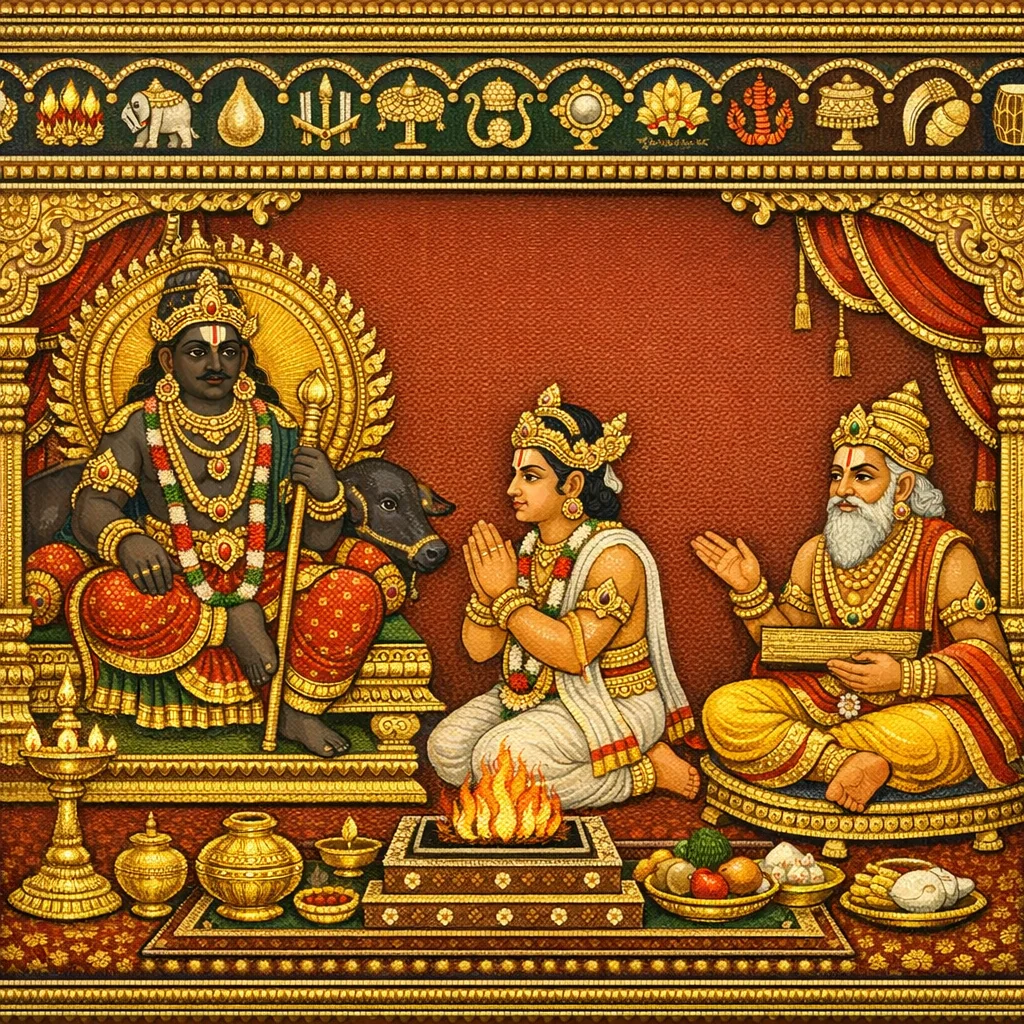
This brief adhyāya, within the Śrāddhakalpa tradition, is an astral prescriptive catalogue. Bṛhaspati, recalling Yama’s earlier instruction to King Śaśabindu, lists the fruits (phala) of performing śrāddha when particular nakṣatras are in conjunction. It proceeds as a chain of asterism-to-benefit mappings: Kṛttikā strengthens firm vows and grants heavenly radiance; Rohiṇī brings progeny and tejas; Ārdrā yields harsh results; Punarvasu and Tiṣya/Puṣya promise prosperity and nourishment; Āśleṣā and Maghā give heroic sons and social eminence; Phālgunī bestows good fortune; Hasta and Citrā confer leadership and handsome offspring; Svātī aids mercantile gain; Anurādhā and Jyeṣṭhā suggest sovereignty; Mūla and the Āṣāḍhās promise health and fame; Śravaṇa points to higher spiritual attainment; Dhaniṣṭhā to wealth and a royal share. The close notes Śaśabindu’s successful rule after adopting this method, presenting ritual timing as a stabilizer of family and polity.
Shlokas
Verse 1
इति श्रीब्रह्माण्डे महापुराणे वायुप्रोक्ते मध्यभागे तृतीय उपोद्धातपादे श्राद्धकल्पे तिथिश्राद्धवर्णनं नाम सप्तदशो ऽध्यायः // १७// बृहस्पतिरुवाच यमस्तु यानि श्राद्धानि प्रोवाच शशबिन्दवे / तानि मे शृणु कार्याणि नक्षत्रेषु पृथक् पृथक्
Thus, in the Śrī Brahmāṇḍa Mahāpurāṇa, in the middle section spoken by Vāyu, in the third Upoddhāta-pāda, within the Śrāddha-kalpa, is the seventeenth chapter called “The Description of Tithi-Śrāddha.” Bṛhaspati said: Hear from me the śrāddhas that Yama taught to Śaśabindu; they are to be performed separately according to each nakṣatra.
Verse 2
श्राद्धं यः कृत्तिकायोगं कुरुते सततं नरः / अग्नीनाधाय स स्वर्गे राजते सुदृढव्रतः
Whoever continually performs śrāddha in the Kṛttikā conjunction, establishing the sacred fires, steadfast in vow, shines resplendent in heaven.
Verse 3
अपत्यकामो रोहिण्यां सौम्ये तेजस्विना भवेत् / प्रायशः क्रूरकर्माणि आर्द्रायां श्राद्धमाचरन्
One who longs for offspring, performing śrāddha under Rohiṇī, becomes gentle and radiant. But one who observes śrāddha under Ārdrā is, for the most part, drawn toward harsh and cruel deeds.
Verse 4
क्षेत्रभागी भवेत्पुत्री श्राद्धं कृत्वा पुनर्वसौ / पुष्टिकामः पुनस्तिष्ये श्राद्धं कुर्वीत मानवः
By performing śrāddha under Punarvasu, a daughter becomes entitled to a share in the ancestral field or land. And one who seeks puṣṭi—nourishment and prosperity—should perform śrāddha again under Tiṣya (Puṣya).
Verse 5
आश्लेषासु पितॄनर्चन्वीरान्पुत्रानवाप्नुयात् / जातीनां भवति श्रेष्ठो मघासु श्राद्धमाचरन्
He who worships the Pitṛs under Āśleṣā gains heroic sons. Performing Śrāddha under Maghā, he becomes the श्रेष्ठ among his kin.
Verse 6
फाल्गुनीषु पितॄनर्चन्सौभाग्यं लभते नरः / प्रदानशीलः सापत्य उत्तरासु करोति यः
Worshipping the Pitṛs under the Phālgunīs, a man attains good fortune. He who, generous in gifts, performs Śrāddha under the Uttarās prospers with offspring.
Verse 7
संसत्सु मुख्यो भवति हस्ते ऽभ्यर्च्य पितॄनपि / चित्रायां चैव यः कुर्यात्पश्येद्रूपवतः सुतान्
By worshipping the Pitṛs under Hasta, one becomes foremost in assemblies. He who performs Śrāddha under Citrā beholds sons of comely form.
Verse 8
स्वातिना चैव यः कुर्याद्वाणिज्ये लाभमाप्नुयात् / पुत्रार्थी तु विशाखासु श्राद्धमीहेत मालवः
Performing Śrāddha under Svātī brings gain in trade. One who longs for a son should strive to perform Śrāddha under Viśākhā.
Verse 9
अनुराधासु कुर्वाणो नरश्चक्रं प्रवर्त्तयेत् / आधिपत्यं भवेच्छ्रेष्ठं ज्येष्ठायां सततं तु यः
He who performs Śrāddha under Anurādhā sets in motion the wheel of influence and prosperity. He who does so continually under Jyeṣṭhā attains excellent lordship.
Verse 10
मूलेनारोग्यमिच्छन्ति ह्याषाढासु महद्यशः / उत्तरासु तु कुर्वाणो वीतशोको भवेन्नरः
In the nakshatra Mūla one seeks health; in Āṣāḍhā one gains great renown. But in Uttarāṣāḍhā, he who performs it becomes a man free from sorrow.
Verse 11
श्रवणेन तु लोकेषु प्राप्नुयात्परमां गतिम् / राज्यभागी धनिष्ठासु प्राप्नुया द्विपुलं धनम्
By performing it in Śravaṇa, one attains the supreme goal among the worlds. In Dhaniṣṭhā, the doer gains a share in kingship and obtains wealth twice over.
Verse 12
श्राद्धनिर्जितलोकश्च वेदान् सांगानवाप्नुयात् / नक्षत्रैर्वारुणैः कुर्वन्भिषक्सिद्धिमवाप्नुयात्
Through śrāddha one conquers the worlds and obtains the Vedas together with their aṅgas. Performed under the Varuṇa-ruled nakshatras, it grants success in the healing art.
Verse 13
पूर्वप्रौष्ठ पदे कुर्वन्विन्देताजीविकान्बहून् / उत्तरास्वनतिक्रम्य विन्देद्गा वै सहस्रशः
Performed in Pūrvaprauṣṭhapadā, one finds many means of livelihood. In Uttarāṣāḍhā, if done without transgressing the rule, one gains cows by the thousand.
Verse 14
बहुकुप्यकृतं द्रव्यं विन्देत्कुर्वन्सुरेवतीम् / अश्वानश्वयुजा भक्तो भरण्यां साधुसत्तमः
In Surevatī, one gains wealth stored up in many vessels. In Aśvayuj, the devotee obtains horses; in Bharaṇī, he becomes the foremost among the sādhus.
Verse 15
इमं श्राद्धविधिं कुर्वञ्छशबिन्दुर्महीमिमाम् / कृत्स्नां बलेन सो ऽक्लिष्ठो लभ्ध्वा च प्रशशास ह
Performing this sacred śrāddha rite, Śaśabindu, by his own might, gained the whole earth without hardship and thereafter ruled it well.
Frequently Asked Questions
Śrāddha performed under particular nakṣatras yields distinct, predictable results—ranging from progeny and wealth to sovereignty and spiritual ascent.
Bṛhaspati speaks, citing Yama as the original instructor, and frames it as Yama’s teaching delivered to King Śaśabindu (a model recipient who later prospers).
It is primarily ritual-cosmological: astral time (nakṣatra) governs rite efficacy; it supports vaṃśa indirectly by emphasizing progeny, ancestral satisfaction, and stable kingship through correctly timed śrāddha.