Adhyaya 17
Aṣṭakā-Śrāddha Vidhi and Dāna-Praśaṃsā (Observances in the Dark Fortnight and Praise of Giving)
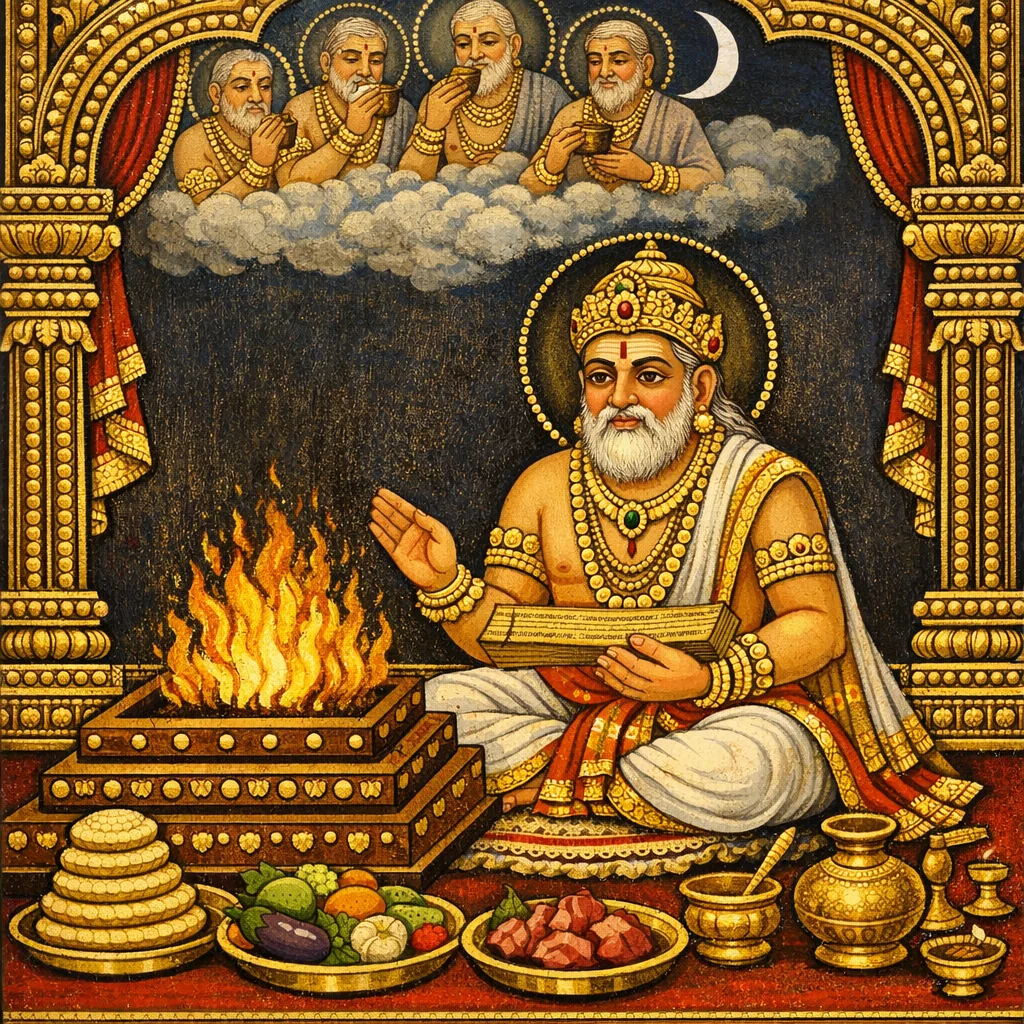
This chapter, spoken by Bṛhaspati, prescribes śrāddha according to lunar timing, focusing on the Aṣṭakā observances in the kṛṣṇa-pakṣa (dark fortnight). It affirms śrāddha as ever fruitful in kāmya (desire-motivated), naimittika (occasion-based), and nitya (regular) forms. It then distinguishes several Aṣṭakā days—first, second, third, and an additional “fourth”—assigning each specific offerings (apūpa cakes, meat, vegetables, etc.), a dravyagata vidhi determined by the materials. The pitṛs are to be propitiated at proper parvan/tithi times; if neglected, the unhonored Aṣṭakās “depart” at month’s end and hopes become barren. In parallel it praises dāna and pūjā: givers attain higher destinies and gains such as strength, progeny, memory, intellect, sons, and prosperity, while non-givers decline. Finally it lists tithi-specific fruits from the 2nd to the 10th: rulership/eminence, enemy-destruction, insight into enemy weaknesses, great fortune, honor, kingship/leadership, complete prosperity, and brāhmī śrī (Brahmic splendor).
Shlokas
Verse 1
इति श्रीब्रह्माण्डे महापुराणे वायुप्रोक्ते मध्यभागे तृतीय उपोद्धातपादे श्राद्धकल्पे दानप्रशंसा नाम षोडशो ऽध्यायः // १६// बृहस्पतिरुवाच अत ऊर्द्ध्वं प्रवक्ष्यामि श्राद्धकर्मणि पूजितम् / काम्यं नैमित्तिकाजस्रं श्राद्धकर्मणि नित्यशः
Thus, in the holy Brahmāṇḍa Mahāpurāṇa, in the middle section spoken by Vāyu, in the third Upoddhāta-pāda, within the Śrāddha-kalpa, is the sixteenth chapter called “Praise of Giving.” Bṛhaspati said: Henceforth I shall declare the revered rites of śrāddha—kāmya, naimittika, and those performed continually—as the daily observance in śrāddha.
Verse 2
पुत्रदारनिमित्ताः स्युरष्टकास्तिस्न एव तु / कृष्णपक्षे वरिष्ठा हि पूर्वाखण्डलदेवता
These are indeed the three Aṣṭakā rites, ordained on account of son and wife; in the dark fortnight (Kṛṣṇa-pakṣa) they are held the most excellent, and their presiding deity is Pūrvākhaṇḍala.
Verse 3
प्राजापत्या द्वितीया स्यात्तृतीया वैश्वदेविका / आद्यापूपैः सदाकार्या मांसैरन्या सदा भवेत्
The second Aṣṭakā is called Prājāpatya, and the third Vaiśvadevikā; the first should always be performed with apūpa cakes, while the other is always to be done with meat.
Verse 4
शाकैः कार्या तृतीया स्यादेवं द्रव्यगतो विधिः / अत्रापीष्टं पितॄणां वै नित्यमेव विधीयते
The third Aṣṭakā should be performed with vegetables—such is the rule according to the substance offered; here too, for the Pitṛs, what is pleasing to them is enjoined to be done always.
Verse 5
या चाप्यन्या चतुर्थी स्यात्तां च कुर्याद्विशेषतः / आसु श्राद्धं बुधः कुर्वन्सर्वस्वेनापि नित्यशः
And if there is yet another, a fourth Aṣṭakā, it should be performed with special care; on these tithis the wise should offer śrāddha daily, even if it be with all they possess.
Verse 6
क्षिप्रमाप्नोति हि श्रेयः परत्रेह च मोदते / पितरः पर्वकालेषु तिथिकालेषु देवताः
He swiftly attains blessed good and rejoices both here and hereafter; at parva seasons and on tithi occasions, the Pitṛs themselves are the deities to be worshipped.
Verse 7
सर्वेषु पुरुषा यान्ति निपातमिव धेनवः / मासांते प्रतिगच्छेयुरष्टकासु ह्यपूजिताः
All men go to downfall, like cows that collapse; at the month’s end, those who remain unhonoring on the Aṣṭakā days return again to sorrow.
Verse 8
मोघास्तस्य भवन्त्याशाः परत्रेह च सर्वशः / पूजकानां समुत्कर्षो नास्तिकानामधोगतिः
His hopes become futile, in this world and the next alike; worshippers rise to excellence, while nāstikas fall to a lower state.
Verse 9
देवास्तु दायिनो यान्ति तिर्यग्गच्छन्त्यदायिनः / पुष्टिं प्रजां स्मृतिं मेधां पुत्रानैश्वर्यमेव च
Givers attain the path of the Devas; non-givers go to animal births; (through this) nourishment, progeny, memory, intellect, sons, and sovereignty are obtained.
Verse 10
कुर्वाणः पूजनं चासु सर्वं पूर्णं समश्नुते / प्रतिपद्धनलाभाय लब्धं चास्य न नश्यति
He who performs worship on these (Aṣṭakā days) enjoys all attainments in fullness; and what he gains for steady increase of wealth does not perish for him.
Verse 11
द्वितीयायां तु यः कुर्याद्द्विपदाधिंपतिर् भवेत् / वरार्थिनां तृतीया तु शत्रुघ्नी पापनाशिनी
He who performs (the rite) on Dvitīyā becomes a lord among the two-footed; for those who seek boons, Tṛtīyā slays enemies and destroys sins.
Verse 12
चतुर्थ्यां तु प्रकुर्वाणः शत्रुच्छिद्राणि पश्यति / पञ्चम्यां चापिकुर्वाणः प्राप्नोति महतीं श्रियम्
One who performs śrāddha on Caturthī beholds the weak points of enemies; and one who performs it on Pañcamī attains great Śrī—abundant prosperity.
Verse 13
षष्ठ्यां श्राद्धानि कुर्वाणः संपूज्यः स्यात्प्रयत्नतः / कुरुते यस्तु सप्तम्यां श्राद्धानि सततं नरः
One who performs śrāddha on Ṣaṣṭhī becomes, through earnest effort, worthy of honor; and the man who on Saptamī continually performs śrāddha.
Verse 14
महीशत्वमवाप्नोति गणानां चाधिपो भवेत् / संपूर्णामृद्धिमाप्नोति यो ऽष्टम्यां कुरुते नरः
Whoever performs it on Aṣṭamī attains kingship and may become lord of the gaṇas; he gains complete and perfect prosperity.
Verse 15
श्राद्धं नवम्यां कर्त्तव्यमैश्वर्यं स्त्रीश्च काङ्क्षता / कुर्वन्दशम्यां तु नरो ब्राह्मीं श्रियमवाप्नुयात्
One who longs for sovereignty and the blessings of a wife should perform śrāddha on Navamī; and performing it on Daśamī, a man attains Brāhmī Śrī—lofty, sacred prosperity.
Verse 16
वेदांश्चैवाप्नुयात्सर्वान्विप्राणां समतां व्रजेत् / एकादश्यां परं दानमैश्वर्य सततं तथा
He attains all the Vedas and comes to a state equal to the vipras. On Ekādaśī there is the highest fruit of giving, and likewise enduring prosperity.
Verse 17
द्वादश्यां जयलाभं च राज्यमायुर्वसूनि च / प्रजावृद्धिं पशून्मेधां स्वातन्त्र्यं पुष्टिमुत्तमाम्
On Dvādaśī, by performing śrāddha one gains victory and profit, sovereignty, long life, and wealth; also increase of progeny, abundance of cattle, keen intellect, freedom, and supreme nourishment and prosperity.
Verse 18
दीर्घमायुरथैश्वर्यं कुर्वाणस्तु त्रयोदशीम् / युवानश्च गृहे यस्य मृतास्तेभ्यः प्रदापयेत्
By performing śrāddha on Trayodaśī one gains long life and lordly prosperity; and if there are those in one’s house who died young, one should arrange gifts and charity on their behalf.
Verse 19
शस्त्रेण वा हता ये च तेषां दद्याच्चतुर्दशीम् / अमावास्यां प्रयत्नेन श्राद्धं कुर्यात्सदा शुचिः
For those who were slain by weapons, one should offer śrāddha on Caturdaśī; and on Amāvasyā, with earnest effort and ever in purity, one should always perform śrāddha.
Verse 20
सर्वकामानवाप्नोति स्वर्गं चानन्तमश्नुते / तथाविषमजातानां यमलानां च सर्वशः
One attains all desires and partakes of endless heaven; likewise, for those of irregular birth and for twins (yamala) as well, this bears fruit in every way.
Verse 21
श्राद्धं दद्यादमावास्यां सर्वकामानवाप्नुयात् / मघासु कुर्वञ्छ्राद्धानि सर्वकामानवाप्नुयात्
By offering śrāddha on Amāvasyā, one attains all desires; and by performing śrāddhas under the Maghā nakṣatra, one likewise attains all desires.
Verse 22
प्रत्यक्षमर्चितास्तेन भवन्ति पितरस्तदा / पितृदवा मघा यस्मात्तस्मात्तास्वक्षयं स्मृतम्
Then the Pitṛs (ancestral spirits) are worshipped as if directly present. Since Maghā is famed as “the giver to the Pitṛs,” śrāddha performed in it is remembered as granting imperishable fruit (akṣaya).
Frequently Asked Questions
Rite (Kalpa): it is a śrāddha-focused chapter (Śrāddha-kalpa) that systematizes Aṣṭakā observances and dāna as the merit mechanism that indirectly supports lineage continuity rather than listing dynastic genealogies.
The chapter stresses kṛṣṇa-pakṣa, tithi, and parvan as the correct temporal windows for pitṛ-pūjā; neglect is portrayed as causing the Aṣṭakā observances to pass unfulfilled at month’s end, nullifying expected results.
A differentiated offering scheme is taught: one observance is to be done with apūpa cakes, another with meat, and another with vegetables—indicating that the rite’s efficacy is mapped to prescribed substances according to the specific Aṣṭakā day/sequence.