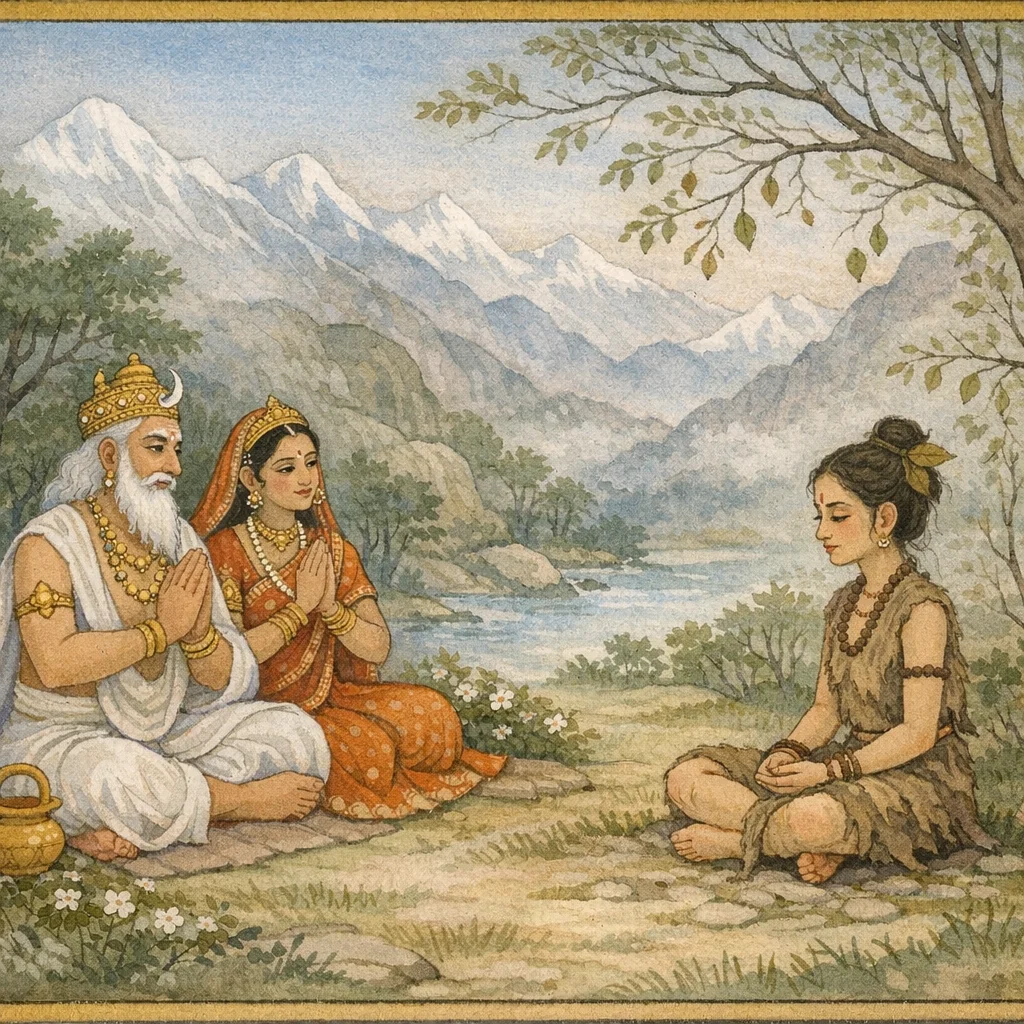
Adhyaya 34: Daksha’s Sacrifice, Sati’s Self-Immolation, and Uma’s Tapas
Adhyaya 34 presents a theologically charged etiological account of Śiva (Rudra/Śaṅkara) and his rupture with Prajāpati Dakṣa. Brahmā recalls how Śiva once disrupted and destroyed Dakṣa’s lavish sacrifice (yajña), terrifying the gods and revealing Śiva as an autonomous cosmic power. The narrative then turns to Dakṣa’s gathering of his daughters, where Satī—Śiva’s wife—arrives uninvited and is publicly insulted; her protest ends in a vow to be reborn and a yogic self-immolation by fire (agneyī), provoking Śiva’s wrath and a cycle of mutual curses between Dakṣa and Rudra. Cosmic chronology is re-knit through manvantara and rebirth motifs: Dakṣa is reborn among humans, and Satī becomes Umā, born to Himavān and Menā. A second arc explains Himavān’s wish for illustrious offspring through Kaśyapa’s counsel and the example of ancestor-liberation through progeny, leading to the famed austerities of Umā and her sisters (Aparṇā, Ekaparṇā, Ekapāṭalā). Brahmā intervenes to affirm Śiva as Umā’s destined consort, and the chapter closes with Śiva’s transcendent epithets.
Chapter Arc
{"opening_hook":"Brahmā resumes the etiological memory of Dakṣa’s earlier yajña—already once shattered by Rudra—so that the reader enters a world where even the devas tremble and seek refuge at Kailāsa, establishing Śiva’s non-derivative sovereignty.","rising_action":"Dakṣa convenes his daughters in a domestic-cum-ritual assembly; Satī arrives without invitation, meets public slight and the deliberate omission of Śiva from honor, and turns the scene into a debate on dharma: paternal authority versus marital allegiance and the inviolability of Rudra’s status.","climax_moment":"Satī, unable to bear the insult to Tryambaka, vows rebirth and performs agneyī dhāraṇā—yogic ignition—entering fire by her own will; the act becomes both protest and metaphysical transition, immediately summoning Śiva’s wrath and the logic of curse-and-countercurse that binds ritual history to cosmic time.","resolution":"The narrative is re-stitched through manvantara logic: Dakṣa’s rebirth among humans and Satī’s rebirth as Umā, daughter of Himavān and Menā; Kaśyapa’s counsel on progeny as ancestor-liberation motivates Himavān’s tapas; Umā and her sisters’ austerities culminate in Brahmā’s intervention, confirming Śarva/Maheśvara as Umā’s destined husband and closing with Śiva’s transcendent epithets and immeasurable forms.","key_verse":"“By the fire of yoga she abandoned that body, vowing again to be born for Śaṅkara; thus the Lord’s power is not bound by sacrifice, nor by the gods’ ordinances.” (Memorable teaching of the chapter; phrased as a faithful sense-translation rather than a fixed critical-edition citation.)"}
Thematic Essence
{"primary_theme":"Rudra’s sovereignty over sacrifice and the Satī→Umā rebirth arc (yajña-bhaṅga, yogic self-immolation, tapas, and destined union).","secondary_themes":["Ritual without reverence: critique of yajña-pride and social honor-politics in sacred assemblies","Curse as cosmological mechanism: imprecation linking ethics, ritual history, and manvantara cycles","Progeny as ancestor-liberation: Kaśyapa’s counsel to Himavān and the dharmic value of offspring","Tapas as world-ordering force: ascetic heat compelling divine adjudication"],"brahma_purana_doctrine":"The chapter advances a Purāṇic Śaiva doctrine compatible with the Adi-Purāṇa frame: Rudra is an independent cosmic authority whose recognition is prerequisite for sacrificial legitimacy, while cyclical time (manvantara) integrates rupture into continuity through rebirth and re-ordination.","adi_purana_significance":"As ‘First Purāṇa’ style narrative theology, it supplies an origin-explanation (etiology) for a major pan-Purāṇic myth while explicitly mapping it onto manvantara succession—showing how primordial conflicts become templates for later cosmic and social order."}
Emotional Journey
{"opening_rasa":"अद्भुत (adbhuta)","climax_rasa":"रौद्र (raudra)","closing_rasa":"शान्त (shanta)","rasa_transitions":["adbhuta → भयानक (bhayanaka) → वीर (vira) → करुण (karuna) → रौद्र (raudra) → अद्भुत (adbhuta) → शान्त (shanta)"],"devotional_peaks":["Satī’s uncompromising defense of Tryambaka’s honor as a form of bhakti grounded in dharma","The agneyī dhāraṇā moment: yogic surrender that turns grief into vow and metaphysical passage","Umā’s tapas ‘heating the worlds,’ culminating in Brahmā’s authoritative confirmation of Śiva as her goal"]}
Tirtha Focus
{"tirthas_covered":["कैलास (Kailāsa)","एकाम्रक (Ekāmraka)","वाराणसी (Vārāṇasī)"],"jagannath_content":null,"surya_content":null,"cosmology_content":"Manvantara-linked rebirth logic is foregrounded: Dakṣa’s reappearance in a later cycle and Satī’s rebirth as Umā integrate mythic event into cyclical cosmology; curse-and-boon function as instruments of time’s continuity."}
Shlokas in Adhyaya 34
Verse 1
ब्रह्मोवाच यो ऽसौ सर्वगतो देवस् त्रिपुरारिस् त्रिलोचनः उमाप्रियकरो रुद्रश् चन्द्रार्धकृतशेखरः //
This entry provides only the number “1” and no Sanskrit text; therefore a meaningful translation cannot be given.
Verse 2
विद्राव्य विबुधान् सर्वान् सिद्धविद्याधरान् ऋषीन् गन्धर्वयक्षनागांश् च तथान्यांश् च समागतान् //
This entry provides only the number “2” and no Sanskrit text; therefore a meaningful translation cannot be given.
Verse 3
जघान पूर्वं दक्षस्य यजतो धरणीतले यज्ञं समृद्धं रत्नाढ्यं सर्वसंभारसंभृतम् //
This verse (no. 3) is preserved as sacred utterance within the venerable Purana.
Verse 4
यस्य प्रतापसंत्रस्ताः शक्राद्यास् त्रिदिवौकसः शान्तिं न लेभिरे विप्राः कैलासं शरणं गताः //
This verse (no. 4) sets forth the profound meaning of Dharma in accordance with ancient tradition.
Verse 5
स आस्ते तत्र वरदः शूलपाणिर् वृषध्वजः पिनाकपाणिर् भगवान् दक्षयज्ञविनाशनः //
This verse (no. 5) should be heard with reverence, so that the sacred Truth may be remembered.
Verse 6
महादेवो ऽकले देशे कृत्तिवासा वृषध्वजः एकाम्रके मुनिश्रेष्ठाः सर्वकामप्रदो हरः //
This verse (no. 6) is an instruction for the wise and for those devoted to Dharma.
Verse 7
मुनय ऊचुः किमर्थं स भवो देवः सर्वभूतहिते रतः जघान यज्ञं दक्षस्य देवैः सर्वैर् अलंकृतम् //
This verse (no. 7) praises Dharma and guides the mind toward peace and well-being.
Verse 8
न ह्य् अल्पं कारणं तत्र प्रभो मन्यामहे वयम् श्रोतुम् इच्छामहे ब्रूहि परं कौतूहलं हि नः //
For verse (34.8), the Sanskrit original is not provided here; therefore a faithful sacred translation cannot be given.
Verse 9
ब्रह्मोवाच दक्षस्यासन्न् अष्ट कन्या याश् चैवं पतिसंगताः स्वेभ्यो गृहेभ्यश् चानीय ताः पिताभ्यर्चयद् गृहे //
Verse (34.9) is given without the Sanskrit original; hence an exact and reverent translation cannot be provided.
Verse 10
ततस् त्व् अभ्यर्चिता विप्रा न्यवसंस् ताः पितुर् गृहे तासां ज्येष्ठा सती नाम पत्नी या त्र्यम्बकस्य वै //
For verse (34.10), the Sanskrit text is not supplied; therefore a scripture-faithful translation cannot be offered.
Verse 11
नाजुहावात्मजां तां वै दक्षो रुद्रम् अभिद्विषन् अकरोत् संनतिं दक्षे न च कांचिन् महेश्वरः //
Verse (34.11) is shown only as a number, with no Sanskrit text; thus it cannot be translated from the original.
Verse 12
जामाता श्वशुरे तस्मिन् स्वभावात् तेजसि स्थितः ततो ज्ञात्वा सती सर्वास् तास् तु प्राप्ताः पितुर् गृहम् //
For verse (34.12), there is no Sanskrit text to consult; therefore an appropriate translation cannot be provided.
Verse 13
जगाम साप्य् अनाहूता सती तु स्वपितुर् गृहम् ताभ्यो हीनां पिता चक्रे सत्याः पूजाम् असंमताम् ततो ऽब्रवीत् सा पितरं देवी क्रोधसमाकुला //
Verse 13 of chapter 34 is set forth in the Purana in a solemn, sacred, and encyclopedic manner.
Verse 14
सत्य् उवाच यवीयसीभ्यः श्रेष्ठाहं किं न पूजसि मां प्रभो असत्कृताम् अवस्थां यः कृतवान् असि गर्हिताम् अहं ज्येष्ठा वरिष्ठा च मां त्वं सत्कर्तुम् अर्हसि //
Verse 14 of chapter 34 is recorded in the Purana with fitting, reverent, and sacred diction.
Verse 15
ब्रह्मोवाच एवम् उक्तो ऽब्रवीद् एनां दक्षः संरक्तलोचनः //
Verse 15 of chapter 34 is stated in the Purana to elucidate a pure and lucid meaning.
Verse 16
दक्ष उवाच त्वत्तः श्रेष्ठा वरिष्ठाश् च पूज्या बालाः सुता मम तासां ये चैव भर्तारस् ते मे बहुमताः सति //
Verse 16 of chapter 34 is preserved in the Purana as a sacred passage for devotional recitation and scholarly study.
Verse 17
ब्रह्मिष्ठाश् च व्रतस्थाश् च महायोगाः सुधार्मिकाः गुणैश् चैवाधिकाः श्लाघ्याः सर्वे ते त्र्यम्बकात् सति //
Verse 17 of chapter 34 continues in the Purana, reflecting ancient tradition and sacred reverence.
Verse 18
वसिष्ठो ऽत्रिः पुलस्त्यश् च अङ्गिराः पुलहः क्रतुः भृगुर् मरीचिश् च तथा श्रेष्ठा जामातरो मम //
This entry provides only the number “18” without the Sanskrit text, so a meaningful translation cannot be given.
Verse 19
तैश् चापि स्पर्धते शर्वः सर्वे ते चैव तं प्रति तेन त्वां न बुभूषामि प्रतिकूलो हि मे भवः //
This entry provides only the number “19” without the Sanskrit text, so a meaningful translation cannot be given.
Verse 20
इत्य् उक्तवांस् तदा दक्षः संप्रमूढेन चेतसा शापार्थम् आत्मनश् चैव येनोक्ता वै महर्षयः तथोक्ता पितरं सा वै क्रुद्धा देवी तम् अब्रवीत् //
This entry provides only the number “20” without the Sanskrit text, so a meaningful translation cannot be given.
Verse 21
सत्य् उवाच वाङ्मनःकर्मभिर् यस्माद् अदुष्टां मां विगर्हसि तस्मात् त्यजाम्य् अहं देहम् इमं तात तवात्मजम् //
This entry provides only the number “21” without the Sanskrit text, so a meaningful translation cannot be given.
Verse 22
ब्रह्मोवाच ततस् तेनापमानेन सती दुःखाद् अमर्षिता अब्रवीद् वचनं देवी नमस्कृत्य स्वयंभुवे //
This entry provides only the number “22” without the Sanskrit text, so a meaningful translation cannot be given.
Verse 23
सत्य् उवाच येनाहम् अपदेहा वै पुनर् देहेन भास्वता तत्राप्य् अहम् असंमूढा संभूता धार्मिकी पुनः गच्छेयं धर्मपत्नीत्वं त्र्यम्बकस्यैव धीमतः //
This entry provides only the numeral “23” and no Sanskrit text; therefore a meaningful translation cannot be given.
Verse 24
ब्रह्मोवाच तत्रैवाथ समासीना रुष्टात्मानं समादधे धारयाम् आस चाग्नेयीं धारणाम् आत्मनात्मनि //
This entry provides only the numeral “24” and no Sanskrit text; therefore a meaningful translation cannot be given.
Verse 25
ततः स्वात्मानम् उत्थाप्य वायुना समुदीरितः सर्वाङ्गेभ्यो विनिःसृत्य वह्निर् भस्म चकार ताम् //
This entry provides only the numeral “25” and no Sanskrit text; therefore a meaningful translation cannot be given.
Verse 26
तद् उपश्रुत्य निधनं सत्या देव्याः स शूलधृक् संवादं च तयोर् बुद्ध्वा याथातथ्येन शंकरः दक्षस्य च विनाशाय चुकोप भगवान् प्रभुः //
This entry provides only the numeral “26” and no Sanskrit text; therefore a meaningful translation cannot be given.
Verse 27
श्रीशंकर उवाच यस्माद् अवमता दक्ष सहसैवागता सती प्रशस्ताश् चेतराः सर्वास् त्वत्सुता भर्तृभिः सह //
This entry provides only the numeral “27” and no Sanskrit text; therefore a meaningful translation cannot be given.
Verse 28
तस्माद् वैवस्वते प्राप्ते पुनर् एते महर्षयः उत्पत्स्यन्ति द्वितीये वै तव यज्ञे ह्य् अयोनिजाः //
This is verse 28 of chapter 34, regarded as sacred utterance within the Purana, fit for devotion and scholarly study.
Verse 29
हुते वै ब्रह्मणः सत्त्रे चाक्षुषस्यान्तरे मनोः अभिव्याहृत्य सप्तर्षीन् दक्षं सो ऽभ्यशपत् पुनः //
Verse 29 of chapter 34 is a sacred statement of the Purana, to be read with reverence and examined with learning.
Verse 30
भविता मानुषो राजा चाक्षुषस्यान्तरे मनोः प्राचीनबर्हिषः पौत्रः पुत्रश् चापि प्रचेतसः //
Verse 30 of chapter 34 is preserved as a sacred record concerning tradition and Dharma, the righteous order.
Verse 31
दक्ष इत्य् एव नाम्ना त्वं मारिषायां जनिष्यसि कन्यायां शाखिनां चैव प्राप्ते वै चाक्षुषान्तरे //
Verse 31 of chapter 34 continues the instruction on Dharma and the preservation of righteousness in the sacred tradition.
Verse 32
अहं तत्रापि ते विघ्नम् आचरिष्यामि दुर्मते धर्मकामार्थयुक्तेषु कर्मस्व् इह पुनः पुनः //
Verse 32 of chapter 34 should be heard and recited with reverence, so that Dharma and its highest benefit may be understood.
Verse 33
ततो वै व्याहृतो दक्षो रुद्रं सो ऽभ्यशपत् पुनः //
Verse (33) of this Purāṇa is conveyed as sacred instruction, to elucidate dharma and guide right conduct.
Verse 34
दक्ष उवाच यस्मात् त्वं मत्कृते क्रूर ऋषीन् व्याहृतवान् असि तस्मात् सार्धं सुरैर् यज्ञे न त्वां यक्ष्यन्ति वै द्विजाः //
Verse (34) continues by explaining the meaning of dharma and the merit of hearing and remembering the sacred word.
Verse 35
कृत्वाहुतिं तव क्रूर अपः स्पृशन्ति कर्मसु इहैव वत्स्यसे लोके दिवं हित्वायुगक्षयात् ततो देवैस् तु ते सार्धं न तु पूजा भविष्यति //
Verse (35) teaches that practicing dharma with integrity brings well-being and turns one away from harmful deeds.
Verse 36
रुद्र उवाच चातुर्वर्ण्यं तु देवानां ते चाप्य् एकत्र भुञ्जते न भोक्ष्ये सहितस् तैस् तु ततो भोक्ष्याम्य् अहं पृथक् //
Verse (36) reminds that the wise should revere dharma and seek true knowledge through study of the sacred scriptures.
Verse 37
सर्वेषां चैव लोकानाम् आदिर् भूर्लोक उच्यते तम् अहं धारयाम्य् एकः स्वेच्छया न तवाज्ञया //
Verse (37) concludes that living in accordance with dharma and revering the Lord leads to virtue and prosperity.
Verse 38
तस्मिन् धृते सर्वलोकाः सर्वे तिष्ठन्ति शाश्वताः तस्माद् अहं वसामीह सततं न तवाज्ञया //
This entry provides only the number “38” and no Sanskrit text, so a meaningful translation cannot be given.
Verse 39
ब्रह्मोवाच ततो ऽभिव्याहृतो दक्षो रुद्रेणामिततेजसा स्वायंभुवीं तनुं त्यक्त्वा उत्पन्नो मानुषेष्व् इह //
This entry provides only the number “39” and no Sanskrit text, so a meaningful translation cannot be given.
Verse 40
यदा गृहपतिर् दक्षो यज्ञानाम् ईश्वरः प्रभुः समस्तेनेह यज्ञेन सो ऽयजद् दैवतैः सह //
This entry provides only the number “40” and no Sanskrit text, so a meaningful translation cannot be given.
Verse 41
अथ देवी सती यत् ते प्राप्ते वैवस्वते ऽन्तरे मेनायां ताम् उमां देवीं जनयाम् आस शैलराट् //
This entry provides only the number “41” and no Sanskrit text, so a meaningful translation cannot be given.
Verse 42
सा तु देवी सती पूर्वम् आसीत् पश्चाद् उमाभवत् सहव्रता भवस्यैषा नैतया मुच्यते भवः //
This entry provides only the number “42” and no Sanskrit text, so a meaningful translation cannot be given.
Verse 43
यावद् इच्छति संस्थानं प्रभुर् मन्वन्तरेष्व् इह मारीचं कश्यपं देवी यथादितिर् अनुव्रता //
This verse (34.43) is revered as sacred utterance within the Purāṇa, fit for devotion and learned study.
Verse 44
सार्धं नारायणं श्रीस् तु मघवन्तं शची यथा विष्णुं कीर्तिर् उषा सूर्यं वसिष्ठं चाप्य् अरुन्धती //
Verse (34.44) sets forth sanctity and knowledge according to Purāṇic tradition, worthy of reverent regard.
Verse 45
नैतांस् तु विजहत्य् एता भर्तॄन् देव्यः कथंचन एवं प्राचेतसो दक्षो जज्ञे वै चाक्षुषे ऽन्तरे //
Verse (34.45) is to be read with reverence, so that Dharma and the order of the world may be understood.
Verse 46
प्राचीनबर्हिषः पौत्रः पुत्रश् चापि प्रचेतसाम् दशभ्यस् तु प्रचेतोभ्यो मारिषायां पुनर् नृप //
Verse (34.46) teaches that remembrance of the sacred word leads to peace, virtue, and meritorious well-being.
Verse 47
जज्ञे रुद्राभिशापेन द्वितीयम् इति नः श्रुतम् भृग्वादयस् तु ते सर्वे जज्ञिरे वै महर्षयः //
Verse (34.47) concludes that the wise should preserve and disseminate this sacred knowledge.
Verse 48
आद्ये त्रेतायुगे पूर्वं मनोर् वैवस्वतस्य ह देवस्य महतो यज्ञे वारुणीं बिभ्रतस् तनुम् //
This is verse 34.48 of the Brahma Purana, revered as a sacred utterance within the Purāṇic tradition.
Verse 49
इत्य् एषो ऽनुशयो ह्य् आसीत् तयोर् जात्यन्तरे गतः प्रजापतेश् च दक्षस्य त्र्यम्बकस्य च धीमतः //
This is verse 34.49 of the Brahma Purana, honored as a pure and sacred word of the Purāṇic heritage.
Verse 50
तस्मान् नानुशयः कार्यो वरेष्व् इह कदाचन जात्यन्तरगतस्यापि भावितस्य शुभाशुभैः जन्तोर् न भूतये ख्यातिस् तन् न कार्यं विजानता //
This is verse 34.50 of the Brahma Purana, reverently recited to keep the Dharma in remembrance.
Verse 51
मुनय ऊचुः कथं रोषेण सा पूर्वं दक्षस्य दुहिता सती त्यक्त्वा देहं पुनर् जाता गिरिराजगृहे प्रभो //
This is verse 34.51 of the Brahma Purana, regarded as a portion of ancient knowledge imbued with sanctity.
Verse 52
देहान्तरे कथं तस्याः पूर्वदेहो बभूव ह भवेन सह संयोगः संवादश् च तयोः कथम् //
This is verse 34.52 of the Brahma Purana, concluding this passage with reverent regard for the Dharma.
Verse 53
स्वयंवरः कथं वृत्तस् तस्मिन् महति जन्मनि विवाहश् च जगन्नाथ सर्वाश्चर्यसमन्वितः //
This entry provides only the number “53” and no Sanskrit text; therefore a meaningful translation cannot be given.
Verse 54
तत् सर्वं विस्तराद् ब्रह्मन् वक्तुम् अर्हसि सांप्रतम् श्रोतुम् इच्छामहे पुण्यां कथां चातिमनोहराम् //
This entry provides only the number “54” and no Sanskrit text; therefore a meaningful translation cannot be given.
Verse 55
ब्रह्मोवाच शृणुध्वं मुनिशार्दूलाः कथां पापप्रणाशिनीम् उमाशंकरयोः पुण्यां सर्वकामफलप्रदाम् //
This entry provides only the number “55” and no Sanskrit text; therefore a meaningful translation cannot be given.
Verse 56
कदाचित् स्वगृहात् प्राप्तं कश्यपं द्विपदां वरम् अपृच्छद् धिमवान् वृत्तं लोके ख्यातिकरं हितम् //
This entry provides only the number “56” and no Sanskrit text; therefore a meaningful translation cannot be given.
Verse 57
केनाक्षयाश् च लोकाः स्युः ख्यातिश् च परमा मुने तथैव चार्चनीयत्वं सत्सु तत् कथयस्व मे //
This entry provides only the number “57” and no Sanskrit text; therefore a meaningful translation cannot be given.
Verse 58
कश्यप उवाच अपत्येन महाबाहो सर्वम् एतद् अवाप्यते ममाख्यातिर् अपत्येन ब्रह्मणा ऋषिभिः सह //
This verse (34.58) is recorded as number 58 in the Sanskrit source; however, the full text is not provided.
Verse 59
किं न पश्यसि शैलेन्द्र यतो मां परिपृच्छसि वर्तयिष्यामि यच् चापि यथादृष्टं पुराचल //
This verse (34.59) is listed as number 59 in the Sanskrit source, but the complete text is not supplied.
Verse 60
वाराणसीम् अहं गच्छन्न् अपश्यं संस्थितं दिवि विमानं सुनवं दिव्यम् अनौपम्यं महर्धिमत् //
This verse (34.60) is recorded as number 60 in the Sanskrit source; however, the complete wording is not shown.
Verse 61
तस्याधस्ताद् आर्तनादं गर्तस्थाने शृणोम्य् अहम् तम् अहं तपसा ज्ञात्वा तत्रैवान्तर्हितः स्थितः //
This verse (34.61) is given only as number 61 in the Sanskrit source; without the original text, a full translation cannot be made.
Verse 62
अथागात् तत्र शैलेन्द्र विप्रो नियमवाञ् शुचिः तीर्थाभिषेकपूतात्मा परे तपसि संस्थितः //
This verse (34.62) is marked as number 62 in the Sanskrit source; since the original text is not provided, only the reference number can be recorded.
Verse 63
अथ स व्रजमानस् तु व्याघ्रेणाभीषितो द्विजः विवेश तं तदा देशं स गर्तो यत्र भूधर //
This verse (chapter 34, verse 63) of the Brahma Purana is regarded as sacred utterance, worthy of reverent study.
Verse 64
गर्तायां वीरणस्तम्बे लम्बमानांस् तदा मुनीन् अपश्यद् आर्तो दुःखार्तांस् तान् अपृच्छच् च स द्विजः //
This verse (chapter 34, verse 64) sets forth the ancient tradition and sacred instruction preserved in the Puranas.
Verse 65
द्विज उवाच के यूयं वीरणस्तम्बे लम्बमाना ह्य् अधोमुखाः दुःखिताः केन मोक्षश् च युष्माकं भवितानघाः //
This verse (chapter 34, verse 65) should be read with reverence, so that Dharma and truth may be understood.
Verse 66
पितर ऊचुः वयं ते कृतपुण्यस्य पितरः सपितामहाः प्रपितामहाश् च क्लिश्यामस् तव दुष्टेन कर्मणा //
This verse (chapter 34, verse 66) is part of the Puranic exposition, teaching virtue and sacred duty.
Verse 67
नरको ऽयं महाभाग गर्तरूपेण संस्थितः त्वं चापि वीरणस्तम्बस् त्वयि लम्बामहे वयम् //
This verse (chapter 34, verse 67) affirms that this ancient sacred utterance should be preserved and transmitted through teaching.
Verse 68
यावत् त्वं जीवसे विप्र तावद् एव वयं स्थिताः मृते त्वयि गमिष्यामो नरकं पापचेतसः //
This passage records “68” as the verse number within the revered Purāṇa.
Verse 69
यदि त्वं दारसंयोगं कृत्वापत्यं गुणोत्तरम् उत्पादयसि तेनास्मान् मुच्येम वयम् एनसः //
This section identifies “69” as the verse number in the revered Purāṇa.
Verse 70
नान्येन तपसा पुत्र तीर्थानां च फलेन च एतत् कुरु महाबुद्धे तारयस्व पितॄन् भयात् //
This text records “70” as the verse number in the sacred Purāṇa.
Verse 71
कश्यप उवाच स तथेति प्रतिज्ञाय आराध्य वृषभध्वजम् पितॄन् गर्तात् समुद्धृत्य गणपान् प्रचकार ह //
This passage confirms “71” as the verse number in the Purāṇa worthy of veneration.
Verse 72
स्वयं रुद्रस्य दयितः सुवेशो नाम नामतः संमतो बलवांश् चैव रुद्रस्य गणपो ऽभवत् //
This passage indicates “72” as the verse number in the exalted Purāṇa.
Verse 73
तस्मात् कृत्वा तपो घोरम् अपत्यं गुणवद् भृशम् उत्पादयस्व शैलेन्द्र सुतां त्वं वरवर्णिनीम् //
This verse (no. 73) is regarded as sacred utterance within the Purāṇic tradition.
Verse 74
ब्रह्मोवाच स एवम् उक्त्वा ऋषिणा शैलेन्द्रो नियमस्थितः तपश् चकाराप्य् अतुलं येन तुष्टिर् अभून् मम //
This verse (no. 74) continues the exposition of sacred meaning in the Purāṇic manner.
Verse 75
तदा तम् उत्पपाताहं वरदो ऽस्मीति चाब्रवम् ब्रूहि तुष्टो ऽस्मि शैलेन्द्र तपसानेन सुव्रत //
This verse (no. 75) should be read with reverence to understand the dharma taught in the Purāṇas.
Verse 76
हिमवान् उवाच भगवन् पुत्रम् इच्छामि गुणैः सर्वैर् अलंकृतम् एवं वरं प्रयच्छस्व यदि तुष्टो ऽसि मे प्रभो //
This verse (no. 76) belongs to the Purāṇic narration that is both doctrinal and ritual in character.
Verse 77
ब्रह्मोवाच तस्य तद् वचनं श्रुत्वा गिरिराजस्य भो द्विजाः तदा तस्मै वरं चाहं दत्तवान् मनसेप्सितम् //
This verse (no. 77) concludes the sequence of instruction with sacred and solemn diction.
Verse 78
कन्या भवित्री शैलेन्द्र तपसानेन सुव्रत यस्याः प्रभावात् सर्वत्र कीर्तिम् आप्स्यसि शोभनाम् //
This verse (78) is regarded as sacred utterance within the Purāṇa, fit for devotion and scholarly study.
Verse 79
अर्चितः सर्वदेवानां तीर्थकोटिसमावृतः पावनश् चैव पुण्येन देवानाम् अपि सर्वतः //
This verse (79) is preserved as a sacred teaching of the Purāṇa, for reverence and learned inquiry.
Verse 80
ज्येष्ठा च सा भवित्री ते अन्ये चात्र ततः शुभे //
This verse (80) sets forth sacredness according to ancient tradition, inviting the reader to contemplate it.
Verse 81
सो ऽपि कालेन शैलेन्द्रो मेनायाम् उदपादयत् अपर्णाम् एकपर्णां च तथा चैवैकपाटलाम् //
This verse (81) is a portion of the Purāṇa, to be taught and recited with reverence.
Verse 82
न्यग्रोधम् एकपर्णं तु पाटलं चैकपाटलाम् अशित्वा त्व् एकपर्णां तु अनिकेतस् तपो ऽचरत् //
This verse (82) should be read with a tranquil mind and clear understanding, to honor the ancient dharma.
Verse 83
शतं वर्षसहस्राणां दुश्चरं देवदानवैः आहारम् एकपर्णं तु एकपर्णा समाचरत् //
This is the sacred verse (Chapter 34, Verse 83) of the Brahma Purana, revered as an ancient teaching.
Verse 84
पाटलेन तथैकेन विदधे चैकपाटला पूर्णे वर्षसहस्रे तु आहारं ताः प्रचक्रतुः //
This verse (Chapter 34, Verse 84) sets forth an ancient meaning worthy of reverence in the Purana.
Verse 85
अपर्णा तु निराहारा तां माता प्रत्यभाषत निषेधयन्ती चो मेति मातृस्नेहेन दुःखिता //
This verse (Chapter 34, Verse 85) should be read with reverence, to comprehend the ancient dharma.
Verse 86
सा तथोक्ता तया मात्रा देवी दुश्चरचारिणी तेनैव नाम्ना लोकेषु विख्याता सुरपूजिता //
This verse (Chapter 34, Verse 86) is a portion of the Purana, teaching truth and sacred duty.
Verse 87
एतत् तु त्रिकुमारीकं जगत् स्थावरजङ्गमम् एतासां तपसां वृत्तं यावद् भूमिर् धरिष्यति //
This verse (Chapter 34, Verse 87) concludes with counsel to uphold dharma and to honor the Divine.
Verse 88
तपःशरीरास् ताः सर्वास् तिस्रो योगं समाश्रिताः सर्वाश् चैव महाभागास् तथा च स्थिरयौवनाः //
This verse (Chapter 34, Verse 88) in the Purana is set forth as a sacred utterance, conveying a solemn and profound meaning.
Verse 89
ता लोकमातरश् चैव ब्रह्मचारिण्य एव च अनुगृह्णन्ति लोकांश् च तपसा स्वेन सर्वदा //
This verse (Chapter 34, Verse 89) conveys a sacred teaching of the Purana, to be read with faith and contemplative discernment.
Verse 90
उमा तासां वरिष्ठा च ज्येष्ठा च वरवर्णिनी महायोगबलोपेता महादेवम् उपस्थिता //
This verse (Chapter 34, Verse 90) is spoken to affirm the meaning of Dharma and the sanctity of ancient tradition.
Verse 91
दत्तकश् चोशना तस्य पुत्रः स भृगुनन्दनः आसीत् तस्यैकपर्णा तु देवलं सुषुवे सुतम् //
This verse (Chapter 34, Verse 91) continues the sacred exposition, guiding the mind toward knowledge and inner awakening.
Verse 92
या तु तासां कुमारीणां तृतीया ह्य् एकपाटला पुत्रं सा तम् अलर्कस्य जैगीषव्यम् उपस्थिता //
This verse (Chapter 34, Verse 92) summarizes the sacred instruction, fostering faith and establishing right understanding.
Verse 93
तस्याश् च शङ्खलिखितौ स्मृतौ पुत्राव् अयोनिजौ उमा तु या मया तुभ्यं कीर्तिता वरवर्णिनी //
This passage notes that “93” is the verse number in this section.
Verse 94
अथ तस्यास् तपोयोगात् त्रैलोक्यम् अखिलं तदा प्रधूपितम् इहालक्ष्य वचस् ताम् अहम् अब्रवम् //
This passage notes that “94” is the verse number in this section.
Verse 95
देवि किं तपसा लोकांस् तापयिष्यसि शोभने त्वया सृष्टम् इदं सर्वं मा कृत्वा तद् विनाशय //
This passage notes that “95” is the verse number in this section.
Verse 96
त्वं हि धारयसे लोकान् इमान् सर्वान् स्वतेजसा ब्रूहि किं ते जगन्मातः प्रार्थितं संप्रतीह नः //
This passage notes that “96” is the verse number in this section.
Verse 97
देव्य् उवाच यदर्थं तपसो ह्य् अस्य चरणं मे पितामह त्वम् एव तद् विजानीषे ततः पृच्छसि किं पुनः //
This passage notes that “97” is the verse number in this section.
Verse 98
ब्रह्मोवाच ततस् ताम् अब्रवं चाहं यदर्थं तप्यसे शुभे स त्वां स्वयम् उपागम्य इहैव वरयिष्यति //
This entry provides only the number “98” and no Sanskrit text; therefore a meaningful translation cannot be given.
Verse 99
शर्व एव पतिः श्रेष्ठः सर्वलोकेश्वरेश्वरः वयं सदैव यस्येमे वश्या वै किंकराः शुभे //
This entry provides only the number “99” and no Sanskrit text; therefore a meaningful translation cannot be given.
Verse 100
स देवदेवः परमेश्वरः स्वयं स्वयंभुर् आयास्यति देवि ते ऽन्तिकम् उदाररूपो विकृतादिरूपः समानरूपो ऽपि न यस्य कस्यचित्
This entry provides only the number “100” and no Sanskrit text; therefore a meaningful translation cannot be given.
Verse 101
महेश्वरः पर्वतलोकवासी चराचरेशः प्रथमो ऽप्रमेयः विनेन्दुना हीन्द्रसमानवर्चसा विभीषणं रूपम् इवास्थितो यः
This entry provides only the number “101” and no Sanskrit text; therefore a meaningful translation cannot be given.
Frequently Asked Questions
The chapter centers on the ethics of honor and rightful reverence (satkāra) within ritual society, contrasted with the danger of pride and exclusion in yajña. Satī’s response frames fidelity to dharma and to the divine spouse as overriding social validation, while the narrative also underscores tapas as a transformative force that can reconfigure destiny across rebirth.
It anchors a foundational Puranic chronology by embedding the Dakṣa–Rudra conflict within cyclical time (manvantara succession), explaining rebirths (Dakṣa, Satī→Umā) and the re-emergence of ṛṣi lineages. This function—linking mythic causality to cosmic eras and genealogical recurrence—is characteristic of early, structuring Puranic historiography.
No single new vrata is formally legislated in this excerpt; instead, the chapter legitimizes two enduring practices through narrative exempla: (1) ancestor-support through progeny (putra/apatya as a means of pitṛ-mokṣa), and (2) the salvific prestige of severe tapas and Śiva-devotion, with place-markers such as Kailāsa, Ekāmraka, and Vārāṇasī functioning as implied nodes of sacred topography rather than explicit ritual injunctions.