Adhyaya 13
Indra’s Brahma-hatyā, Flight from Sin, and Purification by Aśvamedha
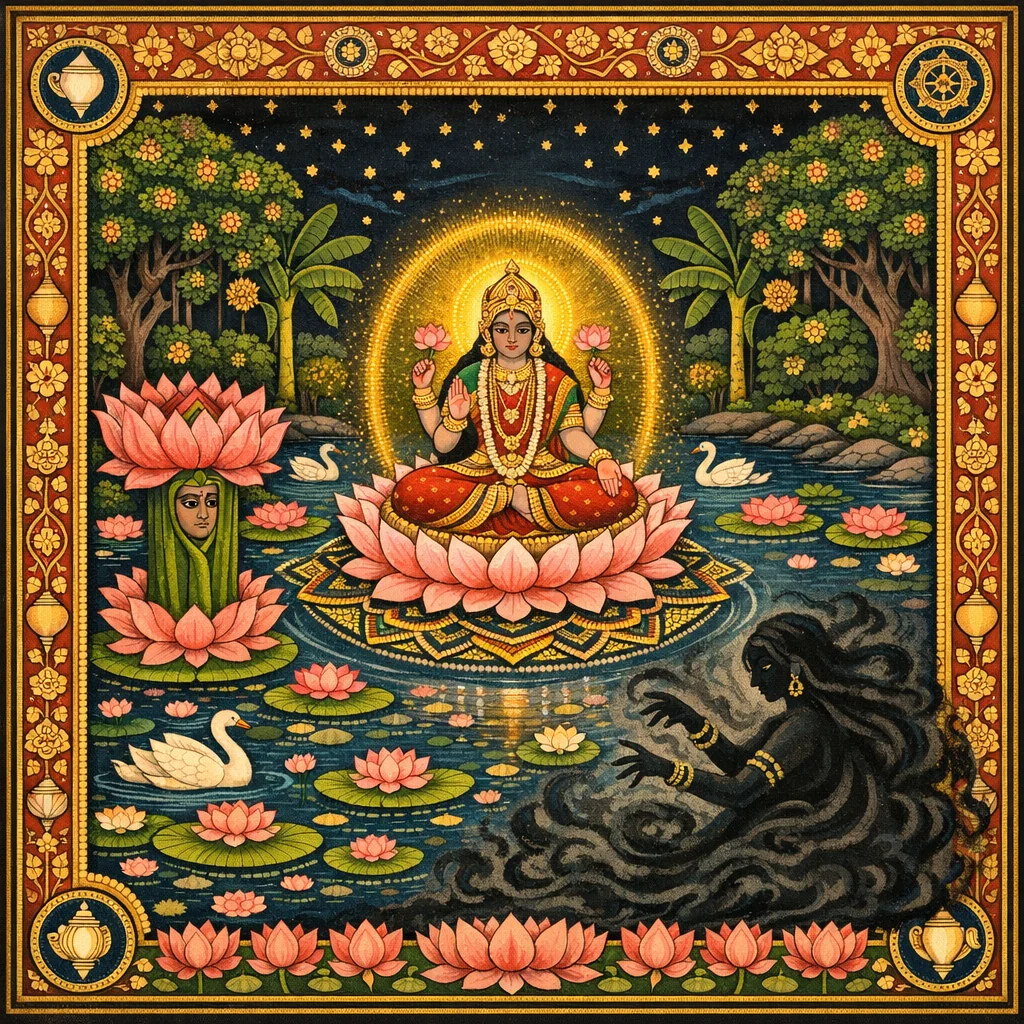
After Vṛtrāsura’s death the universe is relieved, yet Indra alone is distressed. Parīkṣit asks why, and Śukadeva explains Indra’s fear of brahma-hatyā, for Vṛtrāsura is regarded as brāhmaṇa-like and his killing brings grave reaction. Indra recalls how his earlier sin (killing Viśvarūpa) was once distributed among women, earth, trees, and water, but doubts such relief can happen again. The sages reassure him that by pleasing Nārāyaṇa, the Supersoul, through aśvamedha-yajña—and by the purifying power of the holy name—sin can be neutralized. After Indra kills Vṛtrāsura, personified sin appears as a terrifying caṇḍāla woman and pursues him. Indra flees and hides for a thousand years within a lotus stem in Mānasa-sarovara; during this time Nahuṣa rules temporarily, then falls through pride and is cursed. Sheltered by Lakṣmī’s presence and strict worship of Viṣṇu, Indra’s sin diminishes. The brāhmaṇas summon him back and perform the horse sacrifice, clearing reactions like sunrise dispersing fog and restoring Indra’s status. The chapter ends with phala-śruti: hearing this narration grants auspiciousness, victory, longevity, and freedom from sin, pointing to purification through bhakti.
Shlokas
Verse 1
श्रीशुक उवाच वृत्रे हते त्रयो लोका विना शक्रेण भूरिद । सपाला ह्यभवन् सद्यो विज्वरा निर्वृतेन्द्रिया: ॥ १ ॥
Śrī Śukadeva Gosvāmī said: O King, when Vṛtrāsura was killed, all the presiding deities and everyone else in the three planetary systems was immediately pleased and free from trouble — except Indra.
Verse 2
देवर्षिपितृभूतानि दैत्या देवानुगा: स्वयम् । प्रतिजग्मु: स्वधिष्ण्यानि ब्रह्मेशेन्द्रादयस्तत: ॥ २ ॥
Thereafter, the demigods, the great saintly persons, the inhabitants of Pitṛloka and Bhūtaloka, the demons, and also Lord Brahmā and Lord Śiva all returned to their respective homes. While departing, however, no one spoke to Indra.
Verse 3
श्रीराजोवाच इन्द्रस्यानिर्वृतेर्हेतुं श्रोतुमिच्छामि भो मुने । येनासन् सुखिनो देवा हरेर्दु:खं कुतोऽभवत् ॥ ३ ॥
Mahārāja Parīkṣit said: O sage, I wish to hear the cause of Indra’s distress. When Vṛtrāsura was slain, all the devas rejoiced—why, then, was Indra himself unhappy?
Verse 4
श्रीशुक उवाच वृत्रविक्रमसंविग्ना: सर्वे देवा: सहर्षिभि: । तद्वधायार्थयन्निन्द्रं नैच्छद् भीतो बृहद्वधात् ॥ ४ ॥
Śrī Śukadeva Gosvāmī said: Disturbed by Vṛtrāsura’s extraordinary prowess, all the devas, along with the ṛṣis, assembled and begged Indra to slay him. But Indra, fearing the sin of killing a brāhmaṇa, refused.
Verse 5
इन्द्र उवाच स्त्रीभूद्रुमजलैरेनो विश्वरूपवधोद्भवम् । विभक्तमनुगृह्णद्भिर्वृत्रहत्यां क्व मार्ज्म्यहम् ॥ ५ ॥
Indra said: When I killed Viśvarūpa, vast sinful reactions came upon me, yet by the favor of women, the earth, trees, and water, that sin was divided among them. Now, if I kill Vṛtrāsura—another brāhmaṇa—how shall I cleanse myself of the reactions?
Verse 6
श्रीशुक उवाच ऋषयस्तदुपाकर्ण्य महेन्द्रमिदमब्रुवन् । याजयिष्याम भद्रं ते हयमेधेन मा स्म भै: ॥ ६ ॥
Śrī Śukadeva Gosvāmī said: Hearing this, the great sages told Mahendra, “All auspiciousness to you. Do not fear. We shall perform an aśvamedha sacrifice for you, by which you will be freed from any sin incurred by killing a brāhmaṇa.”
Verse 7
हयमेधेन पुरुषं परमात्मानमीश्वरम् । इष्ट्वा नारायणं देवं मोक्ष्यसेऽपि जगद्वधात् ॥ ७ ॥
The ṛṣis continued: O Indra, by performing an aśvamedha sacrifice and thus pleasing Lord Nārāyaṇa—the Supreme Lord, Paramātmā, and supreme controller—one can be freed even from the sin of killing the entire world, what to speak of killing a demon like Vṛtrāsura.
Verse 8
ब्रह्महा पितृहा गोघ्नो मातृहाचार्यहाघवान् । श्वाद: पुल्कसको वापि शुद्ध्येरन् यस्य कीर्तनात् ॥ ८ ॥ तमश्वमेधेन महामखेन श्रद्धान्वितोऽस्माभिरनुष्ठितेन । हत्वापि सब्रह्मचराचरं त्वं न लिप्यसे किं खलनिग्रहेण ॥ ९ ॥
One who has killed a brāhmaṇa, a cow, father, mother or spiritual master can be immediately freed from all sinful reactions simply by chanting the holy name of Lord Nārāyaṇa. Other sinful persons, such as dog-eaters, can also be freed in this way. We shall help you by performing the great horse sacrifice. If you please Lord Nārāyaṇa in that way, why should you be afraid?
Verse 9
ब्रह्महा पितृहा गोघ्नो मातृहाचार्यहाघवान् । श्वाद: पुल्कसको वापि शुद्ध्येरन् यस्य कीर्तनात् ॥ ८ ॥ तमश्वमेधेन महामखेन श्रद्धान्वितोऽस्माभिरनुष्ठितेन । हत्वापि सब्रह्मचराचरं त्वं न लिप्यसे किं खलनिग्रहेण ॥ ९ ॥
One who has killed a brāhmaṇa, a cow, father, mother or spiritual master can be immediately freed from all sinful reactions simply by chanting the holy name of Lord Nārāyaṇa. Other sinful persons, such as dog-eaters, can also be freed in this way. We shall help you by performing the great horse sacrifice. If you please Lord Nārāyaṇa in that way, why should you be afraid?
Verse 10
श्रीशुक उवाच एवं सञ्चोदितो विप्रैर्मरुत्वानहनद्रिपुम् । ब्रह्महत्या हते तस्मिन्नाससाद वृषाकपिम् ॥ १० ॥
Śrī Śukadeva Gosvāmī said: Encouraged by the words of the sages, Indra killed his enemy Vṛtrāsura. When he was killed, the sinful reaction for killing a brāhmaṇa (brahma-hatyā) certainly took shelter of Indra.
Verse 11
तयेन्द्र: स्मासहत्तापं निर्वृतिर्नामुमाविशत् । ह्रीमन्तं वाच्यतां प्राप्तं सुखयन्त्यपि नो गुणा: ॥ ११ ॥
Following the advice of the demigods, Indra killed Vṛtrāsura, and he suffered because of this sinful killing. Although the other demigods were happy, he could not derive happiness from the killing of Vṛtrāsura. Indra’s other good qualities, such as tolerance and opulence, could not help him in his grief.
Verse 12
तां ददर्शानुधावन्तीं चाण्डालीमिव रूपिणीम् । जरया वेपमानाङ्गीं यक्ष्मग्रस्तामसृक्पटाम् ॥ १२ ॥ विकीर्य पलितान् केशांस्तिष्ठ तिष्ठेति भाषिणीम् । मीनगन्ध्यसुगन्धेन कुर्वतीं मार्गदूषणम् ॥ १३ ॥
Indra saw personified sinful reaction chasing him, appearing like a caṇḍāla woman. She seemed very old, and all the limbs of her body trembled. Because she was afflicted with tuberculosis, her body and garments were covered with blood. Breathing an unbearable fishy odor that polluted the entire street, she called to Indra, “Wait! Wait!”
Verse 13
तां ददर्शानुधावन्तीं चाण्डालीमिव रूपिणीम् । जरया वेपमानाङ्गीं यक्ष्मग्रस्तामसृक्पटाम् ॥ १२ ॥ विकीर्य पलितान् केशांस्तिष्ठ तिष्ठेति भाषिणीम् । मीनगन्ध्यसुगन्धेन कुर्वतीं मार्गदूषणम् ॥ १३ ॥
Indra saw personified sinful reaction chasing him, appearing like a caṇḍāla woman. Trembling with age and covered in blood, she called out, 'Wait! Wait!'
Verse 14
नभो गतो दिश: सर्वा: सहस्राक्षो विशाम्पते । प्रागुदीचीं दिशं तूर्णं प्रविष्टो नृप मानसम् ॥ १४ ॥
O King, Indra first fled to the sky, but the personified sin chased him there too. Finally, he quickly went northeast and entered the Manasa-sarovara Lake.
Verse 15
स आवसत्पुष्करनालतन्तू- नलब्धभोगो यदिहाग्निदूत: । वर्षाणि साहस्रमलक्षितोऽन्त: सञ्चिन्तयन् ब्रह्मवधाद्विमोक्षम् ॥ १५ ॥
Meditating on liberation from the sin of killing a brahmana, Indra lived invisibly in the fibers of a lotus stem for 1,000 years, starving because the fire-god could not enter the water.
Verse 16
तावत्त्रिणाकं नहुष: शशास विद्यातपोयोगबलानुभाव: । स सम्पदैश्वर्यमदान्धबुद्धि- र्नीतस्तिरश्चां गतिमिन्द्रपत्न्या ॥ १६ ॥
While Indra hid, Nahusha ruled heaven due to his mystic power. However, blinded by pride, he lusted after Indra's wife and was cursed to become a snake.
Verse 17
ततो गतो ब्रह्मगिरोपहूत ऋतम्भरध्याननिवारिताघ: । पापस्तु दिग्देवतया हतौजा- स्तं नाभ्यभूदवितं विष्णुपत्न्या ॥ १७ ॥
Indra's sins were destroyed by meditating on Truth and the protection of Lord Vishnu's wife. The brahmanas called him back, and he was reinstated in his position.
Verse 18
तं च ब्रह्मर्षयोऽभ्येत्य हयमेधेन भारत । यथावद्दीक्षञ्चक्रु: पुरुषाराधनेन ह ॥ १८ ॥
O Bharata, when Mahendra reached the heavenly planets, the brahmarṣis approached him and, in proper rite, initiated him for the aśvamedha sacrifice meant to worship and please the Supreme Purusha.
Verse 19
अथेज्यमाने पुरुषे सर्वदेवमयात्मनि । अश्वमेधे महेन्द्रेण वितते ब्रह्मवादिभि: ॥ १९ ॥ स वै त्वाष्ट्रवधो भूयानपि पापचयो नृप । नीतस्तेनैव शून्याय नीहार इव भानुना ॥ २० ॥
Thereafter, when the brahmavādīs conducted Mahendra’s aśvamedha and he worshiped the Supreme Purusha—whose Self contains all the gods—the reactions to all his sins were pacified. O King, even the grave sin of killing Tvaṣṭā’s son was at once made void, as fog is dispelled by the rising sun.
Verse 20
अथेज्यमाने पुरुषे सर्वदेवमयात्मनि । अश्वमेधे महेन्द्रेण वितते ब्रह्मवादिभि: ॥ १९ ॥ स वै त्वाष्ट्रवधो भूयानपि पापचयो नृप । नीतस्तेनैव शून्याय नीहार इव भानुना ॥ २० ॥
Thereafter, when the brahmavādīs conducted Mahendra’s aśvamedha and he worshiped the Supreme Purusha—whose Self contains all the gods—the reactions to all his sins were pacified. O King, even the grave sin of killing Tvaṣṭā’s son was at once made void, as fog is dispelled by the rising sun.
Verse 21
स वाजिमेधेन यथोदितेन वितायमानेन मरीचिमिश्रै: । इष्ट्वाधियज्ञं पुरुषं पुराण- मिन्द्रो महानास विधूतपाप: ॥ २१ ॥
Favored by Marīci and the other great sages, the vājimedha (aśvamedha) was performed exactly as enjoined, worshiping the Adhiyajña—the primeval Purusha, the Supreme Soul. Thus Indra, his sins dispelled, regained his exalted station and was honored again by all.
Verse 22
इदं महाख्यानमशेषपाप्मनांप्रक्षालनं तीर्थपदानुकीर्तनम् । भक्त्युच्छ्रयं भक्तजनानुवर्णनंमहेन्द्रमोक्षं विजयं मरुत्वत: ॥ २२ ॥ पठेयुराख्यानमिदं सदा बुधा:शृण्वन्त्यथो पर्वणि पर्वणीन्द्रियम् । धन्यं यशस्यं निखिलाघमोचनंरिपुञ्जयं स्वस्त्ययनं तथायुषम् ॥ २३ ॥
This great narration washes away all sin, glorifies Nārāyaṇa—the Lord known as Tīrthapada—exalts the rise of bhakti, describes devotees such as Indra and Vṛtrāsura, and tells of Mahendra’s release from sin and his victory over the asuras. Therefore the learned should always read it and, on festival days, hear and recite it. It is blessed, fame-giving, the remover of all wrongdoing, the conqueror of enemies, wholly auspicious, and life-prolonging.
Verse 23
इदं महाख्यानमशेषपाप्मनांप्रक्षालनं तीर्थपदानुकीर्तनम् । भक्त्युच्छ्रयं भक्तजनानुवर्णनंमहेन्द्रमोक्षं विजयं मरुत्वत: ॥ २२ ॥ पठेयुराख्यानमिदं सदा बुधा:शृण्वन्त्यथो पर्वणि पर्वणीन्द्रियम् । धन्यं यशस्यं निखिलाघमोचनंरिपुञ्जयं स्वस्त्ययनं तथायुषम् ॥ २३ ॥
In this great narration the Supreme Lord Nārāyaṇa is glorified, the excellence of bhakti is proclaimed, devotees such as Indra and Vṛtrāsura are described, and Indra’s release from sin and his victory over the demons are recounted. By understanding this episode one is cleansed of all sinful reactions; therefore the learned always read it and, on festival days, hear and recite it. This account is blessed, fame-giving, the remover of all sin, the conqueror of enemies, auspicious in every way, and an increaser of longevity.
Frequently Asked Questions
Indra’s grief arises from brahma-hatyā: Vṛtrāsura is treated as brāhmaṇa-like due to spiritual qualification, so the act of killing—though politically necessary for cosmic order—creates severe karmic reaction. The chapter emphasizes that worldly victory does not cancel moral causality; only purification through devotion to Nārāyaṇa (supported by yajña and the holy name) can dissolve the reaction.
The pursuing caṇḍāla woman is pāpa personified—an embodied depiction of karmic reaction that relentlessly follows the doer. The imagery teaches that sin is not merely social guilt but a subtle force that attaches to action until neutralized by proper atonement aligned with devotion, especially Viṣṇu worship and nāma-smaraṇa.
Indra’s reactions diminish through strict worship of Lord Viṣṇu and divine protection associated with Lakṣmī at Mānasa-sarovara, and are finally nullified when brāhmaṇas conduct the aśvamedha-yajña to please the Supreme Lord. The text also underscores that chanting Nārāyaṇa’s name is intrinsically purifying—even for the gravest sins—when approached with genuine devotion.
Nahuṣa temporarily receives the capacity to rule heaven while Indra hides. Overpowered by opulence and pride, he makes improper advances toward Indra’s wife and is cursed by a brāhmaṇa, resulting in his fall and transformation into a serpent—illustrating how adhikāra without humility leads to degradation.