Adhyaya 10
Dadhīci’s Supreme Charity and the Opening of Indra’s War with Vṛtrāsura
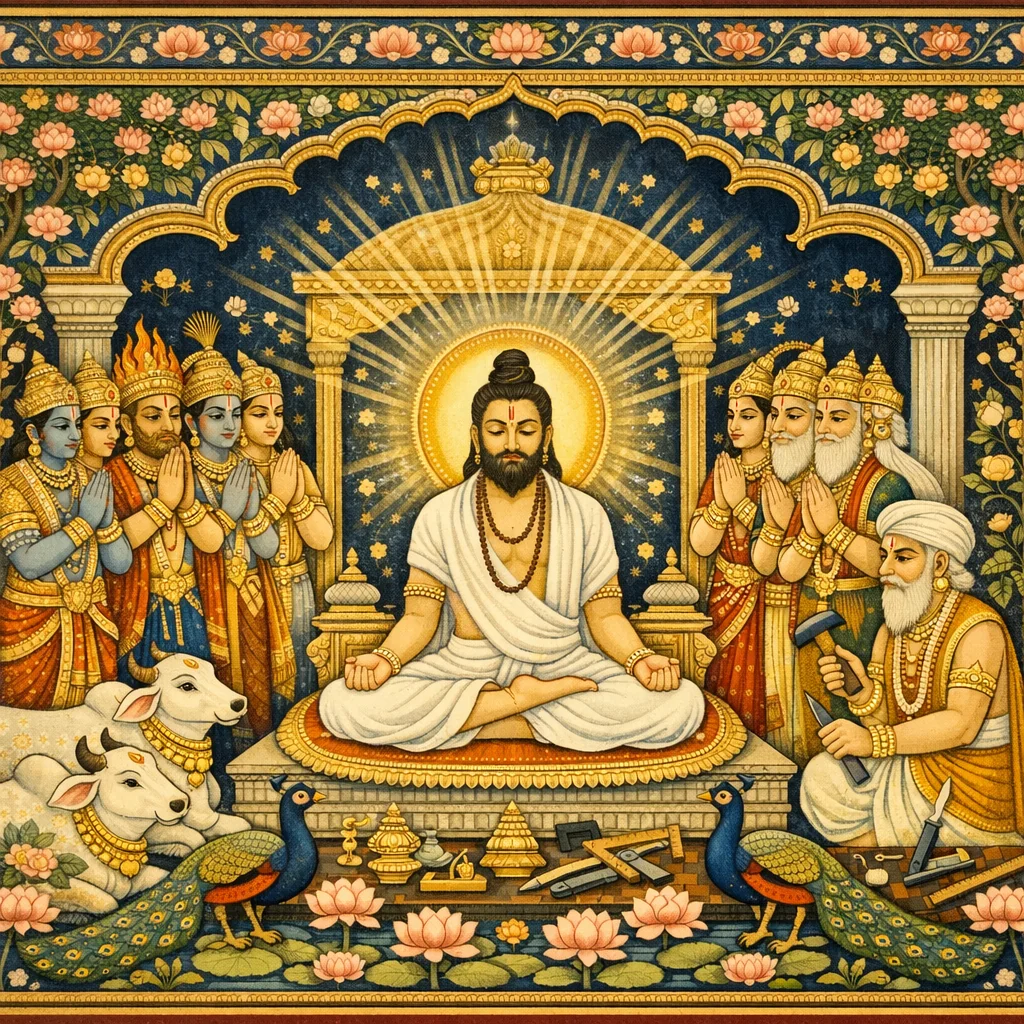
After Hari (Śrī Kṛṣṇa) instructs Indra and disappears, the devas follow the divine plan and approach Ṛṣi Dadhīci, requesting his body to fashion the vajra (thunderbolt). Dadhīci first, with gentle humor, exposes attachment to the body and the pain of death, leading to a dharma lesson on compassion, charity, and the body’s impermanence. Concluding that a fleeting body should be sacrificed for a higher religious purpose and eternal glory, he offers himself, enters samādhi, and relinquishes his five-element body. Viśvakarmā then makes the vajra from his bones; empowered by Dadhīci’s tapas and the Lord’s sanction, Indra mounts Airāvata with the assembled devas amid the sages’ praises to confront Vṛtrāsura. On the Narmadā battlefield the asuras unleash overwhelming volleys, yet the devas—protected by Kṛṣṇa—remain unharmed, and the demons panic and flee. Vṛtrāsura restrains them, teaching that death is inevitable and that “glorious death” is gained either through yogic absorption (especially bhakti-yoga) or fearless leadership in battle, setting the stage for the deeper devotional teaching to come.
Shlokas
Verse 1
श्रीबादरायणिरुवाच इन्द्रमेवं समादिश्य भगवान् विश्वभावन: । पश्यतामनिमेषाणां तत्रैवान्तर्दधे हरि: ॥ १ ॥
Śrī Śukadeva Gosvāmī said: Having instructed Indra in this manner, the Supreme Lord Hari, the cause of the cosmic manifestation, then and there disappeared from the sight of the demigods who were watching without blinking.
Verse 2
तथाभियाचितो देवैर्ऋषिराथर्वणो महान् । मोदमान उवाचेदं प्रहसन्निव भारत ॥ २ ॥
O Bharata (Parīkṣit), following the Lord’s instruction, the demigods approached the great sage Dadhīci, the son of Atharvā. He was exceedingly generous, and when they begged him for his body he at once agreed in part. Yet, wishing to hear teachings on dharma from them, he smiled and, as if in jest, spoke as follows.
Verse 3
अपि वृन्दारका यूयं न जानीथ शरीरिणाम् । संस्थायां यस्त्वभिद्रोहो दु:सहश्चेतनापह: ॥ ३ ॥
O exalted demigods, do you not know that at the time of death unbearable pain steals away the consciousness of all embodied beings?
Verse 4
जिजीविषूणां जीवानामात्मा प्रेष्ठ इहेप्सित: । क उत्सहेत तं दातुं भिक्षमाणाय विष्णवे ॥ ४ ॥
In this world, living beings who long to survive hold their own bodies most dear and strive to protect them at any cost; who, then, would be ready to give up his body, even if Lord Viṣṇu were to ask?
Verse 5
श्रीदेवा ऊचु: किं नु तद् दुस्त्यजं ब्रह्मन् पुंसां भूतानुकम्पिनाम् । भवद्विधानां महतां पुण्यश्लोकेड्यकर्मणाम् ॥ ५ ॥
The demigods replied: O exalted brāhmaṇa, great souls like you—whose deeds are praised in holy fame and who are compassionate to all beings—what could be too difficult for you to give up for others’ welfare?
Verse 6
नूनं स्वार्थपरो लोको न वेद परसङ्कटम् । यदि वेद न याचेत नेति नाह यदीश्वर: ॥ ६ ॥
Truly, people absorbed in self-interest do not know another’s distress and therefore beg. If the beggar knew the giver’s hardship, he would not ask; and if the giver knew the beggar’s plight, he would not say, “No.”
Verse 7
श्रीऋषिरुवाच धर्मं व: श्रोतुकामेन यूयं मे प्रत्युदाहृता: । एष व: प्रियमात्मानं त्यजन्तं सन्त्यजाम्यहम् ॥ ७ ॥
The great sage Dadhīci said: Desiring to hear from you about dharma, I first refused your request for my body. Now, though this body is most dear to me, I shall relinquish it for your noble purpose, for it will leave me today or tomorrow in any case.
Verse 8
योऽध्रुवेणात्मना नाथा न धर्मं न यश: पुमान् । ईहेत भूतदयया स शोच्य: स्थावरैरपि ॥ ८ ॥
O demigods, one who, with this impermanent body, neither strives for dharma nor for eternal glory, and who lacks compassion for the suffering of living beings, is indeed pitiable—even to the immovable.
Verse 9
एतावानव्ययो धर्म: पुण्यश्लोकैरुपासित: । यो भूतशोकहर्षाभ्यामात्मा शोचति हृष्यति ॥ ९ ॥
This alone is imperishable dharma, honored by the pious and renowned: one who grieves at the suffering of other beings and rejoices in their happiness.
Verse 10
अहो दैन्यमहो कष्टं पारक्यै: क्षणभङ्गुरै: । यन्नोपकुर्यादस्वार्थैर्मर्त्य: स्वज्ञातिविग्रहै: ॥ १० ॥
Alas—what wretchedness, what hardship! If a mortal, entangled in things that are as if чужие and break in a moment, does not employ his body, wealth, and kin for selfless service to others, then these very things become sources of misery.
Verse 11
श्रीबादरायणिरुवाच एवं कृतव्यवसितो दध्यङ्ङाथर्वणस्तनुम् । परे भगवति ब्रह्मण्यात्मानं सन्नयञ्जहौ ॥ ११ ॥
Śrī Śukadeva Gosvāmī said: Thus resolved, Dadhīci Muni, the son of Atharvā, offered his body in service to the demigods. Placing his very self at the lotus feet of the Supreme Bhagavān, he relinquished the gross body made of the five elements.
Verse 12
यताक्षासुमनोबुद्धिस्तत्त्वदृग् ध्वस्तबन्धन: । आस्थित: परमं योगं न देहं बुबुधे गतम् ॥ १२ ॥
Dadhīci restrained his senses, life-air, mind, and intelligence; seeing the truth, he shattered all bondage. Established in the supreme yoga, he did not even perceive when his body departed from him.
Verse 13
अथेन्द्रो वज्रमुद्यम्य निर्मितं विश्वकर्मणा । मुने: शक्तिभिरुत्सिक्तो भगवत्तेजसान्वित: ॥ १३ ॥ वृतो देवगणै: सर्वैर्गजेन्द्रोपर्यशोभत । स्तूयमानो मुनिगणैस्त्रैलोक्यं हर्षयन्निव ॥ १४ ॥
Thereupon Indra firmly raised the thunderbolt forged by Viśvakarmā from Dadhīci’s bones. Filled with the sage’s potency and illumined by the tejas of the Supreme Bhagavān, he shone with divine splendor.
Verse 14
अथेन्द्रो वज्रमुद्यम्य निर्मितं विश्वकर्मणा । मुने: शक्तिभिरुत्सिक्तो भगवत्तेजसान्वित: ॥ १३ ॥ वृतो देवगणै: सर्वैर्गजेन्द्रोपर्यशोभत । स्तूयमानो मुनिगणैस्त्रैलोक्यं हर्षयन्निव ॥ १४ ॥
Surrounded by all the demigods, he shone upon the great elephant Airāvata. Praised by the hosts of sages, he seemed to gladden the three worlds.
Verse 15
वृत्रमभ्यद्रवच्छत्रुमसुरानीकयूथपै: । पर्यस्तमोजसा राजन् क्रुद्धो रुद्र इवान्तकम् ॥ १५ ॥
O King Parīkṣit, just as wrathful Rudra once rushed upon Antaka to slay him, so Indra, in anger and great might, charged at Vṛtrāsura, who was surrounded by the leaders of the asuric hosts.
Verse 16
तत: सुराणामसुरै रण: परमदारुण: । त्रेतामुखे नर्मदायामभवत्प्रथमे युगे ॥ १६ ॥
Thereafter, at the close of Satya-yuga and the dawn of Tretā-yuga, a most dreadful battle arose between the devas and the asuras on the bank of the Narmadā.
Verse 17
रुद्रैर्वसुभिरादित्यैरश्विभ्यां पितृवह्निभि: । मरुद्भिर्ऋभुभि: साध्यैर्विश्वेदेवैर्मरुत्पतिम् ॥ १७ ॥ दृष्ट्वा वज्रधरं शक्रं रोचमानं स्वया श्रिया । नामृष्यन्नसुरा राजन्मृधे वृत्रपुर:सरा: ॥ १८ ॥
O King, when the asuras—led by Vṛtrāsura—entered the battlefield, they beheld Śakra bearing the thunderbolt, surrounded by the Rudras, Vasus, Ādityas, Aśvinī-kumāras, Pitṛs, Vahnis, Maruts, Ṛbhus, Sādhyas, and Viśvadevas. Indra blazed with his own splendor, a radiance the demons could not endure.
Verse 18
रुद्रैर्वसुभिरादित्यैरश्विभ्यां पितृवह्निभि: । मरुद्भिर्ऋभुभि: साध्यैर्विश्वेदेवैर्मरुत्पतिम् ॥ १७ ॥ दृष्ट्वा वज्रधरं शक्रं रोचमानं स्वया श्रिया । नामृष्यन्नसुरा राजन्मृधे वृत्रपुर:सरा: ॥ १८ ॥
O King, when the asuras, led by Vṛtrāsura, entered the battlefield, they beheld Śakra—Indra bearing the thunderbolt—surrounded by the Rudras, Vasus, Ādityas, the Aśvinī-kumāras, the Pitṛs, the Vahnis (Agni), the Maruts, Ṛbhus, Sādhyas, and the Viśvadevas. Shining with his own śrī, Indra’s effulgence was unbearable to the demons.
Verse 19
नमुचि: शम्बरोऽनर्वा द्विमूर्धा ऋषभोऽसुर: । हयग्रीव: शङ्कुशिरा विप्रचित्तिरयोमुख: ॥ १९ ॥ पुलोमा वृषपर्वा च प्रहेतिर्हेतिरुत्कल: । दैतेया दानवा यक्षा रक्षांसि च सहस्रश: ॥ २० ॥ सुमालिमालिप्रमुखा: कार्तस्वरपरिच्छदा: । प्रतिषिध्येन्द्रसेनाग्रं मृत्योरपि दुरासदम् ॥ २१ ॥ अभ्यर्दयन्नसम्भ्रान्ता: सिंहनादेन दुर्मदा: । गदाभि: परिघैर्बाणै: प्रासमुद्गरतोमरै: ॥ २२ ॥
Hundreds and thousands of daityas and dānavas, Yakṣas and Rākṣasas—led by Sumālī and Māli, adorned with golden ornaments—held back the vanguard of Indra’s army, a force that even Death personified can scarcely assail. Among them were Namuci, Śambara, Anarvā, Dvimūrdhā, Ṛṣabha, Hayagrīva, Śaṅkuśirā, Vipracitti, Ayomukha, Pulomā, Vṛṣaparvā, Praheti, Heti, and Utkala. Roaring like lions, fearless and intoxicated with pride, they tormented the devas with clubs, iron bludgeons, arrows, spears, mallets, and lances.
Verse 20
नमुचि: शम्बरोऽनर्वा द्विमूर्धा ऋषभोऽसुर: । हयग्रीव: शङ्कुशिरा विप्रचित्तिरयोमुख: ॥ १९ ॥ पुलोमा वृषपर्वा च प्रहेतिर्हेतिरुत्कल: । दैतेया दानवा यक्षा रक्षांसि च सहस्रश: ॥ २० ॥ सुमालिमालिप्रमुखा: कार्तस्वरपरिच्छदा: । प्रतिषिध्येन्द्रसेनाग्रं मृत्योरपि दुरासदम् ॥ २१ ॥ अभ्यर्दयन्नसम्भ्रान्ता: सिंहनादेन दुर्मदा: । गदाभि: परिघैर्बाणै: प्रासमुद्गरतोमरै: ॥ २२ ॥
Hundreds and thousands of daityas and dānavas, Yakṣas and Rākṣasas—led by Sumālī and Māli, adorned with golden ornaments—held back the vanguard of Indra’s army, a force that even Death personified can scarcely assail. Among them were Namuci, Śambara, Anarvā, Dvimūrdhā, Ṛṣabha, Hayagrīva, Śaṅkuśirā, Vipracitti, Ayomukha, Pulomā, Vṛṣaparvā, Praheti, Heti, and Utkala. Roaring like lions, fearless and intoxicated with pride, they tormented the devas with clubs, iron bludgeons, arrows, spears, mallets, and lances.
Verse 21
नमुचि: शम्बरोऽनर्वा द्विमूर्धा ऋषभोऽसुर: । हयग्रीव: शङ्कुशिरा विप्रचित्तिरयोमुख: ॥ १९ ॥ पुलोमा वृषपर्वा च प्रहेतिर्हेतिरुत्कल: । दैतेया दानवा यक्षा रक्षांसि च सहस्रश: ॥ २० ॥ सुमालिमालिप्रमुखा: कार्तस्वरपरिच्छदा: । प्रतिषिध्येन्द्रसेनाग्रं मृत्योरपि दुरासदम् ॥ २१ ॥ अभ्यर्दयन्नसम्भ्रान्ता: सिंहनादेन दुर्मदा: । गदाभि: परिघैर्बाणै: प्रासमुद्गरतोमरै: ॥ २२ ॥
Hundreds and thousands of daityas and dānavas, Yakṣas and Rākṣasas—led by Sumālī and Māli, adorned with golden ornaments—held back the vanguard of Indra’s army, a force that even Death personified can scarcely assail. Among them were Namuci, Śambara, Anarvā, Dvimūrdhā, Ṛṣabha, Hayagrīva, Śaṅkuśirā, Vipracitti, Ayomukha, Pulomā, Vṛṣaparvā, Praheti, Heti, and Utkala. Roaring like lions, fearless and intoxicated with pride, they tormented the devas with clubs, iron bludgeons, arrows, spears, mallets, and lances.
Verse 22
नमुचि: शम्बरोऽनर्वा द्विमूर्धा ऋषभोऽसुर: । हयग्रीव: शङ्कुशिरा विप्रचित्तिरयोमुख: ॥ १९ ॥ पुलोमा वृषपर्वा च प्रहेतिर्हेतिरुत्कल: । दैतेया दानवा यक्षा रक्षांसि च सहस्रश: ॥ २० ॥ सुमालिमालिप्रमुखा: कार्तस्वरपरिच्छदा: । प्रतिषिध्येन्द्रसेनाग्रं मृत्योरपि दुरासदम् ॥ २१ ॥ अभ्यर्दयन्नसम्भ्रान्ता: सिंहनादेन दुर्मदा: । गदाभि: परिघैर्बाणै: प्रासमुद्गरतोमरै: ॥ २२ ॥
Hundreds and thousands of daityas and dānavas, Yakṣas and Rākṣasas—led by Sumālī and Māli, adorned with golden ornaments—held back the vanguard of Indra’s army, a force that even Death personified can scarcely assail. Among them were Namuci, Śambara, Anarvā, Dvimūrdhā, Ṛṣabha, Hayagrīva, Śaṅkuśirā, Vipracitti, Ayomukha, Pulomā, Vṛṣaparvā, Praheti, Heti, and Utkala. Roaring like lions, fearless and intoxicated with pride, they tormented the devas with clubs, iron bludgeons, arrows, spears, mallets, and lances.
Verse 23
शूलै: परश्वधै: खड्गै: शतघ्नीभिर्भुशुण्डिभि: । सर्वतोऽवाकिरन् शस्त्रैरस्त्रैश्च विबुधर्षभान् ॥ २३ ॥
Armed with lances, tridents, axes, swords, and weapons like śataghnīs and bhuśuṇḍis, the asuras attacked from every side and scattered the foremost leaders of the deva armies.
Verse 24
न तेऽदृश्यन्त सञ्छन्ना: शरजालै: समन्तत: । पुङ्खानुपुङ्खपतितैर्ज्योतींषीव नभोघनै: ॥ २४ ॥
Completely covered on every side by networks of arrows falling one after another, the devas could not be seen—like stars in the sky hidden by dense clouds.
Verse 25
न ते शस्त्रास्त्रवर्षौघा ह्यासेदु: सुरसैनिकान् । छिन्ना: सिद्धपथे देवैर्लघुहस्तै: सहस्रधा ॥ २५ ॥
The torrents of weapons and arrows meant to slay the deva soldiers did not reach them, for the devas, swift of hand, cut them in the sky into thousands of pieces.
Verse 26
अथ क्षीणास्त्रशस्त्रौघा गिरिशृङ्गद्रुमोपलै: । अभ्यवर्षन् सुरबलं चिच्छिदुस्तांश्च पूर्ववत् ॥ २६ ॥
When their weapons and mantra-power waned, the asuras began to shower the deva host with mountain peaks, trees, and stones; yet the devas, as before, shattered them in the sky and rendered them powerless.
Verse 27
तानक्षतान् स्वस्तिमतो निशाम्य शस्त्रास्त्रपूगैरथ वृत्रनाथा: । द्रुमैर्दृषद्भिर्विविधाद्रिशृङ्गै रविक्षतांस्तत्रसुरिन्द्रसैनिकान् ॥ २७ ॥
When the asuras under Vṛtrāsura saw that Indra’s soldiers remained wholly unharmed and well—untouched by volleys of weapons, even by trees, stones, and mountain peaks—they were seized with great fear.
Verse 28
सर्वे प्रयासा अभवन् विमोघा: कृता: कृता देवगणेषु दैत्यै: । कृष्णानुकूलेषु यथा महत्सु क्षुद्रै: प्रयुक्ता ऊषती रूक्षवाच: ॥ २८ ॥
Just as the harsh, angry, false accusations of petty men cannot disturb saintly great souls who are favorable to Kṛṣṇa, so all the demons’ efforts against the demigods, sheltered by Kṛṣṇa’s protection, proved futile.
Verse 29
ते स्वप्रयासं वितथं निरीक्ष्य हरावभक्ता हतयुद्धदर्पा: । पलायनायाजिमुखे विसृज्य पतिं मनस्ते दधुरात्तसारा: ॥ २९ ॥
The asuras, never devotees of Hari—Lord Kṛṣṇa—saw their own efforts turn futile and their pride in battle was crushed. Abandoning their leader from the very outset, they resolved to flee, for the enemy had stripped away the essence of their strength.
Verse 30
वृत्रोऽसुरांस्ताननुगान् मनस्वी प्रधावत: प्रेक्ष्य बभाष एतत् । पलायितं प्रेक्ष्य बलं च भग्नं भयेन तीव्रेण विहस्य वीर: ॥ ३० ॥
Seeing his army shattered and all the asuras—even those famed as mighty heroes—fleeing the battlefield in intense fear, Vṛtrāsura, the truly great-hearted warrior, smiled and spoke the following words.
Verse 31
कालोपपन्नां रुचिरां मनस्विनां जगाद वाचं पुरुषप्रवीर: । हे विप्रचित्ते नमुचे पुलोमन् मयानर्वञ्छम्बर मे शृणुध्वम् ॥ ३१ ॥
Fitting his words to the time and circumstance, Vṛtrāsura—hero among heroes—spoke speech cherished by the thoughtful: “O Vipracitti! O Namuci! O Pulomā! O Maya, Anarvā, and Śambara! Hear me—do not flee.”
Verse 32
जातस्य मृत्युर्ध्रुव एव सर्वत: प्रतिक्रिया यस्य न चेह क्लृप्ता । लोको यशश्चाथ ततो यदि ह्यमुं को नाम मृत्युं न वृणीत युक्तम् ॥ ३२ ॥
For every being that is born, death is surely certain; in this world no remedy has been arranged to escape it. Therefore, since death is inevitable, if by a fitting death one attains higher realms and wins lasting fame here, what man would not choose such a glorious end?
Verse 33
द्वौ सम्मताविह मृत्यू दुरापौ यद् ब्रह्मसन्धारणया जितासु: । कलेवरं योगरतो विजह्याद् यदग्रणीर्वीरशयेऽनिवृत्त: ॥ ३३ ॥
Two kinds of glorious death are praised here, and both are very rare. One is to leave the body while absorbed in bhakti-yoga, having mastered the mind and life-air, and to depart remembering Bhagavān, the Supreme Personality of Godhead. The other is to fall on the battlefield as the army’s leader, never turning one’s back. The śāstras commend both as exalted deaths.
Frequently Asked Questions
Dadhīci frames the body as impermanent and ultimately consumable by beasts, valuable only when engaged in dharma and service. Recognizing that death is near “today or tomorrow,” he chooses compassion and higher purpose—transforming bodily loss into akṣaya-kīrti (imperishable fame) and service to the Lord’s cosmic order.
Viśvakarmā manufactures the vajra from Dadhīci’s bones, which are empowered by his austerity and sanctioned by Bhagavān. It is presented as the divinely arranged instrument capable of countering Vṛtrāsura’s otherwise formidable power, showing that victory depends on grace and sacrifice, not merely military strength.
The demigod forces are described as being favorably situated under Kṛṣṇa’s protection, rendering demonic weapon-showers ineffective. The lesson is theological: when aligned with Bhagavān’s will (īśa-anugraha), even overwhelming opposition becomes futile, while pride and adharmic aggression collapse from within.
He names (1) death in absorption through mystic yoga—especially bhakti-yoga—where mind and prāṇa are fixed on the Supreme, and (2) death on the battlefield without turning one’s back while leading others. They are rare because both require mastery over fear: one through inner conquest of the mind, the other through unwavering duty and courage.