Adhyaya 7
Nārada’s Protection of Kayādhu and Prahlāda’s Womb-Instructions: Ātma-tattva and the Path of Bhakti
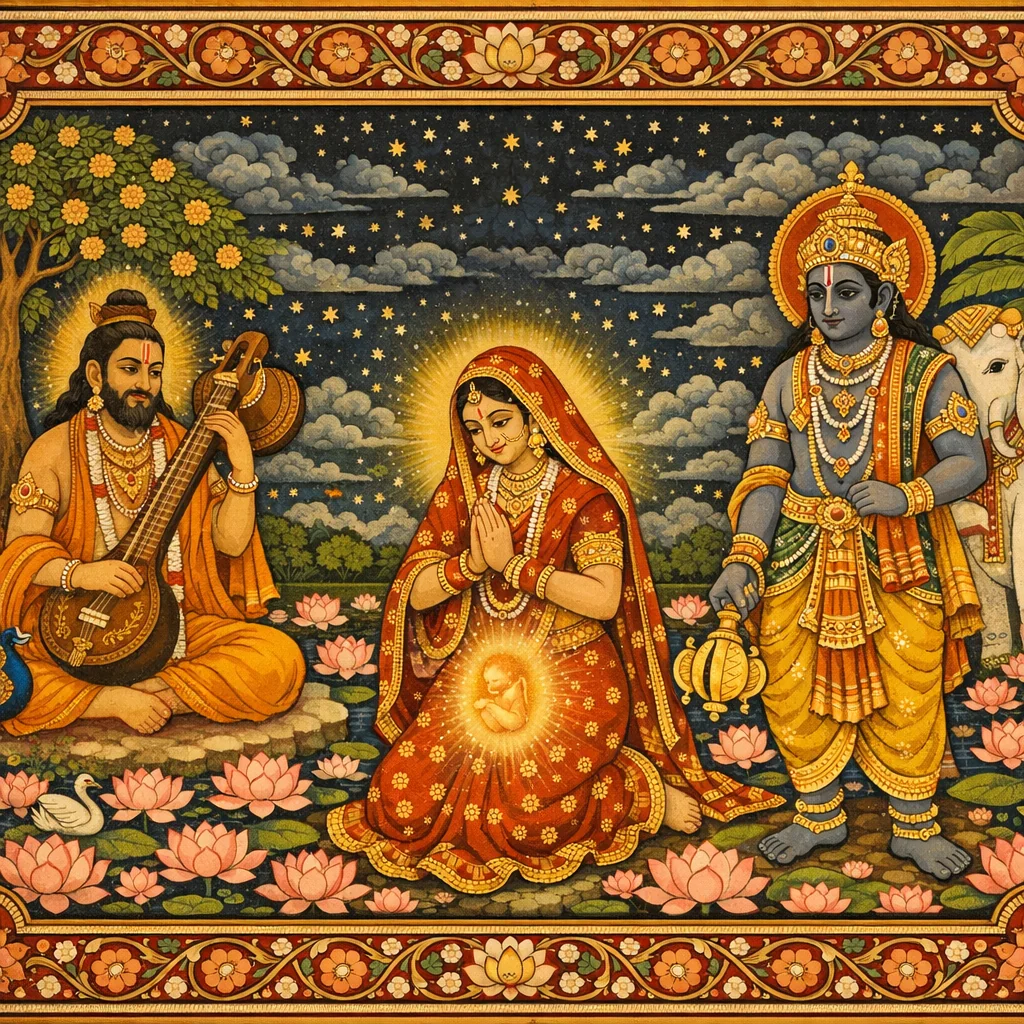
The chapter continues Prahlāda’s teachings to his school friends by tracing the origin of his bhakti. While Hiraṇyakaśipu performs austerities at Mandarācala, Indra and the devas raid the asura capital, scatter the demons, and seize Kayādhu, Prahlāda’s mother. Nārada Muni intervenes, declares her sinless, and reveals that the unborn child is a mahā-bhāgavata whom the devas cannot kill; Indra releases her and the devas honor her for the devotee in her womb. Nārada shelters Kayādhu in his āśrama until Hiraṇyakaśipu returns, teaching dharma and transcendental knowledge to both mother and unborn Prahlāda. Prahlāda then summarizes that wisdom: the body undergoes six transformations but the ātman does not; one must discern spirit from matter (neti-neti), know the soul as the witness amid the Lord’s material energies, and take up Kṛṣṇa consciousness to burn karmic seeds. He describes surrender to the guru (guru-śaraṇāgati), hearing and worship, remembrance of Paramātmā, conquest of inner enemies, and the ecstatic signs of pure devotion. The chapter ends by rejecting temporary opulence and even heavenly elevation, urging immediate worship of the Supersoul and affirming bhakti as the sole goal, preparing for Prahlāda’s inner realization to confront Hiraṇyakaśipu’s outward power.
Shlokas
Verse 1
श्रीनारद उवाच एवं दैत्यसुतै: पृष्टो महाभागवतोऽसुर: । उवाच तान्स्मयमान: स्मरन् मदनुभाषितम् ॥ १ ॥
Nārada Muni said: Though born in a family of asuras, Prahlāda was the greatest devotee. Questioned by the asura boys, he remembered my words and, smiling, replied to his friends.
Verse 2
श्रीप्रह्राद उवाच पितरि प्रस्थितेऽस्माकं तपसे मन्दराचलम् । युद्धोद्यमं परं चक्रुर्विबुधा दानवान्प्रति ॥ २ ॥ H
Prahlāda Mahārāja said: When our father Hiraṇyakaśipu went to Mandarācala to perform severe austerities, in his absence the devas, led by Indra, fiercely sought to subdue the dānavas in war.
Verse 3
पिपीलिकैरहिरिव दिष्टया लोकोपतापन: । पापेन पापोऽभक्षीति वदन्तो वासवादय: ॥ ३ ॥
“Alas! As a serpent is eaten by tiny ants, so Hiraṇyakaśipu, tormentor of the worlds, has been overcome by the fruits of his own sin.” Saying this, Indra and the devas prepared to fight the dānavas.
Verse 4
तेषामतिबलोद्योगं निशम्यासुरयूथपा: । वध्यमाना: सुरैर्भीता दुद्रुवु: सर्वतो दिशम् ॥ ४ ॥ कलत्रपुत्रवित्ताप्तान्गृहान्पशुपरिच्छदान् । नावेक्ष्यमाणास्त्वरिता: सर्वे प्राणपरीप्सव: ॥ ५ ॥
Seeing the demigods’ unprecedented vigor in battle, the demon commanders—being slain one after another—were seized with fear and fled, scattering in every direction. Eager only to save their lives, they rushed away without even looking back at their homes, wives, children, wealth, animals, or household goods.
Verse 5
तेषामतिबलोद्योगं निशम्यासुरयूथपा: । वध्यमाना: सुरैर्भीता दुद्रुवु: सर्वतो दिशम् ॥ ४ ॥ कलत्रपुत्रवित्ताप्तान्गृहान्पशुपरिच्छदान् । नावेक्ष्यमाणास्त्वरिता: सर्वे प्राणपरीप्सव: ॥ ५ ॥
Seeing the demigods’ unprecedented vigor in battle, the demon commanders—being slain one after another—were seized with fear and fled, scattering in every direction. Eager only to save their lives, they rushed away without even looking back at their homes, wives, children, wealth, animals, or household goods.
Verse 6
व्यलुम्पन् राजशिबिरममरा जयकाङ्क्षिण: । इन्द्रस्तु राजमहिषीं मातरं मम चाग्रहीत् ॥ ६ ॥
Victorious and eager for triumph, the demigods plundered the royal camp of Hiraṇyakaśipu, king of the demons, and destroyed everything within. Then Indra, lord of heaven, seized my mother, the queen.
Verse 7
नीयमानां भयोद्विग्नां रुदतीं कुररीमिव । यदृच्छयागतस्तत्र देवर्षिर्ददृशे पथि ॥ ७ ॥
As my mother was being led away, she trembled in fear and wept like a kurarī bird seized by a predator. Just then the great sage Nārada, arriving there by chance with no other engagement, saw her on the road in that condition.
Verse 8
प्राह नैनां सुरपते नेतुमर्हस्यनागसम् । मुञ्च मुञ्च महाभाग सतीं परपरिग्रहम् ॥ ८ ॥
Nārada Muni said: “O Indra, king of the demigods, this woman is truly sinless; you should not drag her away so mercilessly. O greatly fortunate one, she is a chaste satī, the wife of another—release her at once, release her.”
Verse 9
श्रीइन्द्र उवाच आस्तेऽस्या जठरे वीर्यमविषह्यं सुरद्विष: । आस्यतां यावत्प्रसवं मोक्ष्येऽर्थपदवीं गत: ॥ ९ ॥
King Indra said: Within the womb of this woman, the wife of the devas’ enemy, lies a seed of unbearable power. Therefore keep her in our custody until she gives birth; afterward we shall release her.
Verse 10
श्रीनारद उवाच अयं निष्किल्बिष: साक्षान्महाभागवतो महान् । त्वया न प्राप्स्यते संस्थामनन्तानुचरो बली ॥ १० ॥
Nārada Muni replied: The child within this womb is spotless and sinless—truly a great bhāgavata. He is a powerful servant of Lord Ananta; therefore you will not be able to kill him.
Verse 11
इत्युक्तस्तां विहायेन्द्रो देवर्षेर्मानयन्वच: । अनन्तप्रियभक्त्यैनां परिक्रम्य दिवं ययौ ॥ ११ ॥
When the great sage Nārada spoke thus, Indra honored his words and at once released my mother. Because I was a devotee of the Lord, the demigods circumambulated her in reverence, and then returned to their heavenly realm.
Verse 12
ततो मे मातरमृषि: समानीय निजाश्रमे । आश्वास्येहोष्यतां वत्से यावत्ते भर्तुरागम: ॥ १२ ॥
Then the sage Nārada brought my mother to his own āśrama and reassured her: “My dear child, stay here in my āśrama until your husband returns.”
Verse 13
तथेत्यवात्सीद्देवर्षेरन्तिके साकुतोभया । यावद्दैत्यपतिर्घोरात्तपसो न न्यवर्तत ॥ १३ ॥
Accepting Devarṣi Nārada’s instruction, my mother stayed under his care, fearless in every direction, until my father—the king of the Daityas—returned from his dreadful austerities.
Verse 14
ऋषिं पर्यचरत्तत्र भक्त्या परमया सती । अन्तर्वत्नी स्वगर्भस्य क्षेमायेच्छाप्रसूतये ॥ १४ ॥
My mother, being pregnant, sought the welfare of the child within her womb and wished to give birth only after her husband’s return; therefore she stayed in Nārada Muni’s āśrama and served him with supreme devotion.
Verse 15
ऋषि: कारुणिकस्तस्या: प्रादादुभयमीश्वर: । धर्मस्य तत्त्वं ज्ञानं च मामप्युद्दिश्य निर्मलम् ॥ १५ ॥
Nārada Muni, naturally compassionate and situated beyond matter, instructed both my mother who served him and me within the womb, granting the essence of dharma and pure transcendental knowledge, untouched by material contamination.
Verse 16
तत्तु कालस्य दीर्घत्वात् स्त्रीत्वान्मातुस्तिरोदधे । ऋषिणानुगृहीतं मां नाधुनाप्यजहात्स्मृति: ॥ १६ ॥
Because so much time has passed and because my mother was a woman, she forgot those teachings; but the great sage Nārada blessed me, and therefore that remembrance has never left me, even now.
Verse 17
भवतामपि भूयान्मे यदि श्रद्दधते वच: । वैशारदी धी: श्रद्धात: स्त्रीबालानां च मे यथा ॥ १७ ॥
My dear friends, if you place faith in my words, then by that very faith you too can understand transcendental knowledge, as I have, though you are mere children. In the same way, a woman can also, by faith, discern spirit from matter.
Verse 18
जन्माद्या: षडिमे भावा दृष्टा देहस्य नात्मन: । फलानामिव वृक्षस्य कालेनेश्वरमूर्तिना ॥ १८ ॥
Just as a tree’s fruits and flowers, in due course of time, undergo six changes—birth, existence, growth, transformation, decline, and death—so too does the material body; but the spiritual soul (ātman) undergoes no such changes.
Verse 19
आत्मा नित्योऽव्यय: शुद्ध एक: क्षेत्रज्ञ आश्रय: । अविक्रिय: स्वदृग् हेतुर्व्यापकोऽसङ्ग्यनावृत: ॥ १९ ॥ एतैर्द्वादशभिर्विद्वानात्मनो लक्षणै: परै: । अहं ममेत्यसद्भावं देहादौ मोहजं त्यजेत् ॥ २० ॥
The Ātmā is eternal, imperishable, pure, one, the knower of the field (the body), and the shelter of all. He is changeless, self-luminous, the cause of all causes, all-pervading, unattached, and never covered by matter. Knowing these twelve transcendental marks, the truly learned should abandon the delusion born of ignorance—“I” and “mine” with regard to the body and all that pertains to it.
Verse 20
आत्मा नित्योऽव्यय: शुद्ध एक: क्षेत्रज्ञ आश्रय: । अविक्रिय: स्वदृग् हेतुर्व्यापकोऽसङ्ग्यनावृत: ॥ १९ ॥ एतैर्द्वादशभिर्विद्वानात्मनो लक्षणै: परै: । अहं ममेत्यसद्भावं देहादौ मोहजं त्यजेत् ॥ २० ॥
Having rightly understood these twelve supreme characteristics of the Ātmā, the wise should wholly abandon the delusive, ignorance-born notion of “I” and “mine” with respect to the body and all that is connected with it.
Verse 21
स्वर्णं यथा ग्रावसु हेमकार: क्षेत्रेषु योगैस्तदभिज्ञ आप्नुयात् । क्षेत्रेषु देहेषु तथात्मयोगै- रध्यात्मविद् ब्रह्मगतिं लभेत ॥ २१ ॥
Just as a skilled goldsmith recognizes gold within stone and, by various processes, extracts it from the ore, so the knower of the inner self discerns the spiritual soul within the field of the body and, by cultivating ātma-yoga, attains brahma-gati—the supreme perfection.
Verse 22
अष्टौ प्रकृतय: प्रोक्तास्त्रय एव हि तद्गुणा: । विकारा: षोडशाचार्यै: पुमानेक: समन्वयात् ॥ २२ ॥
The eight separated energies of material nature, the three guṇas, and the sixteen transformations—within all these stands one puruṣa, the individual soul, as the witness. Therefore the great ācāryas have concluded that the jīva becomes conditioned by these material elements.
Verse 23
देहस्तु सर्वसङ्घातो जगत्तस्थुरिति द्विधा । अत्रैव मृग्य: पुरुषो नेति नेतीत्यतत्त्यजन् ॥ २३ ॥
The body is merely a conglomeration of elements and is spoken of in two ways—gross and subtle (moving and unmoving). Yet within these bodies the puruṣa, the soul, is to be sought. By analysis—saying “not this, not this”—and rejecting what is not the self, one separates spirit from matter.
Verse 24
अन्वयव्यतिरेकेण विवेकेनोशतात्मना । स्वर्गस्थानसमाम्नायैर्विमृशद्भिरसत्वरै: ॥ २४ ॥
With discernment by connection and distinction (anvaya‑vyatireka) and a purified mind, sober sages should seek the ātman, reflecting on its relation to and difference from all things that undergo creation, maintenance, and dissolution.
Verse 25
बुद्धेर्जागरणं स्वप्न: सुषुप्तिरिति वृत्तय: । ता येनैवानुभूयन्ते सोऽध्यक्ष: पुरुष: पर: ॥ २५ ॥
Intelligence is perceived in three states—wakefulness, dreaming, and deep sleep. He who witnesses these three is the original Lord and ruler, the Supreme Puruṣa, Bhagavān, the Supreme Personality of Godhead.
Verse 26
एभिस्त्रिवर्णै: पर्यस्तैर्बुद्धिभेदै: क्रियोद्भवै: । स्वरूपमात्मनो बुध्येद् गन्धैर्वायुमिवान्वयात् ॥ २६ ॥
By these three divisions of intelligence—born of activity and colored by the three guṇas—one may, under Bhagavān’s guidance, understand the living soul, just as air is known by the aromas it carries. Yet these divisions are not the soul; they are guṇa-made and karma-born.
Verse 27
एतद्द्वारो हि संसारो गुणकर्मनिबन्धन: । अज्ञानमूलोऽपार्थोऽपि पुंस: स्वप्न इवार्प्यते ॥ २७ ॥
Polluted intelligence is the very doorway to saṁsāra, binding one by the modes of nature and by karma. Material existence, rooted in ignorance, is like a dream in which one suffers falsely; it should be seen as unwanted and temporary.
Verse 28
तस्माद्भवद्भि: कर्तव्यं कर्मणां त्रिगुणात्मनाम् । बीजनिर्हरणं योग: प्रवाहोपरमो धिय: ॥ २८ ॥
Therefore, my dear friends, O sons of the asuras, your duty is to take up the yoga of Kṛṣṇa consciousness, which burns the seed of fruitive karma fashioned by the three guṇas and halts the mind’s flow through wakefulness, dreaming, and deep sleep. By Kṛṣṇa consciousness, ignorance is dispelled at once.
Verse 29
तत्रोपायसहस्राणामयं भगवतोदित: । यदीश्वरे भगवति यथा यैरञ्जसा रति: ॥ २९ ॥
Among countless means, the method spoken and accepted by Bhagavān Himself is all-perfect: the performance of one’s duties in such a way that loving rati for the Supreme Lord awakens.
Verse 30
गुरुशुश्रूषया भक्त्या सर्वलब्धार्पणेन च । सङ्गेन साधुभक्तानामीश्वराराधनेन च ॥ ३० ॥ श्रद्धया तत्कथायां च कीर्तनैर्गुणकर्मणाम् । तत्पादाम्बुरुहध्यानात तल्लिङ्गेक्षार्हणादिभि: ॥ ३१ ॥
Accept the bona fide spiritual master and serve him with śraddhā and bhakti. Offer whatever you possess to the guru, and in the company of sādhus and devotees worship the Lord.
Verse 31
गुरुशुश्रूषया भक्त्या सर्वलब्धार्पणेन च । सङ्गेन साधुभक्तानामीश्वराराधनेन च ॥ ३० ॥ श्रद्धया तत्कथायां च कीर्तनैर्गुणकर्मणाम् । तत्पादाम्बुरुहध्यानात तल्लिङ्गेक्षार्हणादिभि: ॥ ३१ ॥
With faith, hear the Lord’s kathā and perform kīrtana of His transcendental qualities and līlās. Meditate on His lotus feet, and worship His Deity strictly according to śāstra and the guru’s injunctions.
Verse 32
हरि: सर्वेषु भूतेषु भगवानास्त ईश्वर: । इति भूतानि मनसा कामैस्तै: साधु मानयेत् ॥ ३२ ॥
Always remember that Hari, Bhagavān as Paramātmā, dwells in the heart of every living being. Therefore, giving up selfish desires, offer due respect to each creature according to its position.
Verse 33
एवं निर्जितषड्वर्गै: क्रियते भक्तिरीश्वरे । वासुदेवे भगवति यया संलभ्यते रति: ॥ ३३ ॥
By these practices one conquers the six enemies—lust, anger, greed, illusion, madness, and envy—and thus becomes fit to serve the Lord, Vāsudeva Bhagavān. In this way one surely attains rati, loving devotional service to the Supreme Lord.
Verse 34
निशम्य कर्माणि गुणानतुल्यान् वीर्याणि लीलातनुभि: कृतानि । यदातिहर्षोत्पुलकाश्रुगद्गदं प्रोत्कण्ठ उद्गायति रौति नृत्यति ॥ ३४ ॥
Hearing of the Lord’s incomparable qualities, mighty deeds, and pastimes performed in His avatāras through His līlā-forms, the pure devotee—already liberated—overflows with transcendental joy: his hairs stand on end, tears stream from his eyes, and his voice chokes. Sometimes he sings aloud, sometimes he weeps, and sometimes he dances openly.
Verse 35
यदा ग्रहग्रस्त इव क्वचिद्धस- त्याक्रन्दते ध्यायति वन्दते जनम् । मुहु: श्वसन्वक्ति हरे जगत्पते नारायणेत्यात्ममतिर्गतत्रप: ॥ ३५ ॥
At times the devotee becomes like one possessed: he laughs or cries out loudly; at times he sits in meditation and offers obeisance to every living being, seeing each as the Lord’s devotee. Breathing heavily again and again, careless of social convention, he chants aloud like one mad with bhakti: “Hare! O Lord of the universe! Nārāyaṇa!”
Verse 36
तदा पुमान्मुक्तसमस्तबन्धन- स्तद्भावभावानुकृताशयाकृति: । निर्दग्धबीजानुशयो महीयसा भक्तिप्रयोगेण समेत्यधोक्षजम् ॥ ३६ ॥
Then the devotee is freed from all bondage: in harmony with the Lord’s bhāva and pastimes, his mind and even his bodily nature become spiritual. By mighty practice of bhakti he draws near to Adhokṣaja, and ignorance, material consciousness, and every desire are burned to ashes, seed and all. Thus he attains shelter at the Lord’s lotus feet.
Verse 37
अधोक्षजालम्भमिहाशुभात्मन: शरीरिण: संसृतिचक्रशातनम् । तद् ब्रह्मनिर्वाणसुखं विदुर्बुधा- स्ततो भजध्वं हृदये हृदीश्वरम् ॥ ३७ ॥
For the embodied soul whose heart is tainted, taking shelter of Adhokṣaja is what cuts the wheel of saṁsāra. This is the bliss of Brahman-nirvāṇa, as the wise know. Therefore, my friends, meditate upon and worship within the heart Hṛdīśvara, the Lord dwelling in everyone’s heart.
Verse 38
कोऽतिप्रयासोऽसुरबालका हरे- रुपासने स्वे हृदि छिद्रवत् सत: । स्वस्यात्मन: सख्युरशेषदेहिनां सामान्यत: किं विषयोपपादनै: ॥ ३८ ॥
O sons of the asuras, what great exertion is there in worshiping Hari, who ever dwells within one’s own heart, as near as an opening? He is Paramātmā—the common friend and well-wisher of all embodied beings. Why then become addicted to contriving needless, artificial paraphernalia for sense enjoyment?
Verse 39
राय: कलत्रं पशव: सुतादयो गृहा मही कुञ्जरकोशभूतय: । सर्वेऽर्थकामा: क्षणभङ्गुरायुष: कुर्वन्ति मर्त्यस्य कियत् प्रियं चला: ॥ ३९ ॥
Wealth, a beautiful wife and companions, sons and daughters, home, animals like cows, elephants and horses, one’s treasury, economic gain and sense enjoyment—indeed even the span to relish them—are all fleeting and fragile. Since human life is temporary, what lasting good can such wavering opulences give to the wise who know the self to be eternal?
Verse 40
एवं हि लोका: क्रतुभि: कृता अमी क्षयिष्णव: सातिशया न निर्मला: । तस्माददृष्टश्रुतदूषणं परं भक्त्योक्तयेशं भजतात्मलब्धये ॥ ४० ॥
Even the worlds attained by grand Vedic sacrifices are perishable; though exceedingly pleasurable, they are not pure, for they bear the taint of material existence. Therefore, for your true welfare and self-realization, worship the Supreme Lord with bhakti as taught in the revealed scriptures—He of whom no intoxication or fault has ever been seen or heard.
Verse 41
यदर्थ इह कर्माणि विद्वन्मान्यसकृन्नर: । करोत्यतो विपर्यासममोघं विन्दते फलम् ॥ ४१ ॥
Seeking material gain, a man who fancies himself very wise acts again and again; yet from those very acts he inevitably meets a contrary result. In this life or the next, he is repeatedly frustrated.
Verse 42
सुखाय दु:खमोक्षाय सङ्कल्प इह कर्मिण: । सदाप्नोतीहया दु:खमनीहाया: सुखावृत: ॥ ४२ ॥
In this world the karmī resolves to gain happiness and escape distress, and thus he acts. Yet in truth, so long as he does not strive for happiness, he remains covered by a measure of ease; the moment he begins laboring for happiness, conditions of suffering begin.
Verse 43
कामान्कामयते काम्यैर्यदर्थमिह पूरुष: । स वै देहस्तु पारक्यो भङ्गुरो यात्युपैति च ॥ ४३ ॥
For the body’s comfort a man longs for many desirable things and devises countless plans; yet this body is not truly his own—it belongs to others. This perishable body embraces the living being for a while, and then departs, leaving him behind.
Verse 44
किमु व्यवहितापत्यदारागारधनादय: । राज्यकोशगजामात्यभृत्याप्ता ममतास्पदा: ॥ ४४ ॥
When this body is destined to end as stool or earth, what meaning have the body’s paraphernalia—wife, home, wealth, children and the rest—kingdom, treasury, elephants, ministers, servants and friends, all seats of possessiveness? They too are temporary; what more is there to say?
Verse 45
किमेतैरात्मनस्तुच्छै: सह देहेन नश्वरै: । अनर्थैरर्थसङ्काशैर्नित्यानन्दरसोदधे: ॥ ४५ ॥
What use are these petty, perishable things—ending with the body—though they look like gain while being misfortune, to the ātman? Before the ocean of eternal bliss they are insignificant; what value have such trifling ties for the deathless living being?
Verse 46
निरूप्यतामिह स्वार्थ: कियान्देहभृतोऽसुरा: । निषेकादिष्ववस्थासु क्लिश्यमानस्य कर्मभि: ॥ ४६ ॥
My friends, O sons of the asuras: the living being gains various bodies according to past karma, and from conception in the womb onward he is seen to suffer in every condition of life in relation to that body, tormented by his deeds. Consider fully, then tell me—what real interest has the soul in fruitive actions that yield only hardship and misery?
Verse 47
कर्माण्यारभते देही देहेनात्मानुवर्तिना । कर्मभिस्तनुते देहमुभयं त्वविवेकत: ॥ ४७ ॥
The embodied soul begins actions with the body that follows him, and by those very actions he fashions another body—both due to lack of discernment. Receiving one body, he acts through it and creates the next; thus, by gross ignorance, he transmigrates from body to body in the repeated cycle of birth and death.
Verse 48
तस्मादर्थाश्च कामाश्च धर्माश्च यदपाश्रया: । भजतानीहयात्मानमनीहं हरिमीश्वरम् ॥ ४८ ॥
Therefore dharma, artha, and kāma all rest upon the will of the Supreme Personality of Godhead. So, my friends, follow the devotees’ path: free from desire, wholly dependent on the Lord’s arrangement, worship Hari—the indwelling Īśvara, the Paramātmā—through devotional service.
Verse 49
सर्वेषामपि भूतानां हरिरात्मेश्वर: प्रिय: । भूतैर्महद्भि: स्वकृतै: कृतानां जीवसंज्ञित: ॥ ४९ ॥
Hari is the soul and the Supersoul (Paramātmā) of all beings; therefore He is the dearest. All living souls and bodies are manifestations of His śakti, and thus He is the supreme controller.
Verse 50
देवोऽसुरो मनुष्यो वा यक्षो गन्धर्व एव वा । भजन्मुकुन्दचरणं स्वस्तिमान् स्याद्यथा वयम् ॥ ५० ॥
Whether deva, asura, human, Yakṣa, or Gandharva—whoever serves the lotus feet of Mukunda, the giver of liberation, is truly situated in the most auspicious state, just like us.
Verse 51
नालं द्विजत्वं देवत्वमृषित्वं वासुरात्मजा: । प्रीणनाय मुकुन्दस्य न वृत्तं न बहुज्ञता ॥ ५१ ॥ न दानं न तपो नेज्या न शौचं न व्रतानि च । प्रीयतेऽमलया भक्त्या हरिरन्यद् विडम्बनम् ॥ ५२ ॥
O sons of the asuras! Mukunda is not pleased by perfect brāhmaṇa-hood, godhood, or saintliness, nor by refined conduct or vast learning. Not by charity, austerity, sacrifice, cleanliness, or vows either. Śrī Hari is pleased only by pure, unwavering bhakti; without sincere devotion, everything else is mere display.
Verse 52
नालं द्विजत्वं देवत्वमृषित्वं वासुरात्मजा: । प्रीणनाय मुकुन्दस्य न वृत्तं न बहुज्ञता ॥ ५१ ॥ न दानं न तपो नेज्या न शौचं न व्रतानि च । प्रीयतेऽमलया भक्त्या हरिरन्यद् विडम्बनम् ॥ ५२ ॥
O sons of the asuras! Mukunda is not pleased by perfect brāhmaṇa-hood, godhood, or saintliness, nor by refined conduct or vast learning. Not by charity, austerity, sacrifice, cleanliness, or vows either. Śrī Hari is pleased only by pure, unwavering bhakti; without sincere devotion, everything else is mere display.
Verse 53
ततो हरौ भगवति भक्तिं कुरुत दानवा: । आत्मौपम्येन सर्वत्र सर्वभूतात्मनीश्वरे ॥ ५३ ॥
Therefore, O dānavas! Just as you regard and care for yourself with favorable concern, in the same way render bhakti to Bhagavān Hari, who is present everywhere as the Paramātmā of all beings.
Verse 54
दैतेया यक्षरक्षांसि स्त्रिय: शूद्रा व्रजौकस: । खगा मृगा: पापजीवा: सन्ति ह्यच्युततां गता: ॥ ५४ ॥
O my friends, O sons of demons, everyone, including you (the Yakṣas and Rākṣasas), the unintelligent women, śūdras and cowherd men, the birds, the lower animals and the sinful living entities, can revive his original, eternal spiritual life and exist forever simply by accepting the principles of bhakti-yoga.
Verse 55
एतावानेव लोकेऽस्मिन्पुंस: स्वार्थ: पर: स्मृत: । एकान्तभक्तिर्गोविन्दे यत्सर्वत्र तदीक्षणम् ॥ ५५ ॥
In this material world, to render service to the lotus feet of Govinda, the cause of all causes, and to see Him everywhere, is the only goal of life. This much alone is the ultimate goal of human life, as explained by all the revealed scriptures.
Frequently Asked Questions
Indra feared that Hiraṇyakaśipu’s “seed” in Kayādhu’s womb would produce another powerful demon, so he sought to keep her in custody until delivery. Nārada stopped him because Kayādhu was sinless and, more importantly, the unborn child was a great devotee protected by the Lord; harming such a devotee would be both adharmic and futile, since the devas cannot overcome the Lord’s protection (poṣaṇa).
The chapter presents śravaṇa as spiritually potent beyond bodily limitation: Nārada instructed Kayādhu, and Prahlāda, present within the womb, heard those teachings. Because bhakti and ātma-jñāna pertain to the soul (not the developing body), and because Nārada blessed him, Prahlāda retained the instruction even when his mother later forgot.
Ātmā can denote the Supreme Self (Paramātmā/Bhagavān) and the individual self (jīvātmā). Both are spiritual and distinct from matter, yet they are not identical in all respects: the Lord is the ultimate cause and all-pervading shelter (āśraya), while the jīva is a dependent knower within a particular body. Recognizing this dissolves bodily ‘I’ and ‘mine’ and redirects life toward devotion.
Because they remain within the realm of guṇas and temporality: svarga is comfortable but not nirmala (free from material taint) and eventually ends. Prahlāda’s argument is soteriological: the real problem is the birth-death cycle; only bhakti—constant remembrance and service to the Lord—stops the wheel of saṁsāra.
It defines perfection as the process accepted by the Lord: duties and practices that awaken love for Bhagavān (bhakti). Practically, Prahlāda lists guru-śaraṇāgati, service with faith, hearing and glorifying the Lord, deity worship per śāstra and guru, and Paramātmā remembrance—leading to purification, conquest of inner enemies, and steady loving service.