
Shloka 38
Arjuna Vishada Yoga — The Yoga of Arjuna's Despondency
कथं न ज्ञेयमस्माभिः पापादस्मान्निवर्तितुम् । कुलक्षयकृतं दोषं प्रपश्यद्भिर्जनार्दन ॥ १.३८ ॥
kathaṃ na jñeyam asmābhiḥ pāpād asmān nivartitum | kula-kṣaya-kṛtaṃ doṣaṃ prapaśyadbhir janārdana || 1.38 ||

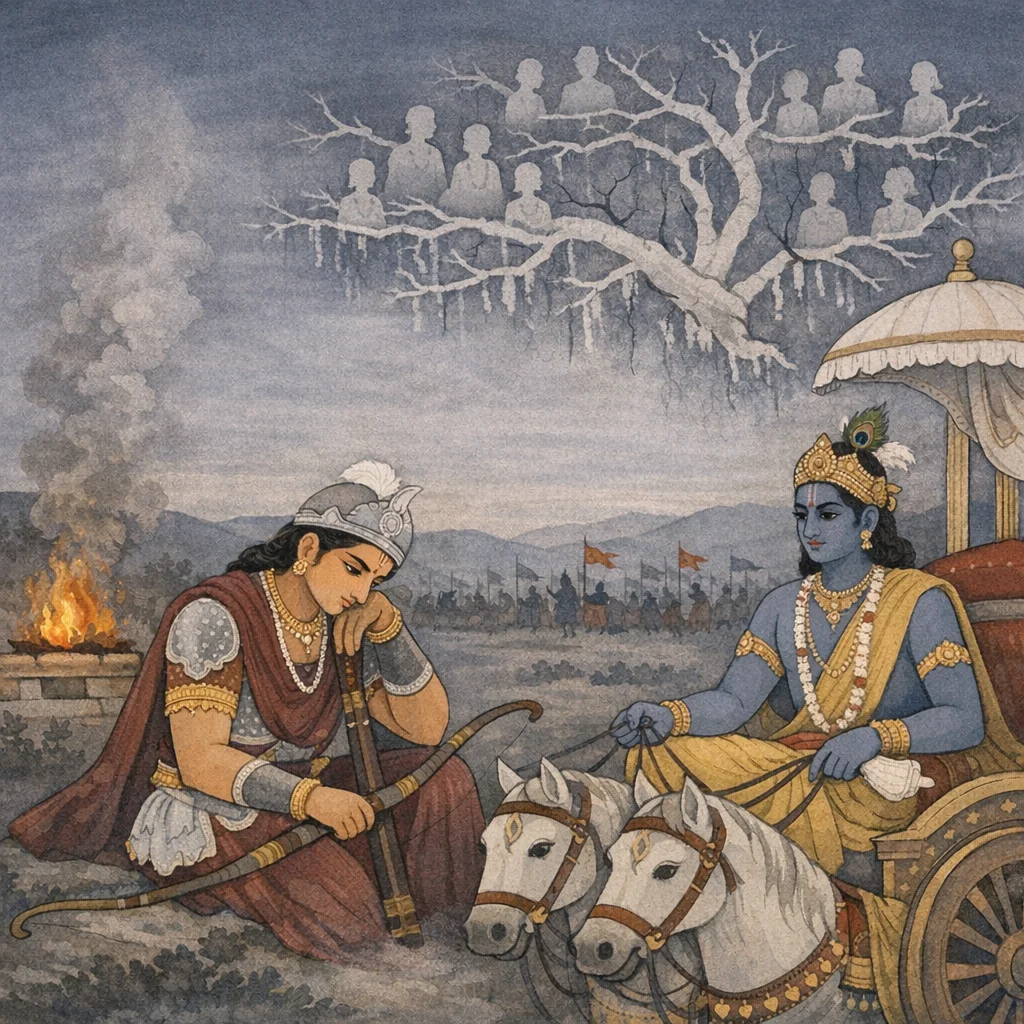
How could it not be known by us to turn away from sin, O Janārdana—we who clearly perceive the fault arising from the destruction of the family?
How should it not be known by us to turn away from wrongdoing, O Janārdana, we who clearly see the fault arising from the destruction of the family?
How could it not be understood by us to refrain from wrongdoing, O Janārdana—by us who perceive clearly the defect produced by the ruin of the lineage?
The verse appeals to reflective responsibility: awareness of consequences creates an obligation to desist. ‘Jñeyam’ here is practical-ethical knowledge, not merely theoretical.
FAQs
Arjuna argues from anticipated remorse: once one foresees harm, proceeding would violate self-trust and intensify later guilt.
The verse treats knowledge as inherently action-guiding; later the Gītā will refine what counts as true knowledge and how it informs duty.
It continues Arjuna’s critique: unlike those ‘blinded by greed,’ he claims to recognize long-term social damage and thus feels compelled to desist.
It supports an ethics of foresight: when harms are predictable (to communities, institutions, families), informed agents bear heightened responsibility to prevent them.