
Shloka 33
Arjuna Vishada Yoga — The Yoga of Arjuna's Despondency
येषामर्थे काङ्क्षितं नो राज्यं भोगा: सुखानि च | त इमेऽवस्थिता युद्धे प्राणांस्त्यक्त्वा धनानि च ॥ १.३३ ॥
yeṣām arthe kāṅkṣitaṃ no rājyaṃ bhogāḥ sukhāni ca | ta ime'vasthitā yuddhe prāṇāṃs tyaktvā dhanāni ca || 1.33 ||

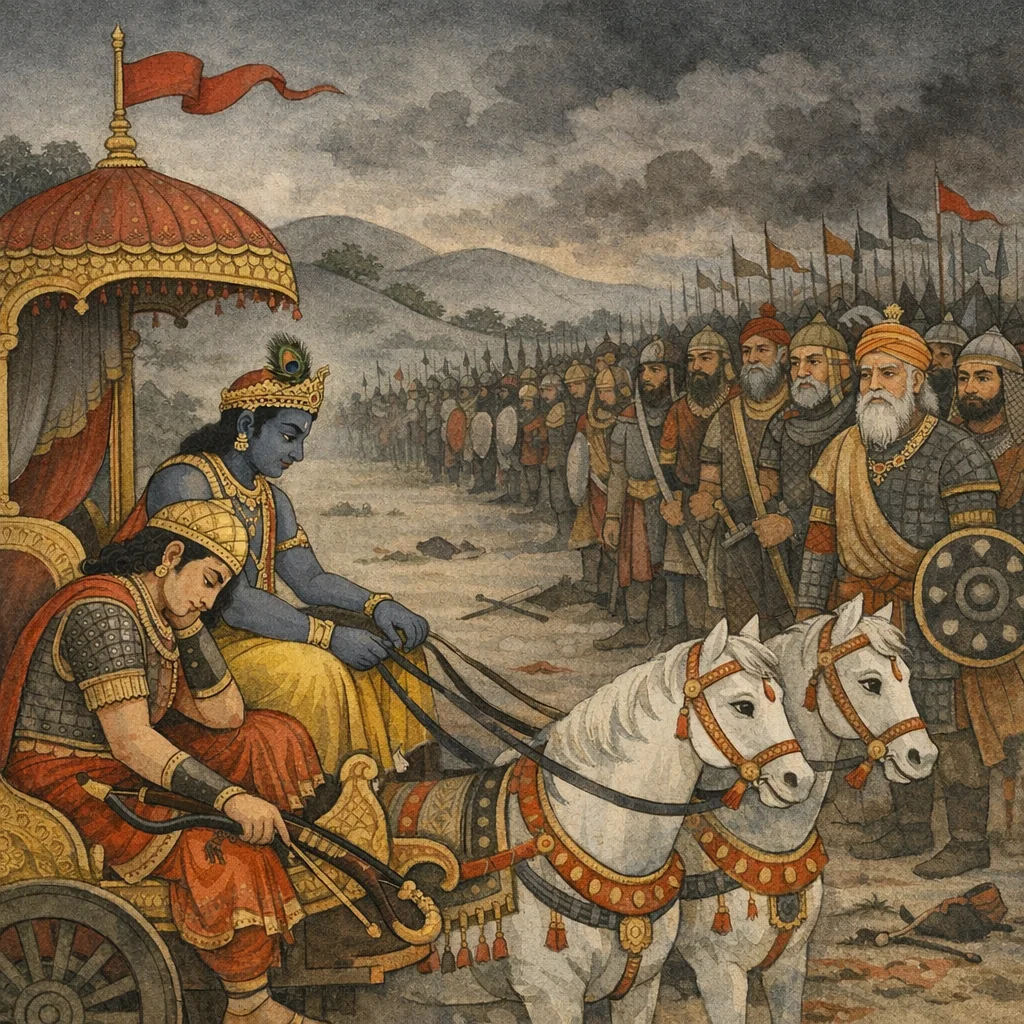
—those for whose sake we desired kingdom, enjoyments, and pleasures, those very persons stand here in battle, having renounced life and wealth.
…they for whose sake we desired kingdom, enjoyments and pleasures—those very persons stand here in the conflict, having set aside life and wealth.
…those for whose sake sovereignty, enjoyments, and pleasures were desired by us—those people are stationed here in battle, relinquishing life and possessions.
Tyaktvā (“having relinquished”) can be read as ‘risking’ or ‘renouncing’ life and wealth. The emphasis is on the tragic irony: the intended beneficiaries are themselves participants.
FAQs
Arjuna recognizes a contradiction between motive and outcome: striving for communal benefit becomes incoherent when the community itself is divided and endangered, producing paralysis.
The verse sets up the later teaching that action cannot be justified solely by desired outcomes; it must align with dharma and a clearer understanding of self and duty.
It completes the thought begun in 1.32: the very elders and relatives for whom prosperity was desired are present in the opposing ranks.
It cautions against pursuing goals ‘for others’ without their consent or against their welfare, and highlights the need for ethical means, not only intended ends.