
Shloka 31
Arjuna Vishada Yoga — The Yoga of Arjuna's Despondency
न च श्रेयोऽनुपश्यामि हत्वा स्वजनमाहवे । न काङ्क्षे विजयं कृष्ण न च राज्यं सुखानि च ॥ १.३१ ॥
na ca śreyo'nupaśyāmi hatvā svajanam āhave | na kāṅkṣe vijayaṃ kṛṣṇa na ca rājyaṃ sukhāni ca || 1.31 ||

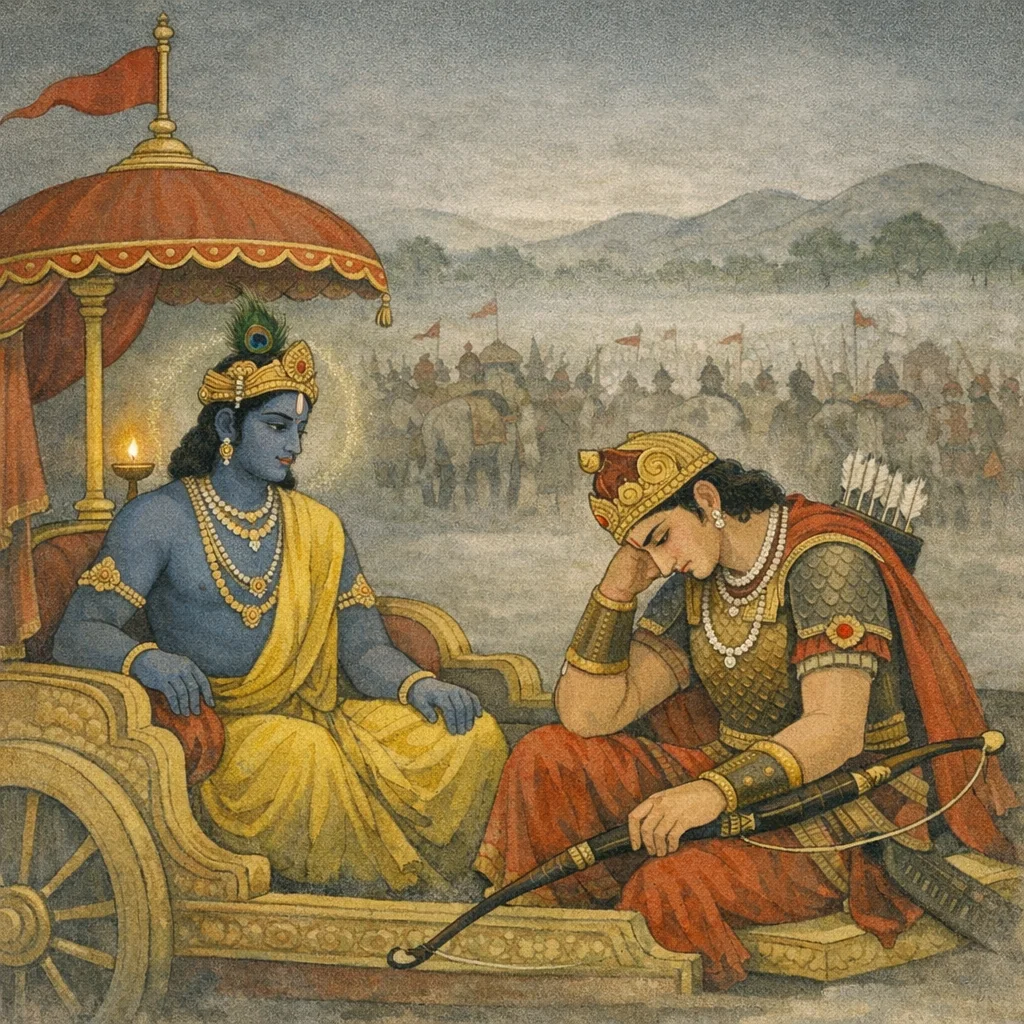
I do not perceive any true good in slaying my own kinsmen in battle. O Kṛṣṇa, I desire neither victory, nor kingdom, nor pleasures.
I do not see any good in engaging in battle after opposing my own people. O Kṛṣṇa, I do not desire victory, nor kingdom, nor pleasures.
And I do not perceive what is better (śreyas) after confronting my own kin in battle. O Kṛṣṇa, I do not wish for victory, nor for sovereignty, nor for enjoyments.
Śreyas can be rendered as “good,” “the better course,” or “spiritual welfare.” The verse frames Arjuna’s hesitation as an evaluative (ethical/prudential) judgment rather than fear alone.
FAQs
Arjuna’s statement reflects acute moral stress: anticipated loss of valued relationships makes external success (victory, power) appear meaningless, a common feature of ethical conflict where personal bonds override instrumental goals.
The verse introduces the śreyas/preyas tension: what seems immediately preferable (avoiding painful action) may conflict with a deeper notion of the ‘better’ grounded in dharma, which later teaching reframes through self-knowledge and non-attachment.
This is part of Arjuna’s opening crisis in which he questions the value of participation in a dynastic conflict when it entails confronting his own kin.
It can be read as a case study in values clarification: when goals like status or success feel hollow, one must re-examine guiding principles and responsibilities rather than acting solely from impulse or aversion.