
Shloka 29
Arjuna Vishada Yoga — The Yoga of Arjuna's Despondency
वेपथुश्च शरीरे मे रोमहर्षश्च जायते । गाण्डीवं स्रंसते हस्तात्त्वक्चैव परिदह्यते ॥ १.२९ ॥
vepathuś ca śarīre me roma-harṣaś ca jāyate | gāṇḍīvaṁ sraṁsate hastāt tvak caiva paridahyate || 1.29 ||

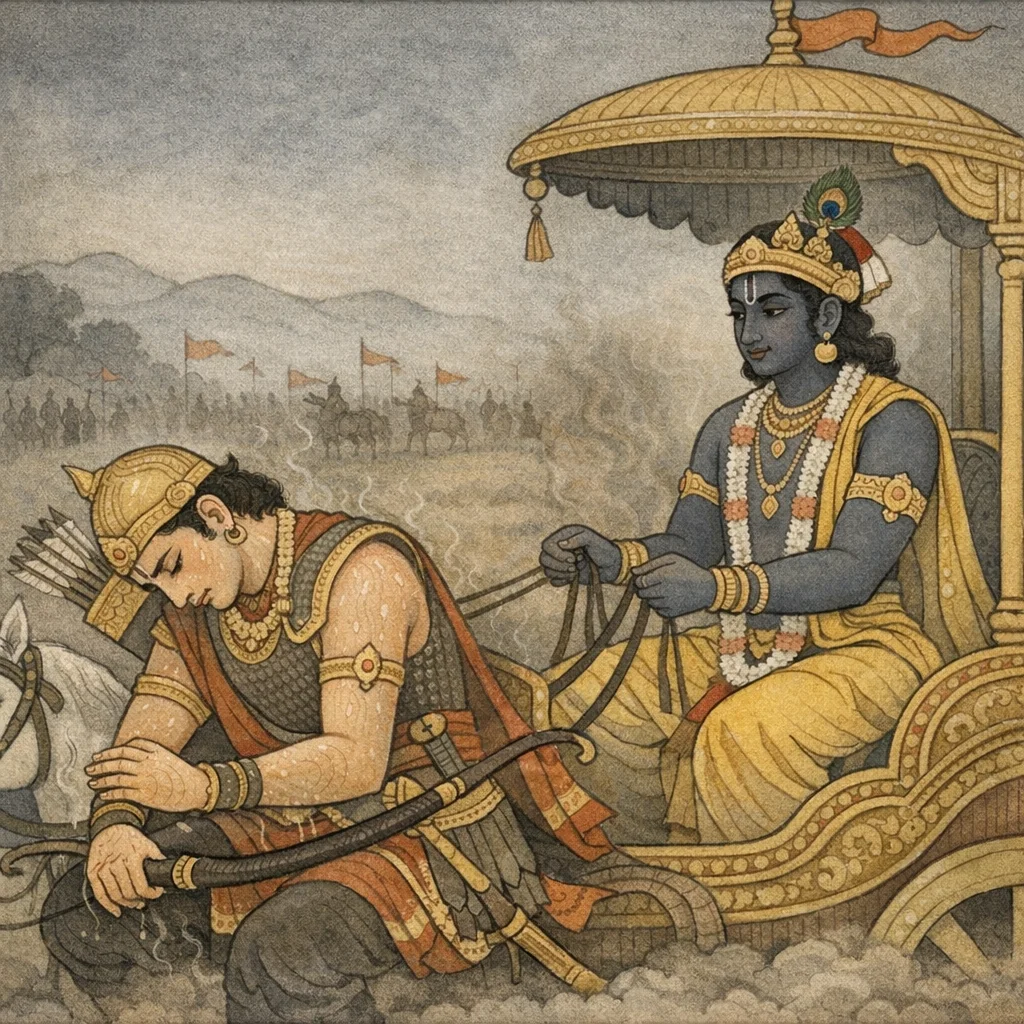
My limbs tremble, and my hair stands on end; the Gāṇḍīva slips from my hand, and my skin burns all over.
My limbs tremble, and my hair stands on end; my bow Gāṇḍīva slips from my hand, and my skin burns.
There is trembling in my body and bristling of hair; the Gāṇḍīva slips from my hand, and my skin feels burning.
Traditional translations may treat these as signs of fear; the broader context suggests acute stress and moral shock. Academically, they are somatic markers of intense affect (anxiety/grief).
FAQs
The verse records bodily symptoms of acute distress—trembling, piloerection, heat sensations—indicating that Arjuna’s conflict is not abstract but fully embodied.
It foreshadows the Gītā’s later emphasis on mastering the mind and senses: unsteady inner states manifest as loss of steadiness in action.
These symptoms intensify the narrative of Arjuna’s collapse into despondency, preparing for his explicit refusal to proceed.
Recognize physical signs of stress as signals to pause, reflect, and seek grounding before making consequential choices.