
Shloka 2
Arjuna Vishada Yoga — Arjuna Vishada Yoga
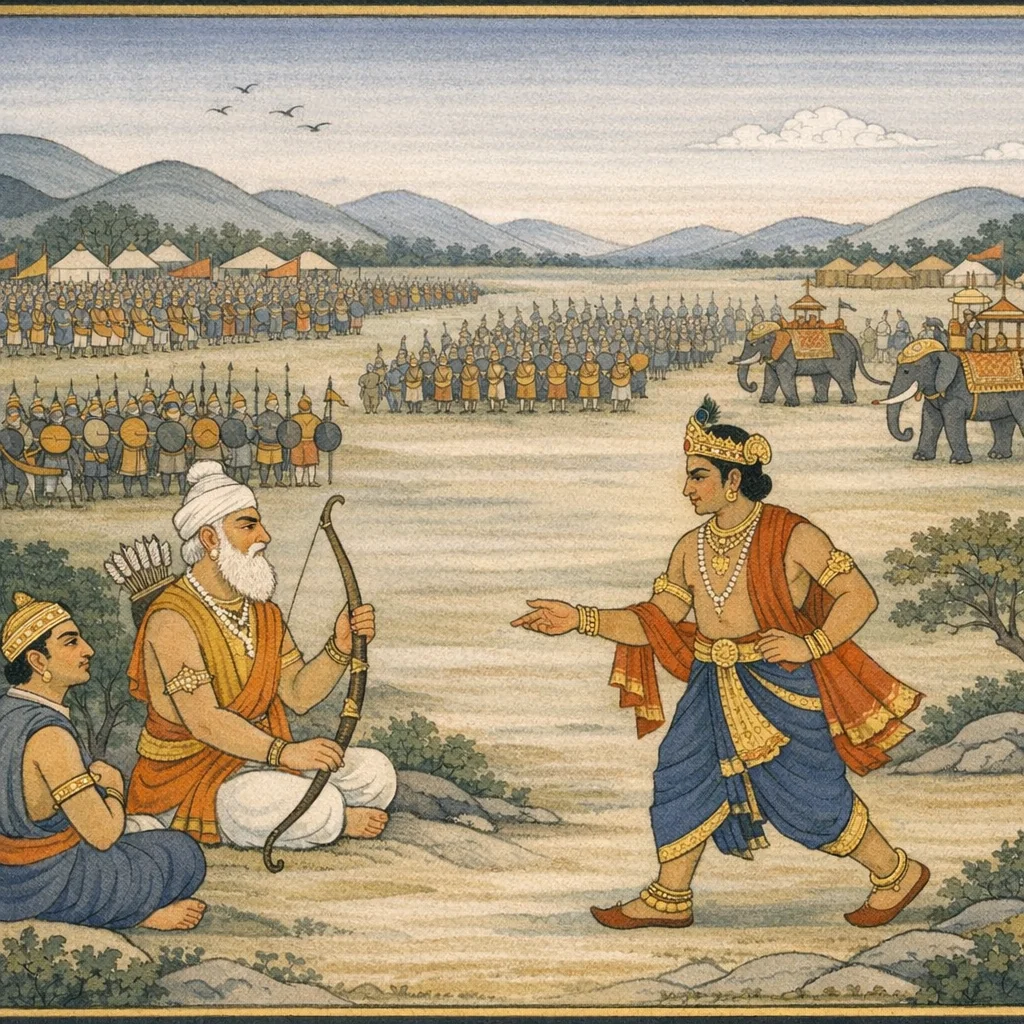
सञ्जय उवाच । दृष्ट्वा तु पाण्डवानीकं व्यूढं दुर्योधनस्तदा आचार्यमुपसङ्गम्य राजा वचनमब्रवीत् ॥
sañjaya uvāca | dṛṣṭvā tu pāṇḍavānīkaṃ vyūḍhaṃ duryodhanas tadā | ācāryam upasaṅgamya rājā vacanam abravīt ||

Sañjaya said: Then, seeing the Pāṇḍava army drawn up in battle-array, King Duryodhana approached his teacher and spoke these words.
Sañjaya said: Seeing then the army of the Pāṇḍavas drawn up in formation, King Duryodhana approached his teacher and spoke these words.
Sañjaya said: Then, having seen the Pāṇḍava force arranged in battle-order, King Duryodhana went up to the teacher and spoke.
No major doctrinal variants are prominent. ‘ācārya’ is commonly identified as Droṇa; translations vary between ‘teacher’ and the proper-name identification in commentary traditions.
FAQs
The verse depicts assessment under pressure: seeing an organized opposing force prompts Duryodhana to seek counsel/validation from authority, a common response to uncertainty.
As a prelude, it frames the ‘field’ as ordered and intelligible (vyūḍha), implying that action unfolds within structures—social, psychological, and ethical—that condition agency.
It transitions from Dhṛtarāṣṭra’s question to Sañjaya’s report, introducing Duryodhana’s speech that sets the scene before Arjuna’s crisis.
In professional or personal conflicts (often nonviolent and internal), people may seek authority figures for reassurance; the verse invites awareness of when counsel becomes dependency.