
Shloka 10
Arjuna Vishada Yoga — The Yoga of Arjuna's Despondency
अपर्याप्तं तदस्माकं बलं भीष्माभिरक्षितम् । पर्याप्तं त्विदमेतेषां बलं भीमाभिरक्षितम् ॥
aparyāptaṃ tad asmākaṃ balaṃ bhīṣmābhirakṣitam | paryāptaṃ tv idam eteṣāṃ balaṃ bhīmābhirakṣitam ||

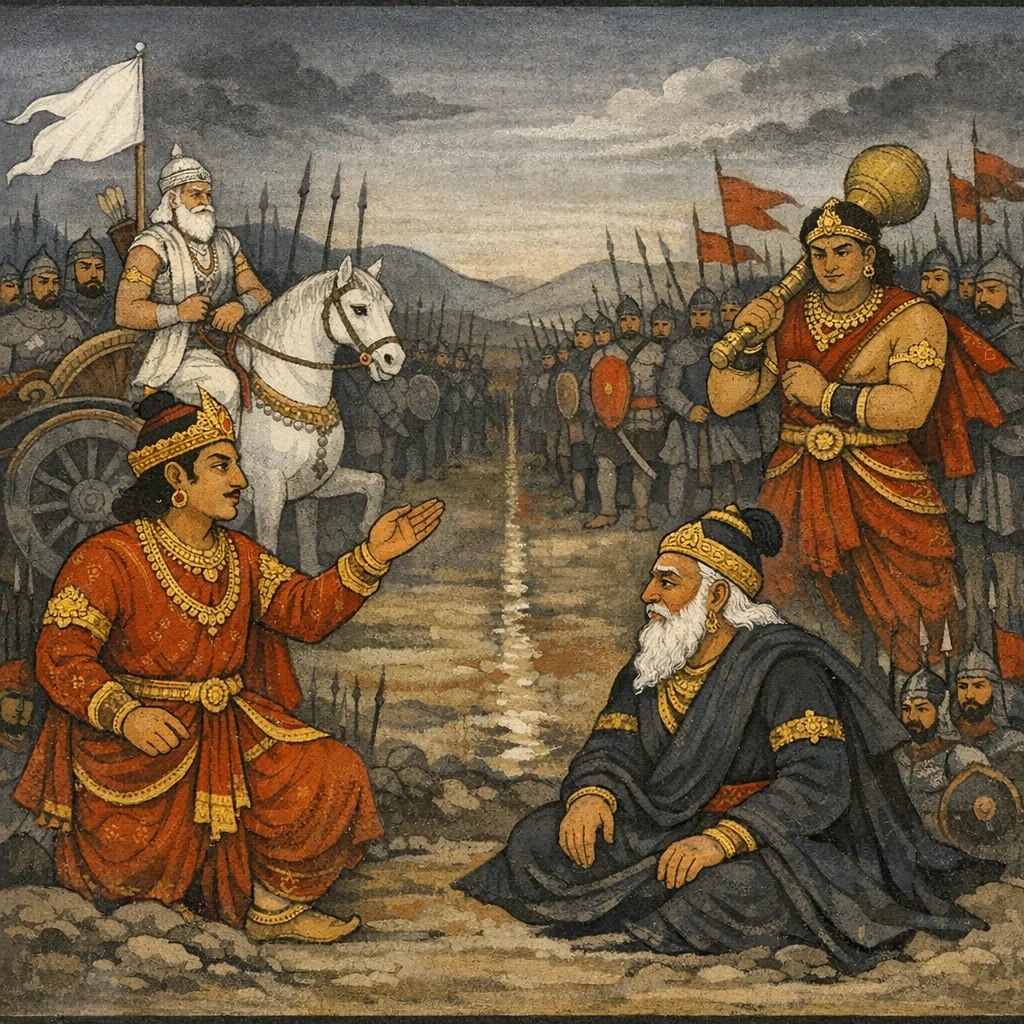
That army of ours, guarded by Bhīṣma, is indeed insufficient; but this army of theirs, guarded by Bhīma, is sufficient.
That force of ours, protected by Bhīṣma, is insufficient; but this force of theirs, protected by Bhīma, is sufficient.
That strength of ours, guarded by Bhīṣma, is not enough; but this strength of theirs, guarded by Bhīma, is enough.
A well-known interpretive issue is whether ‘aparyāpta/paryāpta’ mean ‘insufficient/sufficient’ or ‘immeasurable/limited’. Traditional commentators differ: some read Duryodhana as anxious (insufficient), others as praising his side as ‘unlimited’. The Sanskrit permits both semantic ranges depending on context.
FAQs
The comparative framing can indicate insecurity (downplaying one’s own side) or calculated rhetoric (prompting greater effort). The ambiguity mirrors how language can mask or reveal anxiety.
Power is presented as dependent on protectors and circumstances, hinting that external strength is unstable; the Gītā later shifts emphasis toward inner steadiness and discernment.
This closes Duryodhana’s immediate assessment by contrasting leadership anchors (Bhīṣma vs Bhīma), sharpening the sense of impending decision without narrating any graphic outcome.
In competitive environments, people often interpret the same data as either threatening or motivating. The verse encourages noticing how one’s mindset shapes evaluations of ‘enough’ and ‘not enough’.