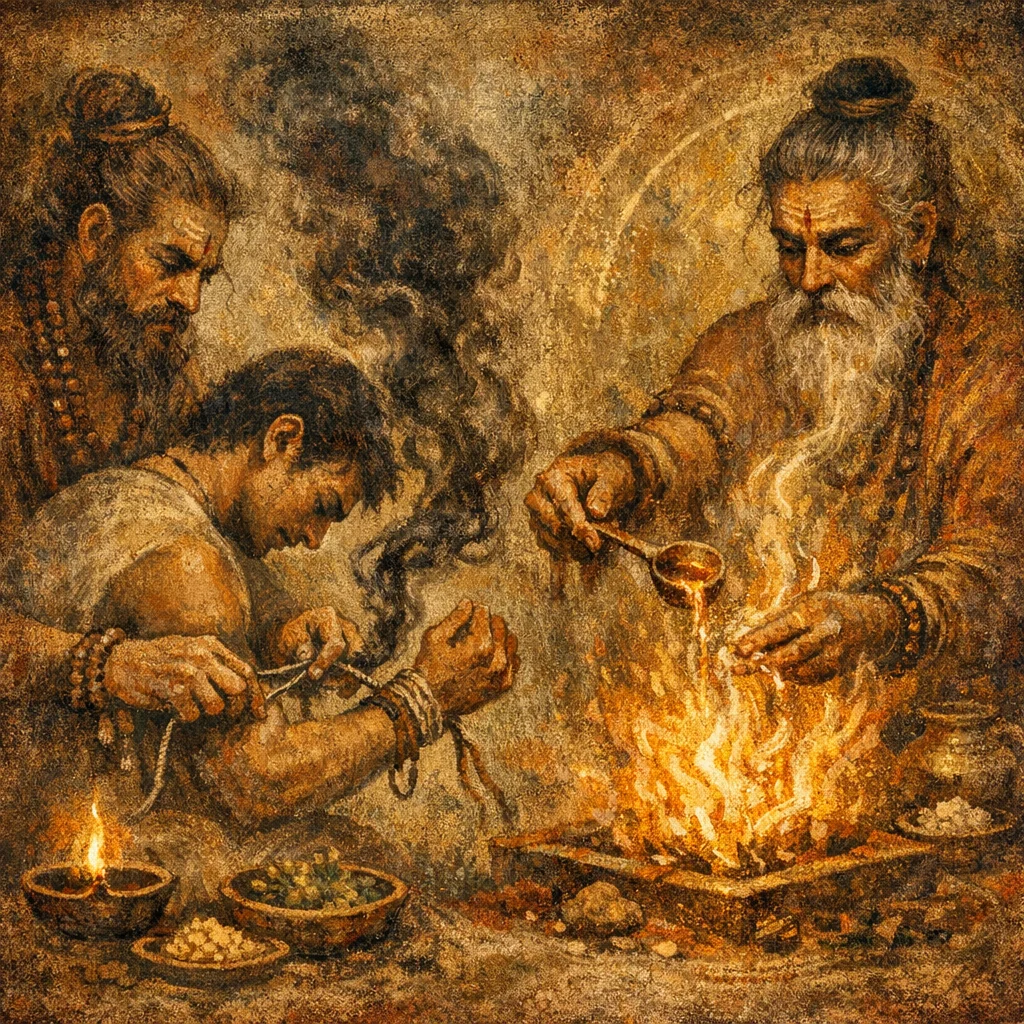
Sukta 78
Rishi: Atharvanic tradition (not specified in the excerpt).
Devata: Agni (as purifier and stabilizer of the release).
Chandas: Mixed/prose-rubric + metrical line; likely Anuṣṭubh-like cadence in the metrical portion (requires metrical check).
Mantras
Mantra 1
वन्दमोचनम्। वि ते मुञ्चामि रशनां वि योक्त्रं वि नियोजनम्। इहैव त्वमजस्र एध्यग्ने
Release from bondage. I loosen apart for thee the cord, apart the yoke-thong, apart the fastening-on. Here, even here, do thou, unceasing, wax strong, O Agni.
Mantra 2
अस्मै क्षत्राणि धारयन्तमग्ने युनज्मि त्वा ब्रह्मणा दैव्येन । दीदिह्य१स्मभ्यं द्रविणेह भद्रं प्रेमं वोचो हविर्दां देवतासु
Thee, O Agni, sustaining royal powers for this man, I yoke with divine brahman. Blaze for us here unto wealth, unto auspicious good; speak forth this (word), O giver of oblation, among the deities.
Frequently Asked Questions
It can mean literal restraint (cords, yokes, captivity) and also symbolic constraint—illness, fear, hostile magic, or obligations felt as something that ‘ties’ a person down.
Agni purifies and transforms: he ‘burns away’ constriction, carries the prayer through oblation, and then stands as a steady presence so the released condition remains firm and protected.
This hymn is materially simple: it centers on a cord/strap as the binding symbol and a fire (Agni). An oblation is implied in the second mantra, but the emphasis is on the act of untying and the mantra’s stabilizing ‘yoking’ of Agni.