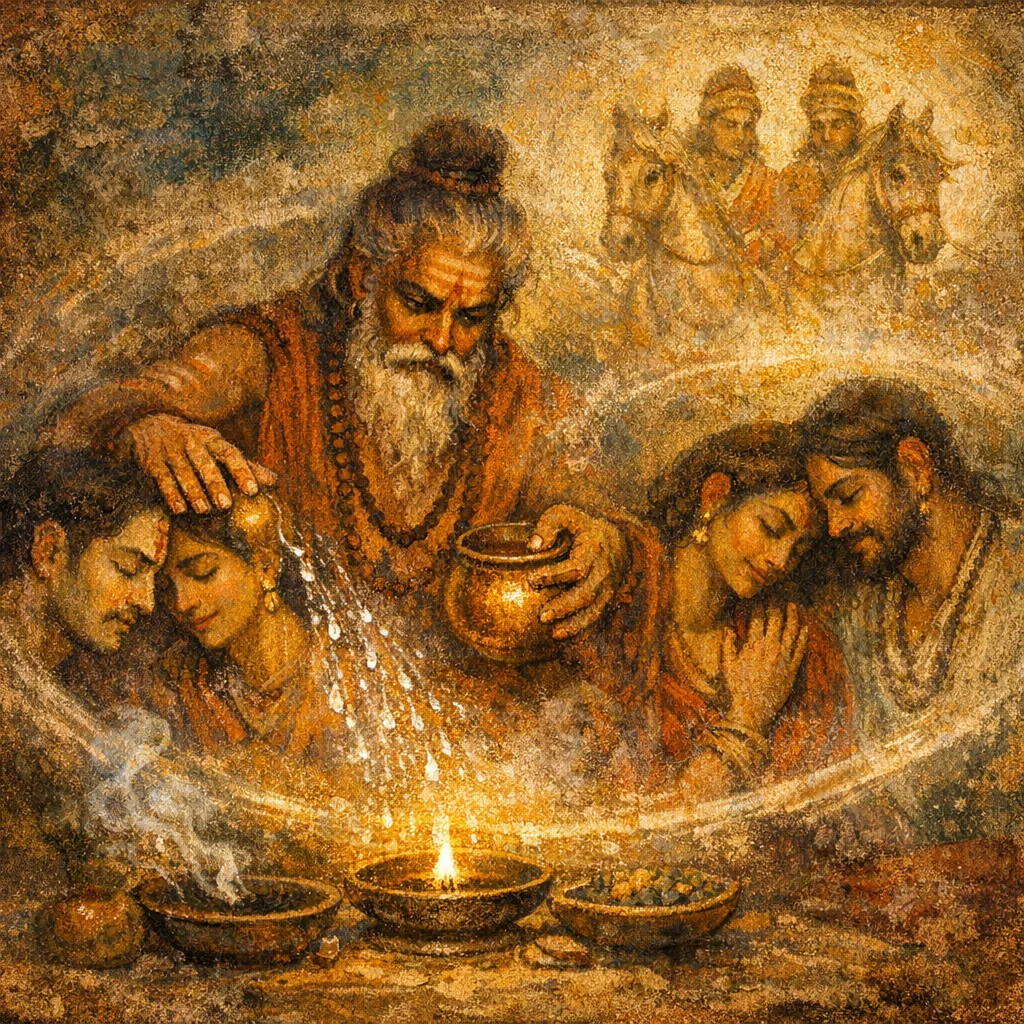
Sukta 52
Rishi: Atharvanic tradition (concord formula section)
Devata: The Aśvins (dual helpers) as establishers of concord
Chandas: Anuṣṭubh (with title/heading)
Mantras
Mantra 1
सांमनस्यम्। संज्ञानं नः स्वेभिः संज्ञानमरणेभिः । संज्ञानमश्विना युवमिहास्मासु नि यच्छतम्
Concord of mind: Grant us common understanding with our own; common understanding with strangers. O Aśvins, do ye here among us firmly establish common understanding.
Mantra 2
सं जानामहै मनसा सं चिकित्वा मा युष्महि मनसा दैव्येन । मा घोषा उत् स्थुर्बहुले विनिर्हते मेषुः पप्तदिन्द्रस्याहन्यागते
With mind let us be of one knowledge, with forethought let us be of one intent; let us not be sundered, with the god-given mind. Let no clamours rise aloft among the many when rout is smitten down; let not the ram’s ill token dart forth, when Indra’s day hath come.
Frequently Asked Questions
It is used to create shared understanding and unified intention in a family, council, or community, and to prevent quarrels, rumor, and disruptive clamor in gatherings.
The Aśvins are swift helpers who restore order and well-being; here they are asked to ‘set down’ concord firmly so minds and speech move together rather than split into factions.
No. Its main ‘technology’ is spoken recitation and collective intention. It can be performed simply in an assembly setting; optional water-sprinkling may be added as a calming gesture.