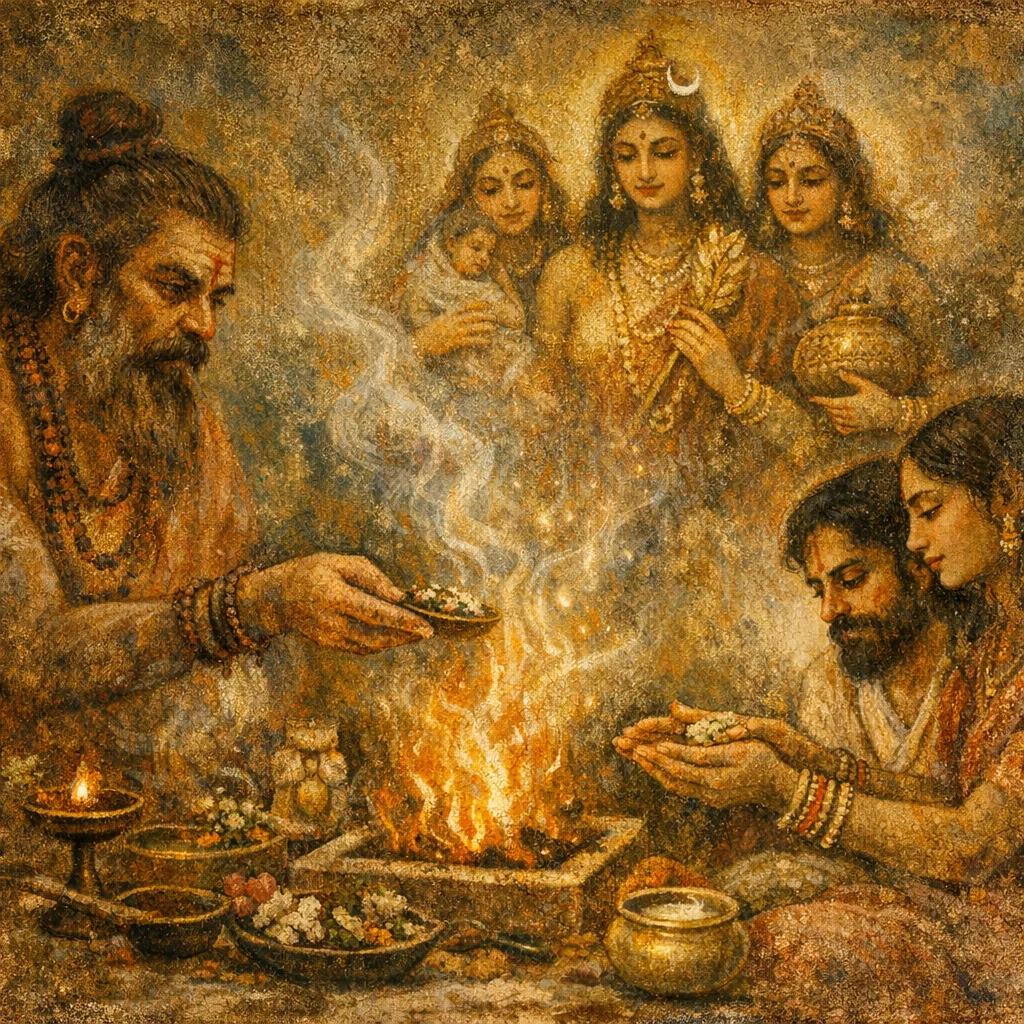
Sukta 46
Rishi: Atharvanic tradition (hymn to Sinīvālī; seer attribution varies in ancillary lists)
Devata: Sinīvālī
Chandas: Anuṣṭubh (predominant in AV domestic hymns; metrical exactness may vary by pāda)
Mantras
Mantra 1
सिनीवाली। सिनीवालि पृथुष्टुके या देवानामसि स्वसा । जुषस्व हव्यमाहुतं प्रजां देवि दिदिड्ढि नः
Sinīvālī! O Sinīvālī, broad in praise, who art the Gods’ own sister: accept with favour the oblation duly offered; and, Goddess, establish for us our progeny.
Mantra 2
या सुबाहुः स्वङ्गुरिः सुषूमा बहुसूवरी । तस्यै विश्पत्न्यै हविः सिनीवाल्यै जुहोतन
She who is fair-armed, fair-fingered, of happy travail, rich in abundant offspring—to her, the clan’s mistress, to Sinīvālī, offer ye the oblation.
Mantra 3
या विश्पत्नीन्द्रमसि प्रतीची सहस्रस्तुकाभियन्ती देवी। विष्णोः पत्नि तुभ्यं राता हवींषि पतिं देवि राधसे चोदयस्व
Thou who, the people’s mistress, art turned hither, approaching, a Goddess praised a thousandfold; O consort of Viṣṇu, to thee are given the oblations: O Goddess, for our thriving success, impel (toward us) a husband and lord.
Frequently Asked Questions
Sinīvālī is a feminine Atharvavedic power of fertility and auspicious fullness, honored as a household-protecting ‘clan-mistress’ who can establish progeny and ensure safe generative outcomes.
The hymn asks for conception and the firm establishment of children (prajā), along with protection of childbirth and the broader prosperity of the household.
It is framed as a domestic oblation rite: recite the three mantras while offering havis/āhuti (often with ghee) into a household fire, focusing the intention on fertility, safe delivery, and thriving success in family life.