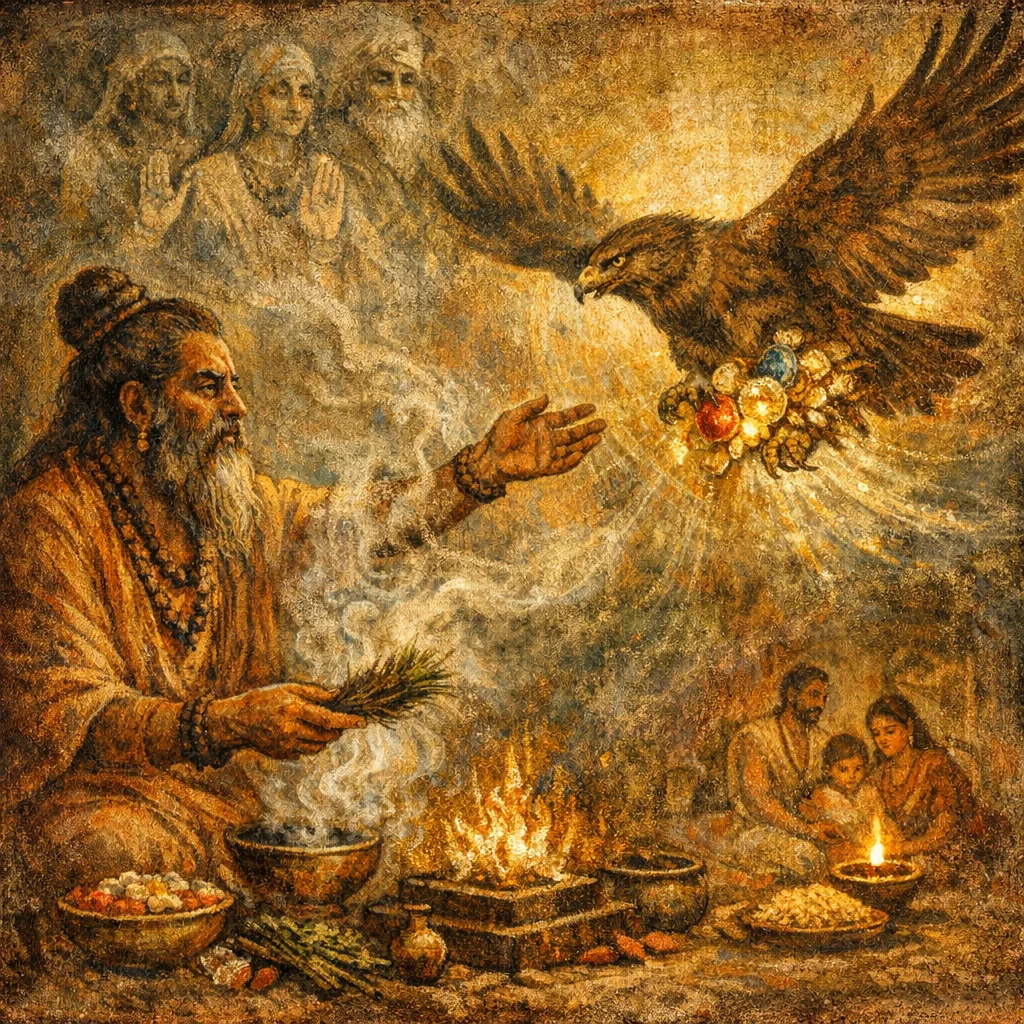
Sukta 41
Rishi: Traditionally associated with Suparṇa/Śyena hymn-complexes (specific ṛṣi ascription varies)
Devata: Suparṇa/Śyena (with Indra as allied power)
Chandas: Triṣṭubh (probable)
Mantras
Mantra 1
सुपर्णः। अति धन्वान्यत्यपस्ततर्द श्येनो नृचक्षा अवसानदर्शः । तरन् विश्वान्यवरा रजांसीन्द्रेण सख्या शिव आ जगम्यात्
Over the waste-lands, over the waters, hath the Falcon forced his passage—keen-eyed for men, beholding the resting-place; crossing all the lower realms of space, in friendship with Indra, auspicious may he come hither.
Mantra 2
श्येनो नृचक्षा दिव्यः सुपर्णः सहस्रपाच्छतयोनिर्वयोधाः । स नो नि यच्छाद् वसु यत् पराभृतमस्माकमस्तु पितृषु स्वधावत्
The Falcon, keen-eyed for men, the heavenly fair-winged, thousand-footed, of a hundred sources, giver of vigour—may he restore to us the good that hath been borne away; may what is ours be (safe) among the Fathers, rich in svadhā.
Frequently Asked Questions
It is used for safe and successful arrival (of a person, message, help, or boon) and for restoring valuables that have been taken or gone missing, while protecting rightful possession.
Indra represents victorious force and overcoming resistance; the hymn frames the falcon’s swift transit and success as empowered by Indra’s friendship (sakhya).
It asks that one’s goods remain secure under ancestral authority—svadhā signifies the Pitṛs’ sustaining power and a juridical-sacral guarantee that what is ‘ours’ stays protected.