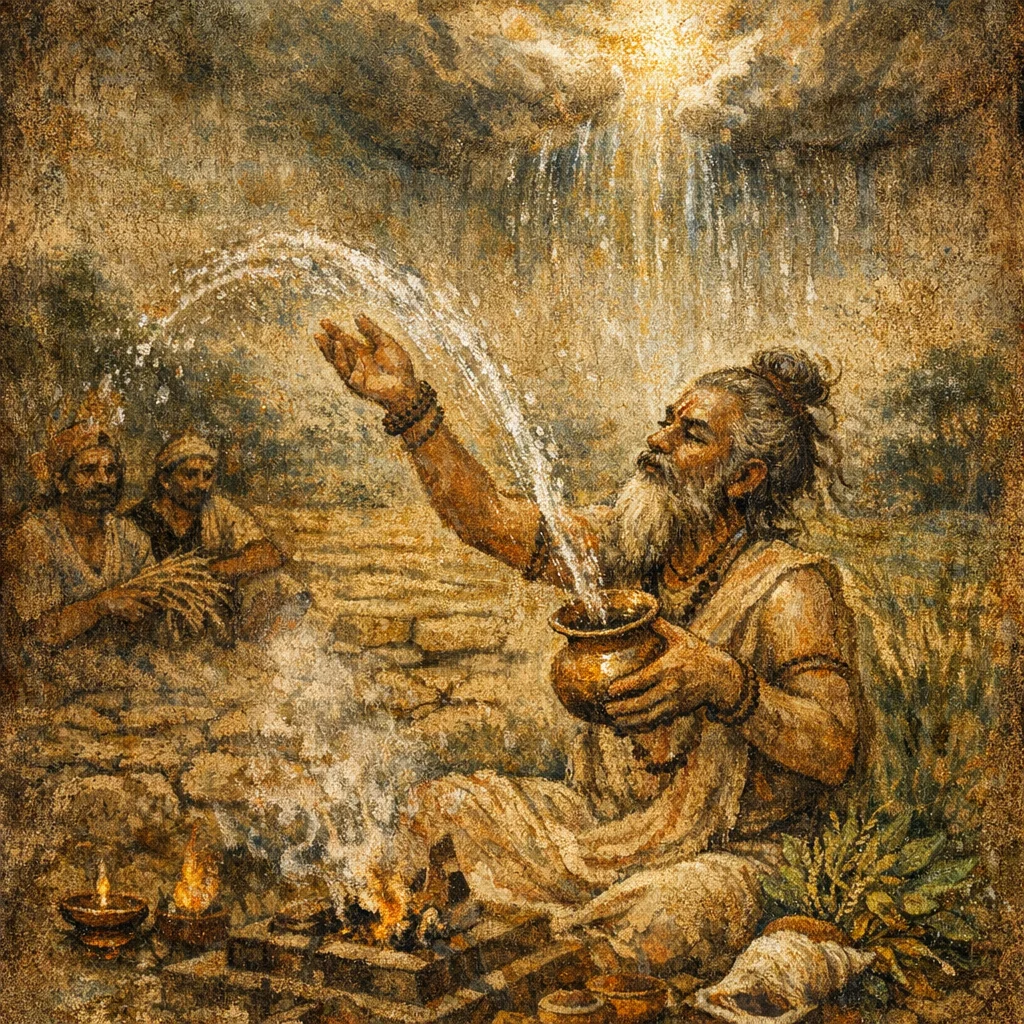
Sukta 18
Rishi: Atharvanic tradition (rain-compulsion corpus)
Devata: Nabhas (cloud), Pṛthivī, Dhātṛ (as regulator of rain)
Chandas: Jagatī/triṣṭubh-mixed (AV rain hymns often irregular)
Mantras
Mantra 1
दवृष्टिः। प्र नभस्व पृथिवि भिन्द्धी३दं दिव्यं नभः । उद्नो दिव्यस्य नो धातरीशानो वि ष्या दृतिम्
O cloud, forth! O Earth, cleave this heavenly cloud. From the heavenly water, for us—O Dhātṛ, sovereign—open wide the waterskin.
Mantra 2
न घ्रंस्तताप न हिमो जघान प्र नभतां पृथिवी जीरदानुः । आपश्चिदस्मै घृतमित् क्षरन्ति यत्र सोमः सदमित् तत्र भद्रम्
Neither has the scorching glare burned, nor has the frost smitten: let Earth, rich in flowing moisture, be overclouded. Even the waters for her drip ghee indeed; where Soma is ever, there is welfare.
Frequently Asked Questions
It aims to end drought by commanding the cloud to open and pour down celestial waters, while also ensuring the weather stays beneficial—neither scorching nor frosty—so crops can thrive.
It uses a vivid metaphor: the cloud is like a sealed skin-bag holding water. The mantra asks Dhātṛ to “open it wide,” meaning to release rain in a controlled, life-giving way.
Ghee symbolizes nourishment and prosperity. Saying the waters “drip ghee” expresses a wish that rainfall be fertile and strengthening—supporting growth, yield, and well-being.