Sukta 116
Rishi: Atharvanic tradition (hymn ascribed in the Anukramaṇī to Atharvan/Angiras-type seers; requires edition-specific confirmation).
Devata: Jvara (Fever) personified; śīta-jvara as a specific form.
Chandas: Likely Anuṣṭubh (requires metrical verification against full pada-count in critical text).
Mantras
Mantra 1
ज्वरनाशनम्। नमो रूराय च्यवनाय नोदनाय धृष्णवे । नमः शीताय पूर्वकामकृत्वने
Homage to Rūra, to Cyavana, to the Urger, to the Bold one. Homage to the Cold (fever), to him who maketh good the former wish.
Mantra 2
यो अन्येद्युरुभयद्युरभ्येतीमं मण्डूकमभ्येऽत्वव्रतः
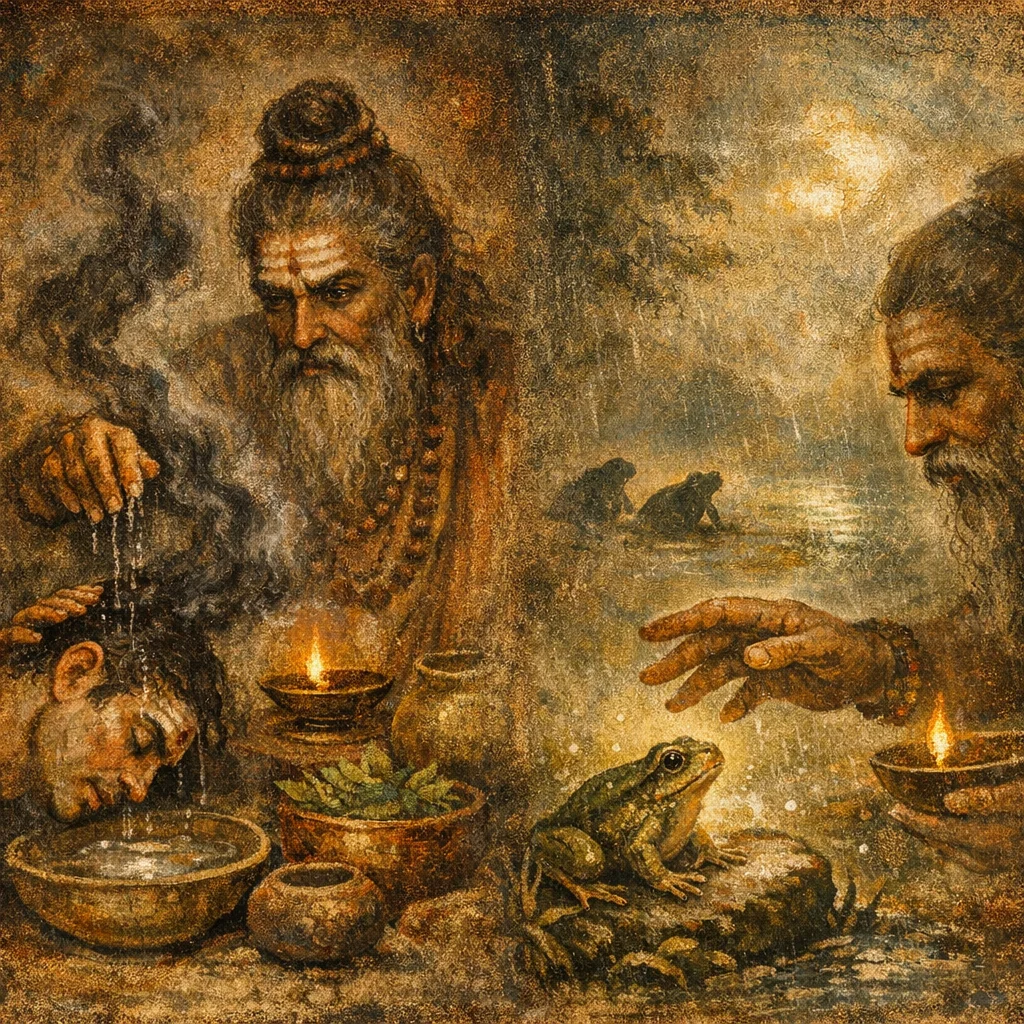
What fever, whether of the next day or of both days, cometh on—let that lawless one go forth upon this frog.
Frequently Asked Questions
It is a healing (bhaiṣajya) hymn meant to pacify and remove fever, especially cold-fever (śīta-jvara) and fevers that recur on set days.
The frog functions as a substitute recipient in a transference rite: the mantra instructs the recurring fever to leave the patient and ‘go upon’ the frog instead, symbolically carrying the illness away.
Both: it begins with respectful homage to fever’s named forms (appeasement) and then turns to a direct directive that the fever depart and relocate, expressing Atharvanic healing authority.