Sukta 115
Rishi: Atharvanic tradition (as per anukramaṇī for 7.115)
Devata: Pāpi Lakṣmī (personified evil fortune/blemish)
Chandas: Anuṣṭubh
Mantras
Mantra 1
पापलक्षणनाशनम्। प्र पतेतः पापि लक्ष्मि नश्येतः प्रामुतः पत । अयस्मयेनाङ्केन द्विषते त्वा सजामसि
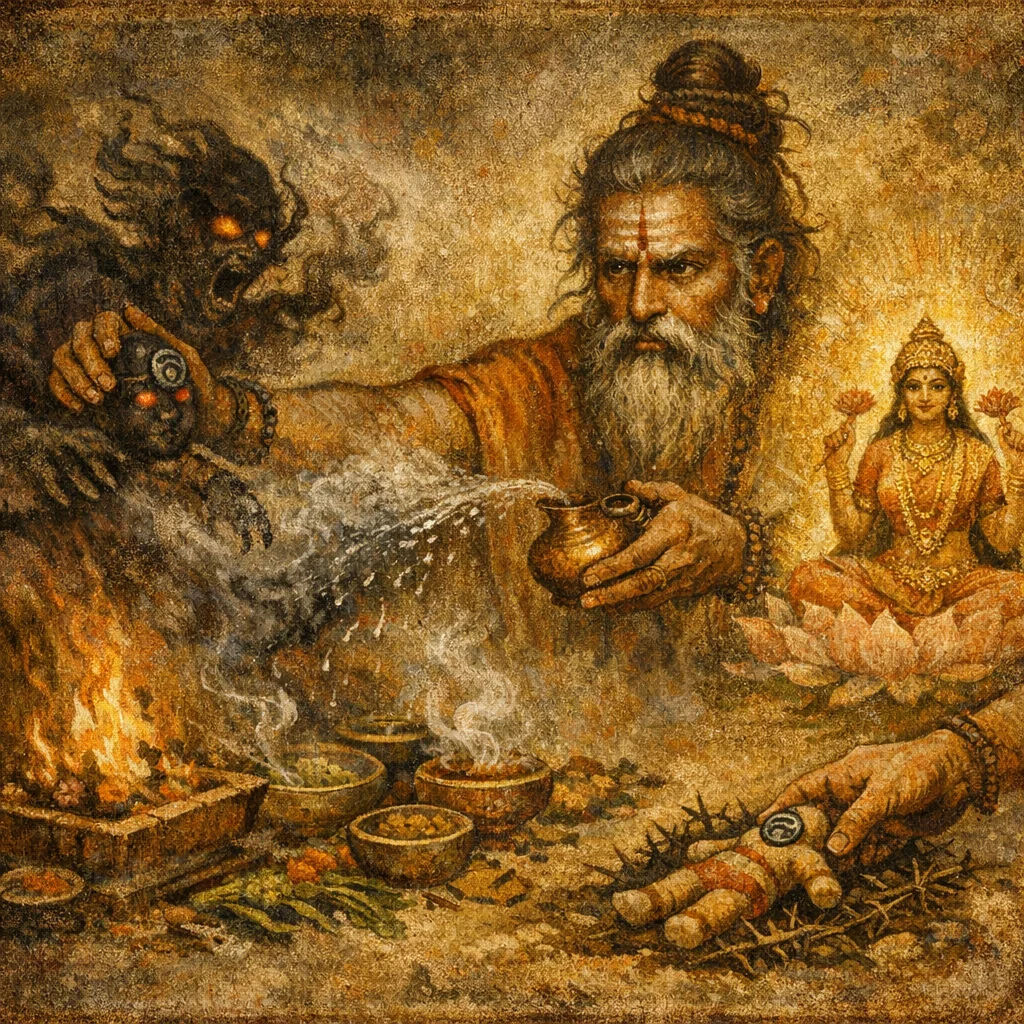
Fly forth, O evil Lakṣmī; vanish away—fly hence to yonder. With an iron hook we fasten thee upon the hater.
Mantra 2
या मा लक्ष्मीः पतयालूरजुष्टाभिचस्कन्द वन्दनेव वृक्षम्। अन्यत्रास्मत् सवितस्तामितो धा हिरण्यहस्तो वसु नो रराणः
What Lakṣmī, fluttering, dust-delighting, hath leapt upon me, as a creeper upon a tree—O Savitar, set her elsewhere from us, set her away from hence; thou golden-handed, rejoicing, grant us wealth.
Mantra 3
एकशतं लक्ष्म्यो३मर्त्यस्य साकं तन्वाऽजनुषोऽधि जाताः । तासां पापिष्ठा निरितः प्र हिण्मः शिवा अस्मभ्यं जातवेदो नि यच्छ
A hundred are the Lakṣmīs of a mortal, born together with the body, from birth, set upon him. The most evil of them, from Nirrti, forth do we drive away; the kindly ones, O Jātavedas, do thou establish fast for us.
Mantra 4
एता एना व्याकरं खिले गा विष्ठिता इव । रमन्तां पुण्या लक्ष्मीर्याः पापीस्ता अनीनशम्
These have I sorted out: go ye to the waste, as dung that standeth there. Let the holy Lakṣmīs, those that are auspicious, take their delight; the evil ones—those have I caused to perish.
Frequently Asked Questions
It is evil fortune personified—an inauspicious “mark” that can cling to someone as persistent bad luck or harmful signs, and which the mantra treats as something that can be driven away or transferred.
Iron functions as a binding/fastening material: the rite imagines the evil influence being “caught” and attached elsewhere (especially onto a hostile rival), rather than remaining on the client.
Both: it expels the Nirrti-linked, most harmful Lakṣmī while asking Agni Jātavedas to firmly establish the auspicious Lakṣmīs so that well-being and prosperity remain with the client.