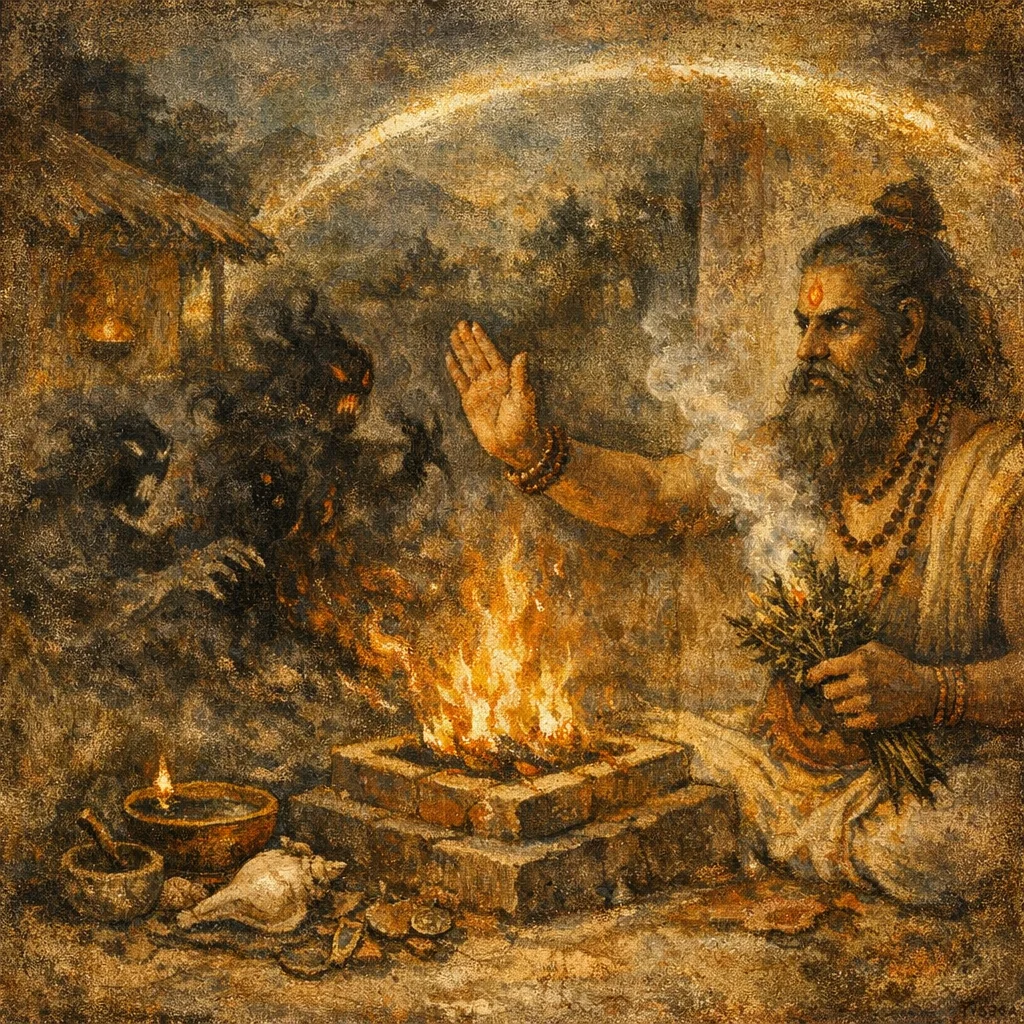
Sukta 108
Rishi: Atharvanic tradition (varies by anukramaṇī)
Devata: Agni (as protector and destroyer of foes)
Chandas: Triṣṭubh/Jagatī mixture (requires metrical verification)
Mantras
Mantra 1
शत्रुनाशनम्। यो नस्तायद् दिप्सति यो न आविः स्वो विद्वानरणो वा नो अग्ने । प्रतीच्येत्वरणी दत्वती तान् मैषामग्ने वास्तु भून्मो अपत्यम्
Destruction of foes. Whoso would rob us, who would fain do us hurt; who, openly, though our own, is knowing (in guile), or who is a stranger—O Agni, let him go back again; let the arani, dealing out (thy fire), give those over: let there be for them, O Agni, no dwelling-place, nor offspring.
Mantra 2
यो नः सुप्तान् जाग्रतो वाभिदासात् तिष्ठतो वा चरतो जातवेदः । वैश्वानरेण सयुजा सजोषास्तान् प्रतीचो निर्दह जातवेदः
Whoso would assail us, sleeping or waking, whether standing or moving, O Jātavedas—thou, in yoke and in one accord with Vaiśvānara, burn those back upon themselves, O Jātavedas.
Frequently Asked Questions
It is used to protect a home and its people from thieves, attackers, and hostile intent—especially by sending the threat ‘back’ and burning the aggression through Agni’s power.
The first verse explicitly includes harm from a ‘known’ person acting with guile and from an outsider, showing that Agni’s protection covers betrayal as well as external hostility.
The hymn is fire-centered: a lit hearth/fire is primary, and araṇī (fire-sticks) are traditional. In practice, a maintained flame and simple fuel offerings are the core supports for recitation.