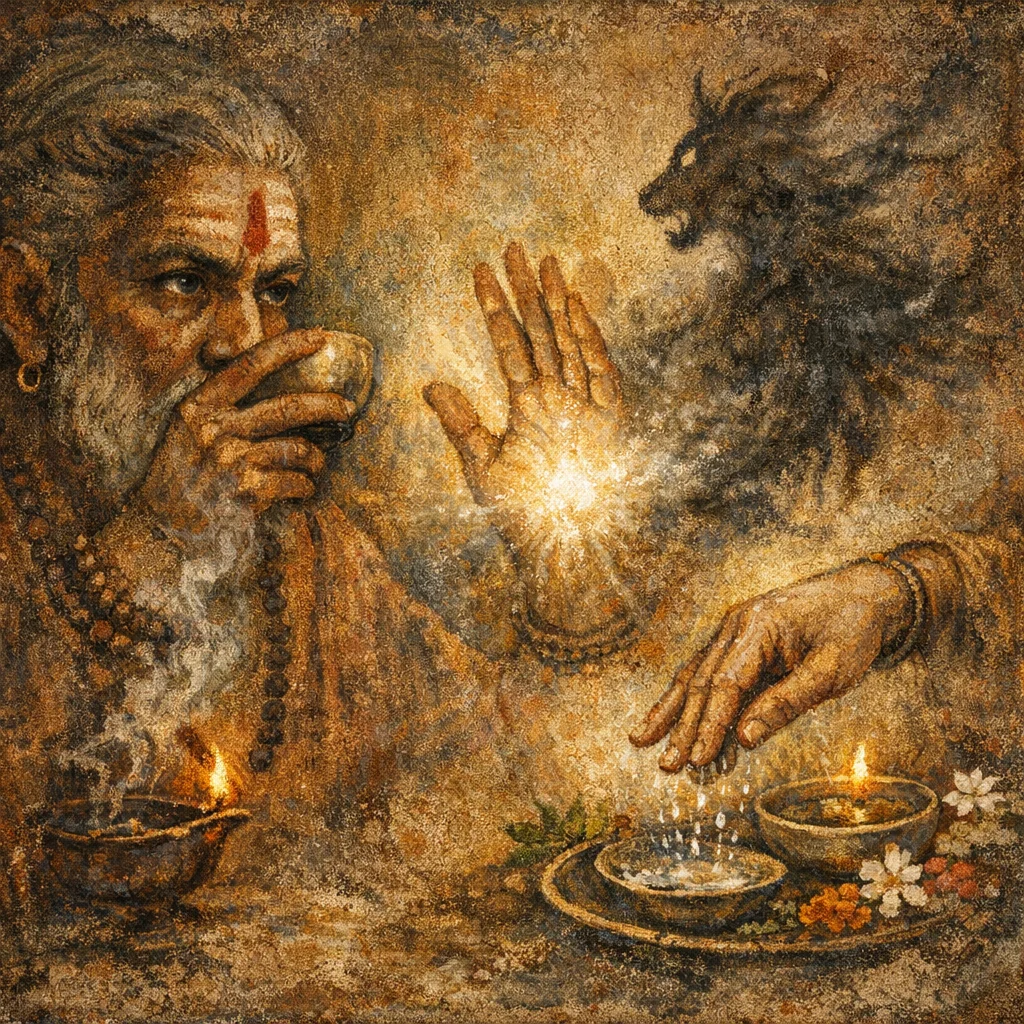
Sukta 101
Rishi: Atharvanic tradition (unspecified in the provided excerpt)
Devata: Duḥsvapna-nāśana / Śiva (auspiciousness as operative power)
Chandas: Anuṣṭubh (probable; verse-length and cadence fit common AV anuṣṭubh usage)
Mantras
Frequently Asked Questions
It addresses fear caused by bad dreams—especially the worry that eating or doing something in a dream could bring real loss, impurity, or misfortune after waking.
Dream-eating symbolizes an act that feels real in the moment but cannot be ‘found’ or verified in the morning. The mantra uses this to declare the dream-event non-binding and to convert it into śiva (benign luck).
It is recited immediately upon waking from an ominous dream, often with simple self-purification (ācamana) and focused intention, to pacify the mind and nullify the dream’s supposed omen-force.