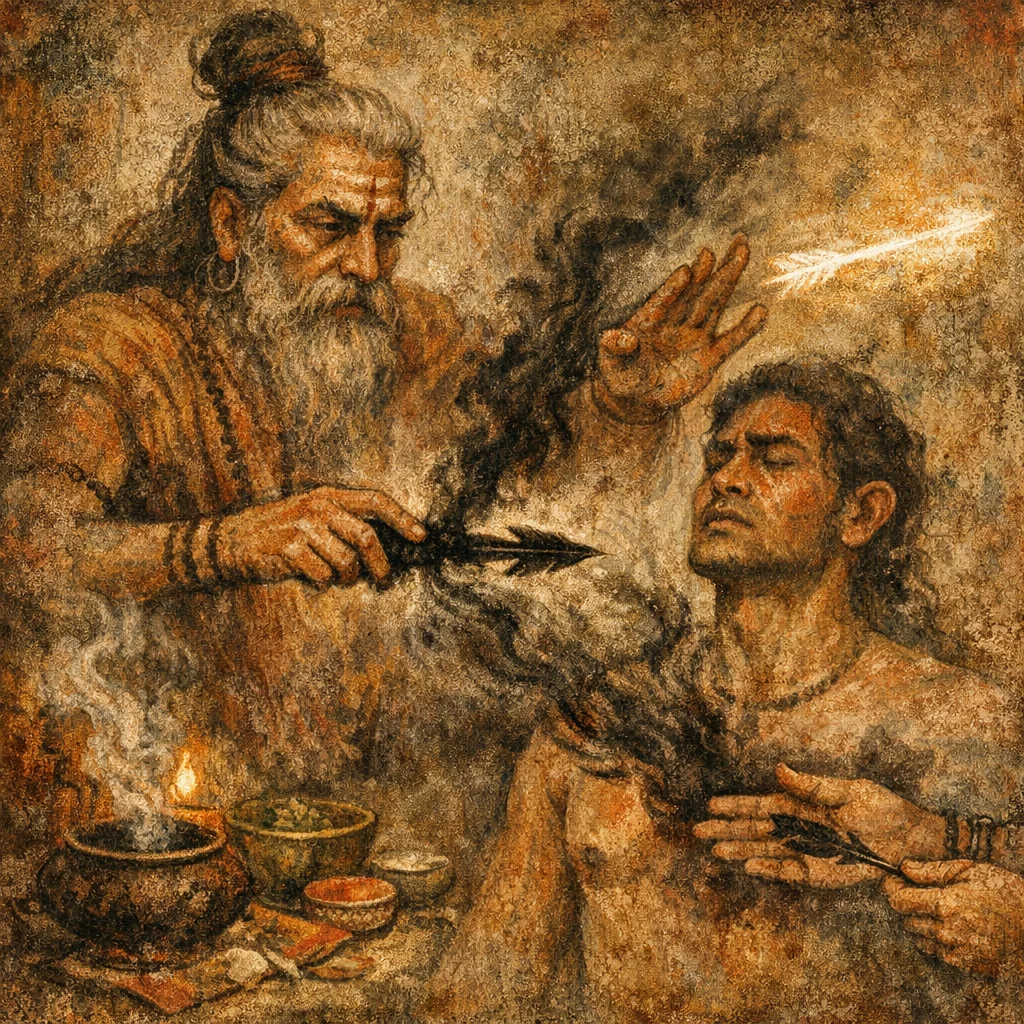
Sukta 90
Rishi: Atharvanic tradition (often anonymous in AV; associated with Atharvan/Angiras healing corpus)
Devata: Rudra (as sender and, by appeasement, remover of the missile)
Chandas: Anuṣṭubh (approx.; AV healing verses commonly in anuṣṭubh)
Mantras
Mantra 1
इषुनिष्कासनम्। यां ते रुद्र इषुमास्यदङ्गेभ्यो हृदयाय च । इदं तामद्य त्वद् वयं विषूचीं वि वृहामसि
The arrow which thou, O Rudra, didst shoot—unto the limbs and unto the heart—this self-same, to-day, from thee, we pluck forth utterly, the far-wounding shaft.
Mantra 2
यास्ते शतं धमनयोऽङ्गान्यनु विष्ठिताः । तासां ते सर्वासां वयं निर्विषाणि ह्वयामसि
What hundred channels of thine are stretched along the members—of them all, for thee, we call in the poisonless powers, the antidotal release.
Mantra 3
नमस्ते रुद्रास्यते नमः प्रतिहितायै । नमो विसृज्यमानायै नमो निपतितायै
Homage to thee, O Rudra, as thou shootest; homage to the shaft when it is aimed and set; homage when it is loosed forth; homage when it hath fallen.
Frequently Asked Questions
It is a ritual image for sudden, piercing illness or pain—especially in limbs and the heart—treated as a lodged missile that can be drawn out and neutralized by mantra.
It frames the body as a network through which pain/poison can spread; the mantra calls in “nirviṣa” (poisonless, antidotal) force so the affliction cannot remain or circulate.
Both: it performs extraction (removal) and then uses repeated namas (homage) to calm Rudra and ‘finish’ the missile’s power at every stage, helping prevent a return of the attack.