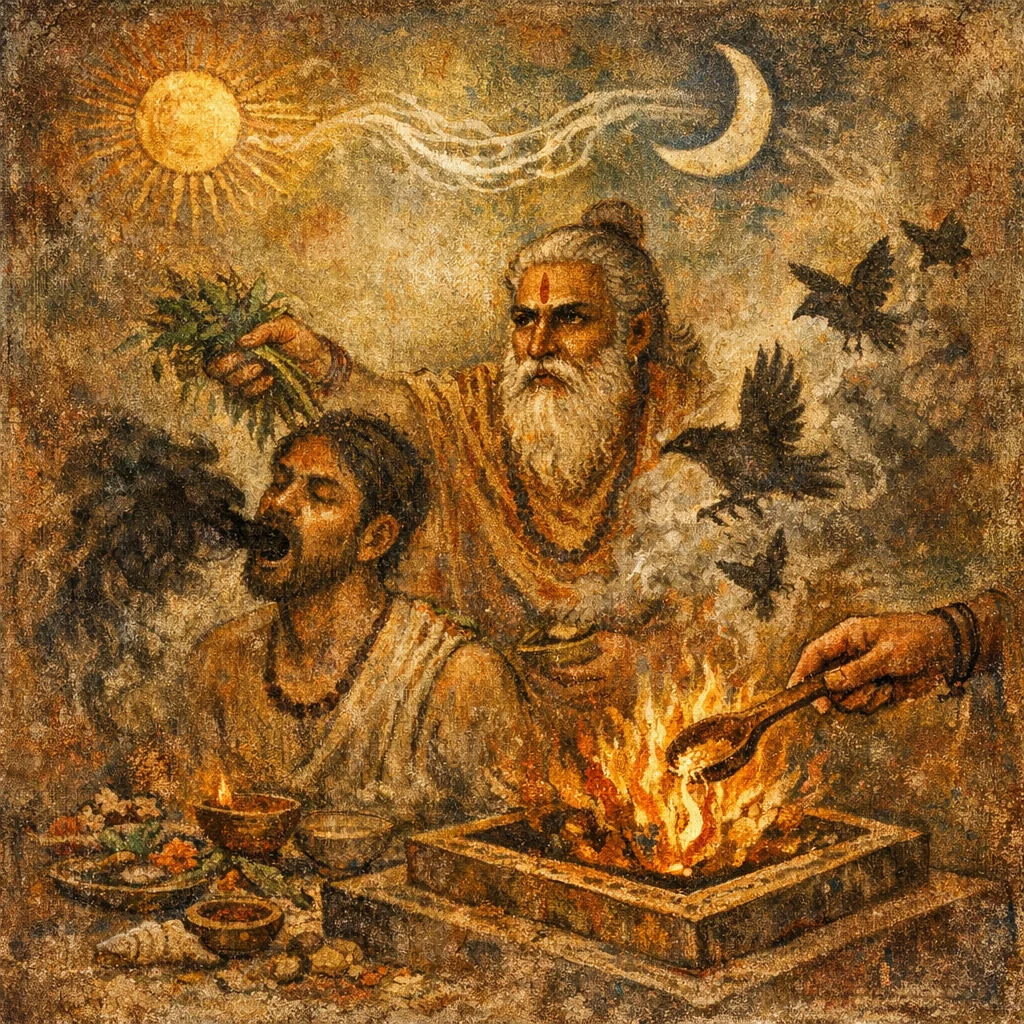
Sukta 83
Rishi: Atharvanic healer tradition (anonymous/collective)
Devata: Sūrya and Candramas (as healers); disease-personification (Apaciti) as target
Chandas: Mixed/Anuṣṭubh tendency (AV healing verses often anuṣṭubh; first segment includes an exclamatory heading)
Mantras
Mantra 1
भैषज्यम्। अपचितः प्र पतत सुपर्णो वसतेरिव । सूर्यः कृणोतु भेषजं चन्द्रमा वोऽपोच्छतु
A remedy! Let the wasting sickness fly forth—like a fair-winged bird from its dwelling. Let the Sun make the medicine; let the Moon clear it away from you.
Mantra 2
एन्येका श्येन्येका कृष्णैका रोहिणी द्वे। सर्वासामग्रभं नामावीरघ्नीरपेतन
One is Eṇī, one is Śyenī, one is Kṛṣṇā, and two are Rohiṇī: the name of them all have I grasped—harmless to heroes—away, depart!
Mantra 3
असूतिका रामायण्यऽपचित् प्र पतिष्यति । ग्लरितः प्र पतिष्यति स गलुन्तो नशिष्यति
Asūtikā, Rāmāyaṇī—wasting sickness—shall fly forth; Glarita shall fly forth: of it, Galunta shall not remain behind.
Mantra 4
वीहि स्वामाहुतिं जुषाणो मनसा स्वाहा मनसा यदिदं जुहोमि
Bear hither thine own oblation, taking pleasure therein: with mind—Svāhā!—with mind, what offering here I make.
Frequently Asked Questions
Apaciti is a personified wasting or consuming sickness. The hymn treats it as an agent that can be commanded to depart from its ‘dwelling’ in the patient.
They represent complementary cosmic medicines: the Sun as restoring, vitalizing power and the Moon as cleansing, cooling removal of affliction. Together they enact both expulsion and recovery.
It functions as a ritual seal: the offering is mentally and verbally confirmed as accepted, so the healing action is ‘made effective’ and stabilized against return of the illness.