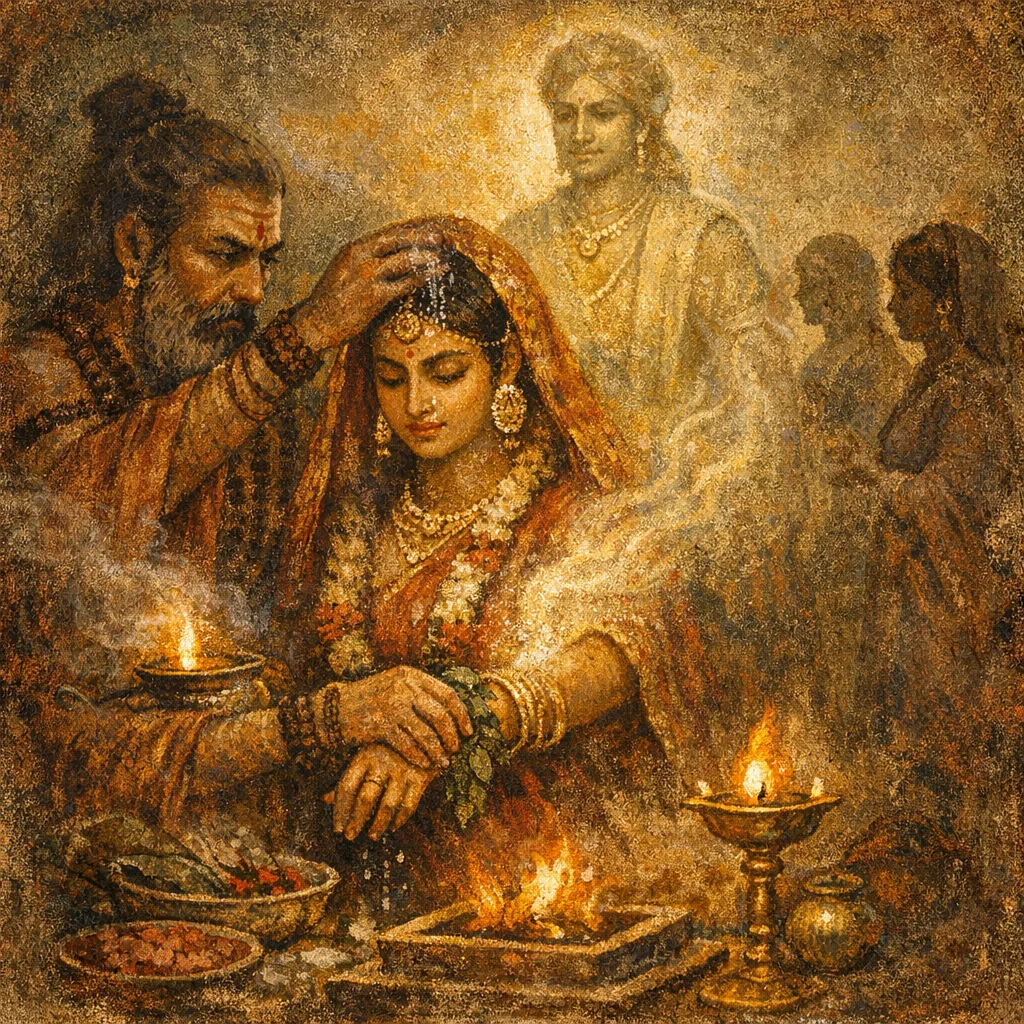
Sukta 60
Rishi: Atharvanic tradition (hymn for pati-lābha)
Devata: Aryaman
Chandas: Anuṣṭubh (probable)
Mantras
Mantra 1
पतिलाभः। अयमा यात्यर्यमा पुरस्ताद् विषितस्तुपः । अस्या इचछन्नग्रुवै पतिमुत जायामजानये
Here comes Aryaman in front, with praise well-ordered; desiring for this maiden a husband, and a wifehood, for the begetting of offspring.
Mantra 2
अश्रमदियमर्यमन्नन्यासां समनं यती। अङ्गो न्वऽर्यमन्नस्या अन्याः समनमायति
This maid, O Aryaman, hath bestirred her to the common meeting of others; yea now, O Aryaman, other women come to the meeting for her (as rivals).
Mantra 3
धाता दाधार पृथिवीं धाता द्यामुत सूर्यम्। धातास्या अग्रुवै पतिं दधातु प्रतिकाम्यऽम्
Dhātṛ hath set firm the Earth; Dhātṛ the Heaven, and the Sun: so may Dhātṛ for this maiden appoint a husband answering to desire.
Frequently Asked Questions
Aryaman represents lawful fellowship and the social contract—especially marriage alliances that require communal recognition. He is invoked to bring a legitimate, well-matched union rather than a merely private desire.
It points to the public/communal setting where matches are discussed and evaluated—family meetings, assemblies, or social gatherings. The mantra asks that the maiden succeed there even when other women are also present as rivals.
Dhātṛ is the cosmic “Ordainer” who sets earth, heaven, and the sun in place. By invoking him, the hymn frames the husband’s appointment as something firmly established in cosmic order—stable, fitting, and fruitful.