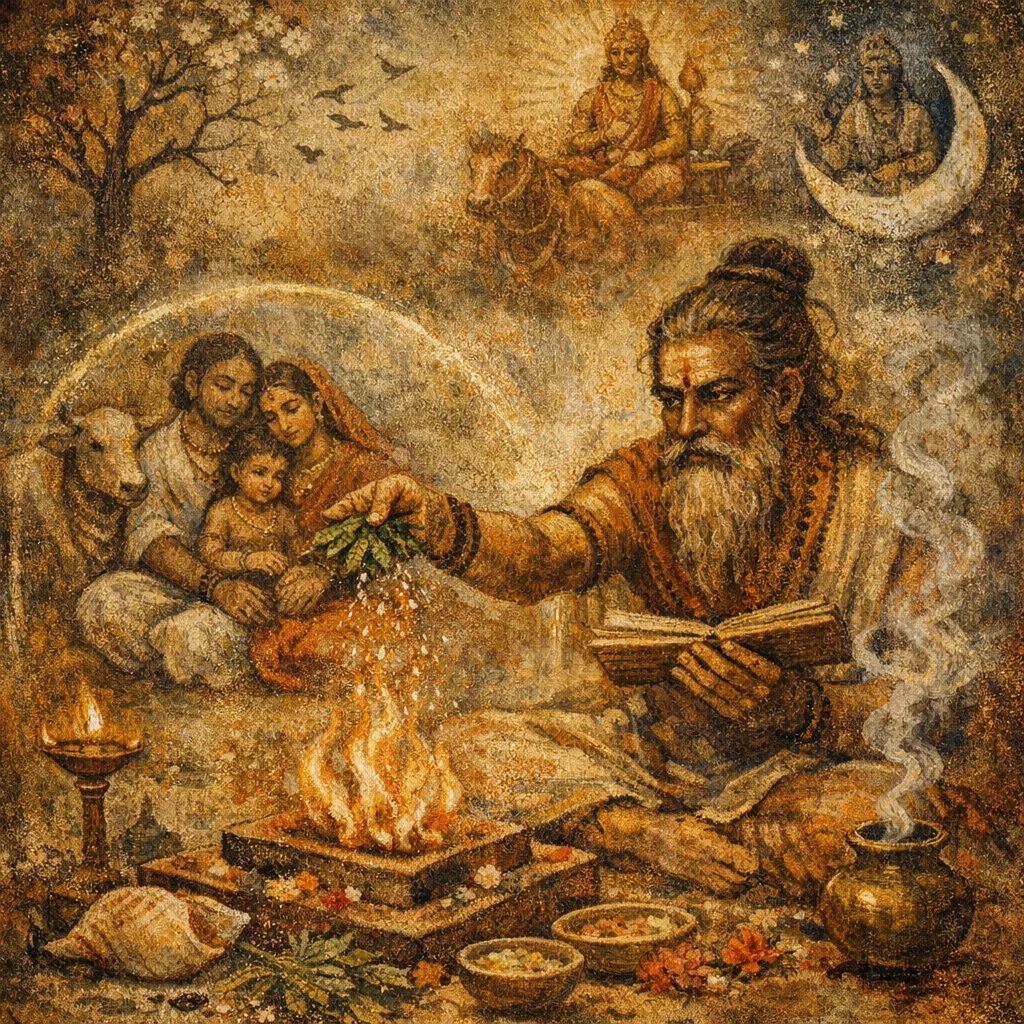
Sukta 55
Rishi: Atharvanic tradition (per Anukramaṇī for AV 6.55).
Devata: Viśve Devāḥ (All the Gods); with Heaven-and-Earth as cosmic setting
Chandas: Mixed/triṣṭubh-like cadence is possible here; confirm by metrical analysis in edition (not securely anuṣṭubh).
Mantras
Mantra 1
सौमनस्यम्। ये पन्थानो बहवो देवयाना अन्तरा द्यावापृथिवी संचरन्ति । तेषामज्यानिं यतमो वहाति तस्मै मा देवाः परि धत्तेह सर्वे
Goodwill. The many paths, god-leading, that move between Heaven and Earth—whichever of them bearest best the untraced (way), unto that let all the Gods here set goodwill round about me.
Mantra 2
ग्रीष्मो हेमन्तः शिशिरो वसन्तः शरद् वर्षाः स्विते नो दधात । आ नो गोषु भजता प्रजायां निवात इद् वः शरणे स्याम
Summer and Winter, Cold-season and Spring, Autumn and the Rains—graciously bestow on us (your gifts). Deal out to us among cattle, deal out in progeny; in your windless shelter, yea, in refuge may we abide.
Mantra 3
इदावत्सराय परिवत्सराय संवत्सराय कृणुता बृहन्नमः । तेषां वयं सुमतौ यज्ञियानामपि भद्रे सौमनसे स्याम
To the This-year, to the Turning-year, to the Full-year make ye great reverence. In the good favor of those worship-worthy Powers may we abide—yea, in the auspicious, in goodwill may we be.
Frequently Asked Questions
Its main goal is saumanasya—an atmosphere of goodwill and concord—supported by pacifying the Seasons and the Year so life remains auspicious and stable.
Because wellbeing depends on orderly cycles of time: when seasons and the year are ‘in good favor,’ they yield comfort, fertility, cattle-prosperity, and protection from extremes.
No specific substances are mentioned in the hymn. It can be used as a recitation for peace and concord, especially at seasonal transitions or when harmony is needed.