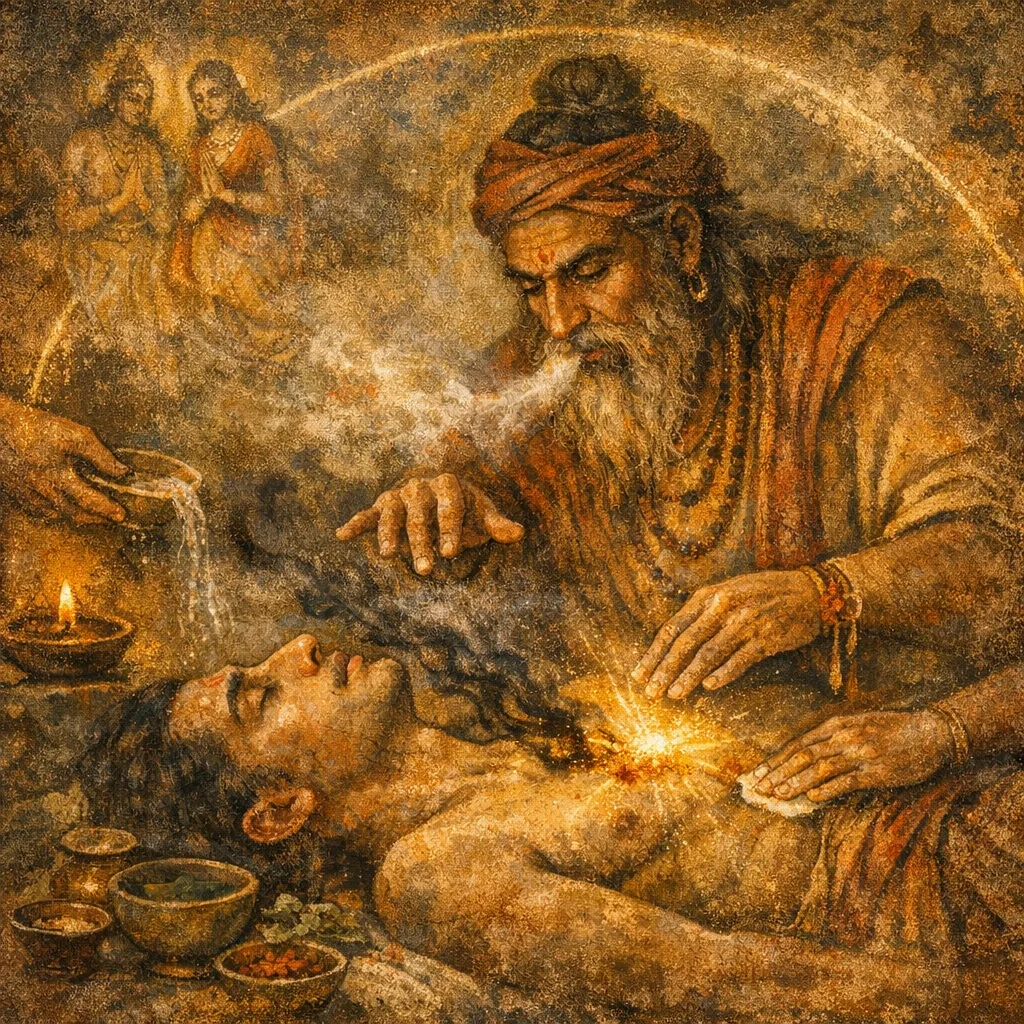
Sukta 53
Rishi: Atharvanic tradition (specific r̥ṣi not stated in the provided excerpt)
Devata: Dyāvāpṛthivī; Soma, Agni, Vāyu, Savitṛ, Bhaga; Svadhā as sustaining power
Chandas: Mixed/Triṣṭubh-like cadence (probable; longer pādas suggest non-anuṣṭubh)
Mantras
Mantra 1
सर्वतो रक्षणम्। द्यौश्च म इदं पृथिवी च प्रचेतसौ शुक्रो बृहन् दक्षिणया पिपर्तु । अनु स्वधा चिकितां सोमो अग्निर्वायुर्नः पातु सविता भगश्च
Protection from every side. Let Heaven and this Earth, the two foreknowing, bright and vast, with auspicious bounty make it full. In due course let Svadhā take heed; let Soma, Agni, Vāyu protect us—Savitṛ and Bhaga as well.
Mantra 2
पुनः प्राणः पुनरात्मा न ऐतु पुनश्चक्षुः पुनरसुर्न ऐतु । वैश्वानरो नो अदब्धस्तनूपा अन्तस्तिष्ठाति दुरितानि विश्वा
Back let breath come, back let the self come unto us; back let sight, back let life return unto us. Vaiśvānara, our unbeguiled body-guard, stands within, (warding off) all misfortunes.
Mantra 3
सं वर्चसा पयसा सं तनूभिरगन्महि मनसा सं शिवेन । त्वष्टा नो अत्र वरीयः कृणोत्वनु नो मार्ष्टु तन्वो३यद् विरिष्टम्
With lustre, with milk, with our bodies—together; with mind together, with the auspicious—so have we attained. Let Tvaṣṭṛ here make for us the better state; and let him, in due course, wipe away from our body whatever is marred.
Frequently Asked Questions
For protection on all sides and for restoring weakened vitality—calling back breath, life, sight, and inner steadiness after illness, fright, or harmful influence.
It functions as a retrieval formula: each repetition ‘calls back’ a specific faculty (prāṇa, ātman, cakṣus, asu), reintegrating what feels lost or scattered.
Not necessarily. A simple lamp (Agni/Vaiśvānara symbol) and clean milk or water are sufficient; the hymn’s main force is the protective invocation and the restorative petition to Tvaṣṭṛ.