Sukta 37
Rishi: Atharvanic seer-tradition (often anonymous/Angirasic in such apotropaic hymns)
Devata: Śapatha (personified oath/curse-power) / protective all-seeing force
Chandas: Anuṣṭubh (likely; narrative-ritual anuṣṭubh style)
Mantras
Mantra 1
शापनाशनम्। उप प्रागात् सहस्राक्षो युक्त्वा शपथो रथम्। शप्तारमन्विछन् मम वृक इवाविमतो गृहम्
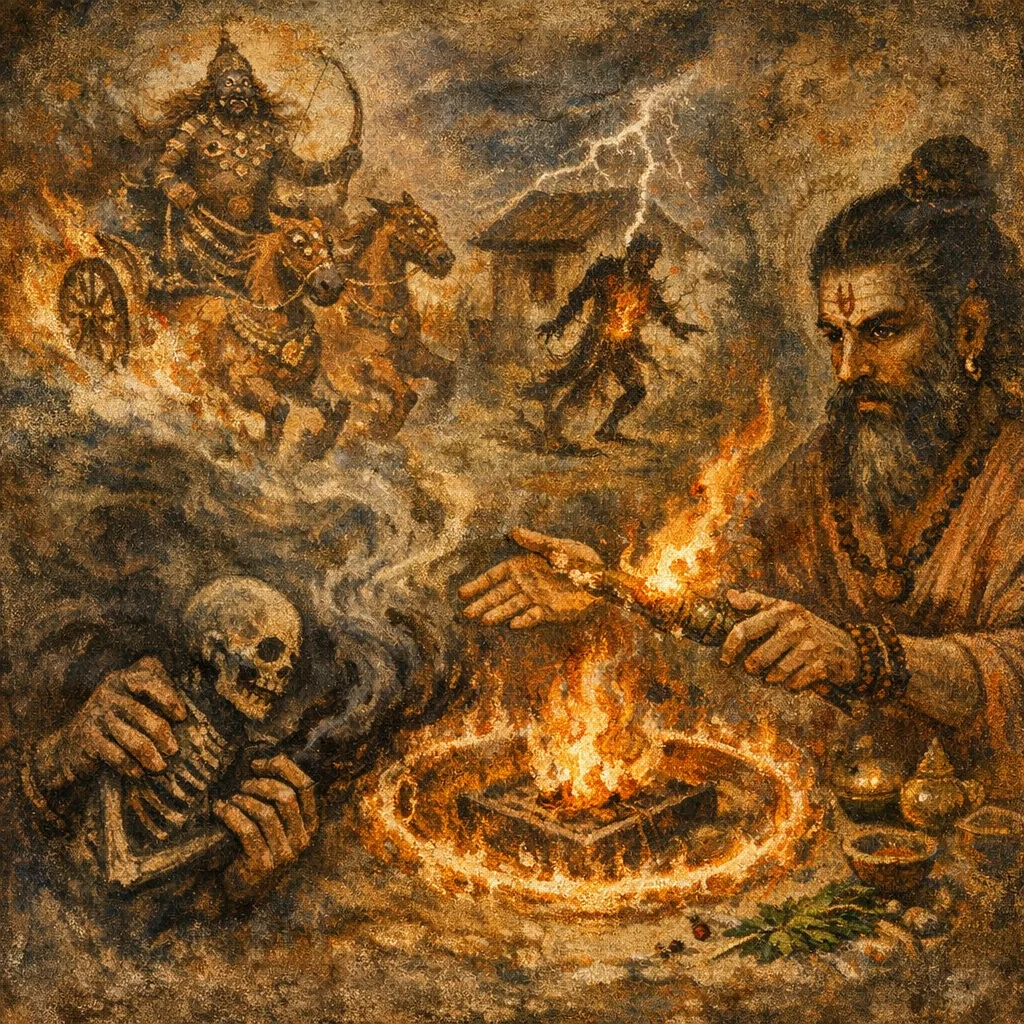
Curse-destroying. Hither hath come the thousand-eyed; the Oath (curse-power), having yoked his chariot, seeketh out the curser of me, as a wolf the house of him that hath sheep.
Mantra 2
परि णो वृङ्ग्धि शपथ ह्रदमग्निरिवा दहन्। शप्तारमत्र नो जहि दिवो वृक्षमिवाशनिः
Tear from us, O Curse, the heart’s (grief), as fire burneth; and here smite down for us the curser, as heaven’s lightning a tree.
Mantra 3
यो नः शपादशपतः शपतो यश्च नः शपात्। शुने पेष्ट्रमिवावक्षामं तं प्रत्यस्यामि मृत्यवे
Whoso, though himself uncursed, doth curse us, and whosoever curseth us—I cast that man back unto Death, as one flings to a dog a morsel of crushed refuse.
Frequently Asked Questions
Śapatha is the personified force of the oath/curse: a moral and ritual enforcer. Here it is invoked as a protective power that detects hostile speech and turns it back on its author.
It does both: it removes the curse’s effect from the victim (especially from the heart/mind) and performs pratyāvartana—sending the curse-force back to the one who uttered it, culminating in handing the offender to Mṛtyu.
Recite the three verses near the threshold or hearth with a small lamp (Agni-symbol) and clean water for sprinkling. Visualize the curse leaving you and returning to its source; optionally tie a protective thread afterward as a seal.