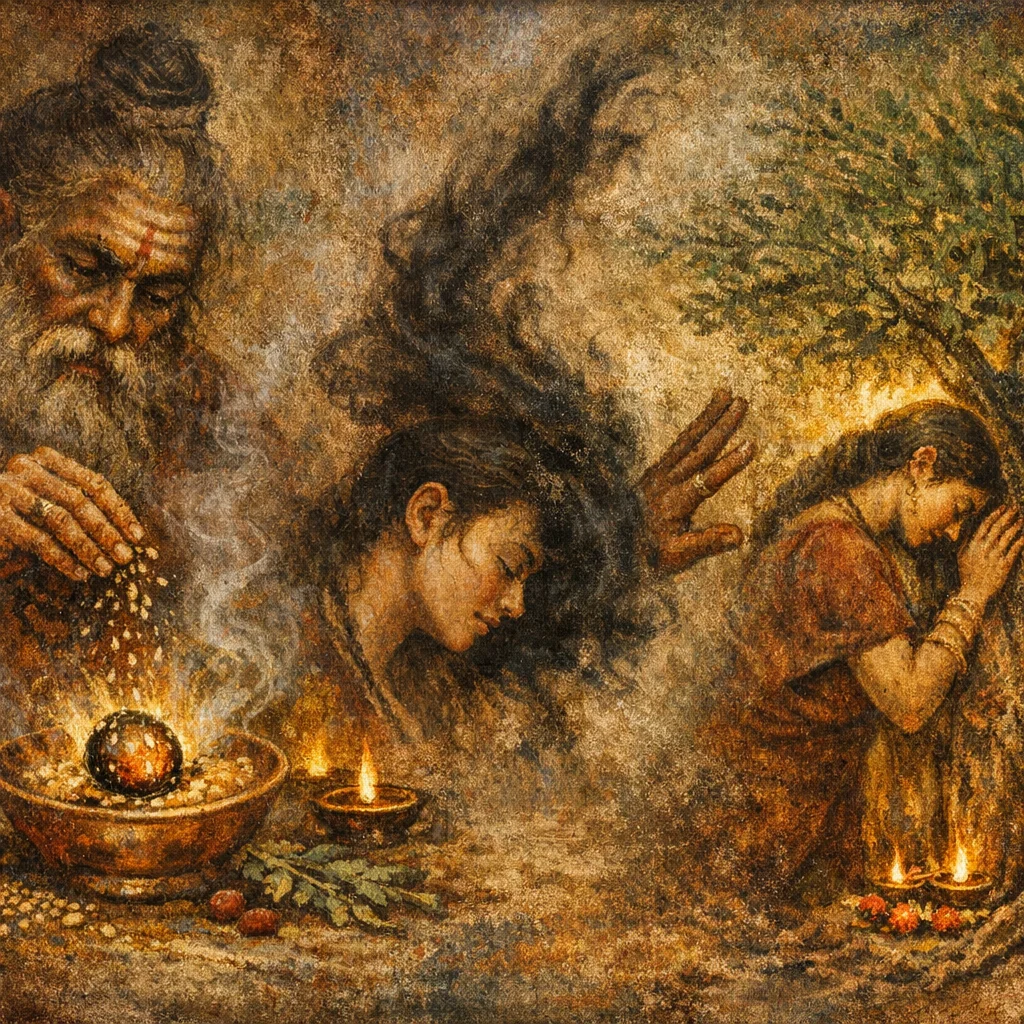
Sukta 30
Rishi: Atharvanic/Angirasa tradition (ascribed generically in this plant-hymn complex)
Devata: Śamī (personified tree-power)
Chandas: Triṣṭubh (probable, by cadence and length)
Mantras
Mantra 1
पापशमनम्। देवा इमं मधुना संयुतं यवं सरस्वत्यामधि मणावचर्कृषुः । इन्द्र आसीत् सीरपतिः शतक्रतुः कीनाशा आसन् मरुतः सुदानवः
Allaying of evil. The Gods prepared this barley, compounded with honey, upon the jewel, on Sarasvatī. Indra was lord of the plough, the Hundred-powered; the ploughmen were the Maruts, bounteous givers.
Mantra 2
यस्ते मदोऽवकेशो विकेशो येनाभिहस्यं पुरुषं कृणोषि । आरात् त्वदन्या वनानि वृक्षि त्वं शमि शतवल्शा वि रोह
That rapture of thine, O Śamī, which loosens and scatters the hair, whereby thou makest a man a thing for laughter—far from thee hew down the other forest-growths; but thou, O hundred-branched Śamī, spring forth and grow abroad.
Mantra 3
बृहत्पलाशे सुभगे वर्षवृद्ध ऋतावरि । मातेव पुत्रेभ्यो मृड केशेभ्यः शमि
O broad-leaved, auspicious Śamī, rain-nourished, mantled in ṛta—like a mother unto her sons be gracious; grant kindly relief unto the hair.
Frequently Asked Questions
It combines expiation and prosperity (through honeyed barley consecrated on an amulet) with Śamī’s apotropaic power to disarm a rival—making the opponent socially ridiculous while protecting the household.
Hair symbolizes visible order, dignity, and vulnerability. The hymn uses Śamī’s “māda” to disrupt an opponent’s appearance (v.2) and then asks Śamī to restore calm and protection for one’s own side (v.3).
Śamī wood/leaf is primary. Barley (yava) mixed with honey (madhu) is consecrated on a maṇi (amulet/jewel), with Sarasvatī invoked as a purity-field supporting expiation and auspicious growth.