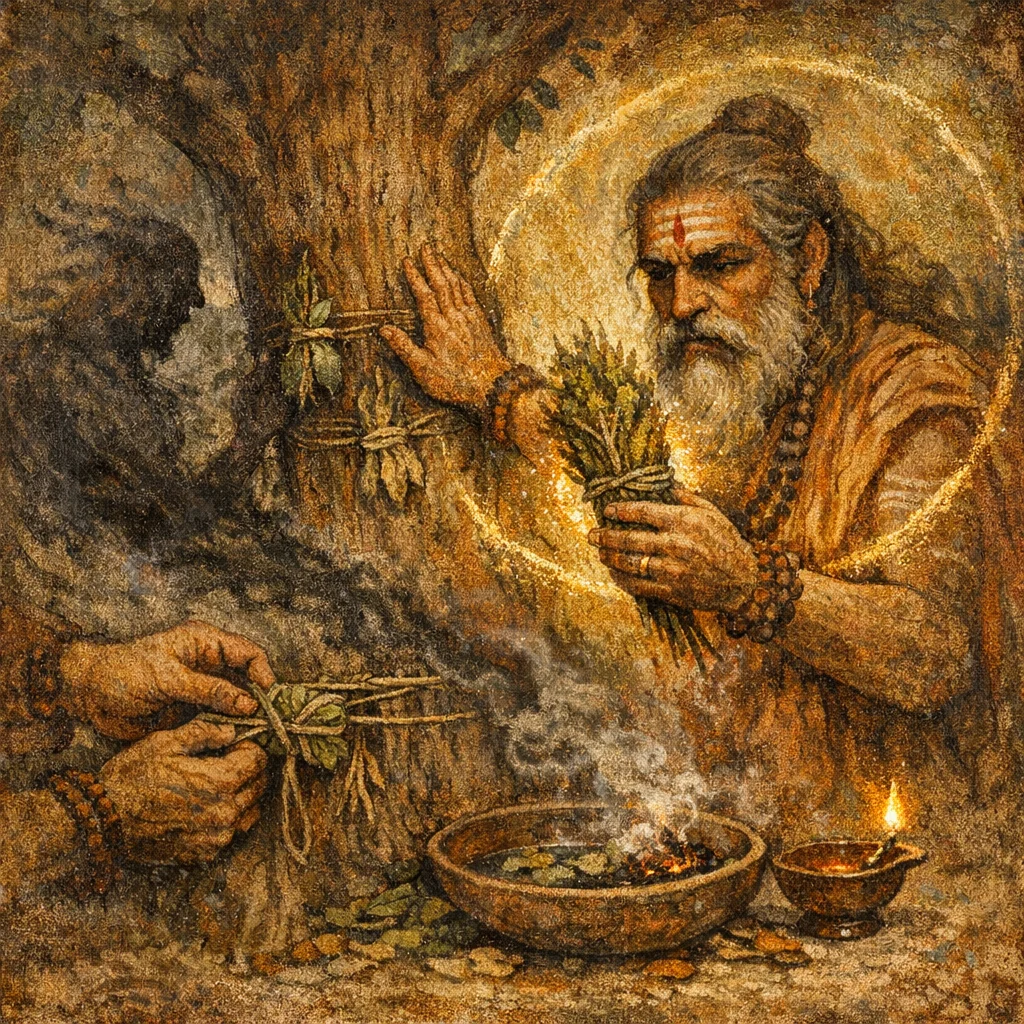
Sukta 15
Rishi: Atharvanic tradition (anukramaṇī-dependent)
Devata: Oṣadhi (personified Herb), with allied Vṛkṣa (Trees) as supporters
Chandas: Anuṣṭubh
Mantras
Mantra 1
शत्रुनिवारणम्। उत्तमो अस्योषधीनां तव वृक्षा उपस्तयः । उपस्तिरस्तु सो३स्माकं यो अस्मां अभिदासति
Highest art thou among herbs; thine are the trees for helpers. Let that support be ours against the man who assaileth us.
Mantra 2
सबन्धुश्चासबन्धुश्च यो अस्मां अभिदासति । तेषां सा वृक्षाणामिवाहं भूयासमुत्तमः
Whether kinsman or no kinsman be he who assaileth us—of them, as (one) among trees, may I become the highest.
Mantra 3
यथा सोम ओषधीनामुत्तमो हविषां कृतः । तलाशा वृक्षाणामिवाहं भूयासमुत्तमः
As Soma is highest of herbs, made chief among oblations, so—like Talāśa among trees—may I become the highest.
Frequently Asked Questions
It asks the supreme Herb (Oṣadhi), backed by trees, to give protective support against anyone who attacks or harasses the practitioner, and to establish the practitioner in a superior, unassailable position.
They function as examples of “the highest” in their domains—Soma among herbs and Talāśa among trees—so the practitioner’s desired supremacy is justified by a well-known natural and ritual hierarchy.
The verses do not name a specific species; traditionally one takes a clean, intact plant token as the Oṣadhi-focus. If local tradition identifies a ‘chief’ herb or Talāśa wood, that can be used, but the mantra’s intent is the key.