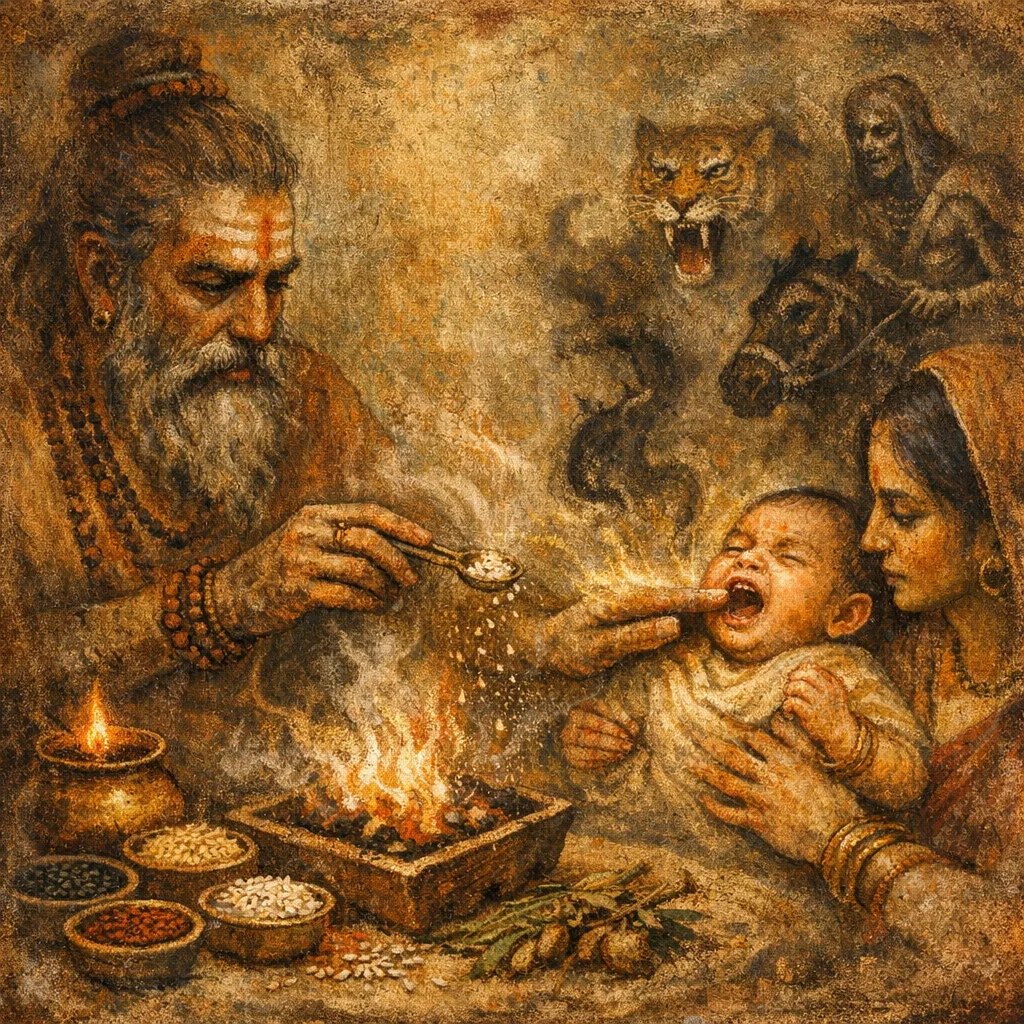
Sukta 140
Rishi: Atharvanic tradition (household seer not individually specified in many Anukramaṇī notices for such domestic charms)
Devata: Dantau (the two Teeth, personified); secondarily prosperity (ratna) as desired result
Chandas: Anuṣṭubh (predominant domestic charm meter)
Mantras
Mantra 1
सुमङ्गलौ दन्तौ। २ उपरिष्टाज्ज्योतिष्मती त्रिषटुप्, ३ आस्तारपङ्क्तिः। यौ व्याघ्रववरूढौ जिघत्सतः पितरं मातरं च । यौ दन्तौ ब्रह्मणस्पते शिवौ कृणु जातवेदः
Auspicious be the two teeth: those two, tiger-jaw-mounted, ravening to devour both father and mother—those two teeth, O Lord of Prayer, do thou, O Jātavedas, make them kindly and benign.
Mantra 2
व्रीहिमत्तं यवमत्तमथो माषमथो तिलम्। एष वां भागो निहितो रत्नधेयाय दन्तौ मा हिंसिष्टं पितरं मातरं च
Rice-laden, barley-laden, and also beans, and also sesame—this is your portion here laid down for treasure’s bestowal. O ye two Teeth, harm not the father, harm not the mother also.
Mantra 3
उपहूतौ सयुजौ स्योनौ दन्तौ सुमङ्गलौ । अन्यत्र वां घोरं तन्वः१ परैतु दन्तौ मा हिंसिष्टं पितरं मातरं च
Invoked and brought anear, united, kindly, auspicious, O ye two Teeth: elsewhere let your dreadful thing of the body depart. O ye two Teeth, harm not the father, harm not the mother also.
Frequently Asked Questions
It is a domestic healing-protection charm used during teething to pacify the erupting teeth, reduce the ‘fierce’ aspect of pain, and keep the household unharmed—especially protecting father and mother.
The grains function as a bali ‘share’ (bhāga): a small appeasing portion given to the personified Teeth so their force turns auspicious and becomes supportive of prosperity (ratna) rather than harmful.
They are invoked as regulating and purifying powers—Brahmaṇaspati as the lord of sacred speech/order, and Agni as Jātavedas—to transform the teeth into śiva (benign) and to drive away the ‘ghora’ bodily distress.