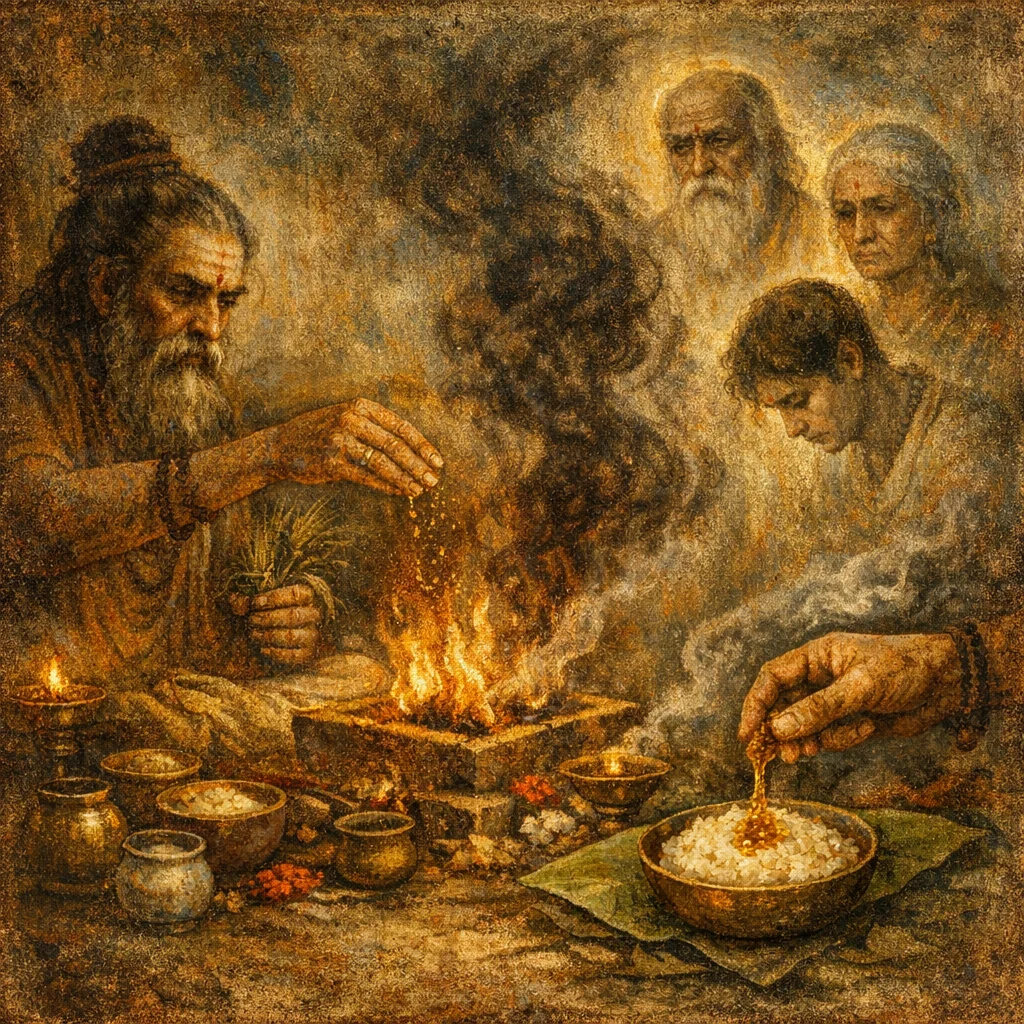
Sukta 116
Rishi: Atharvanic tradition (specific r̥ṣi attribution varies in ancillary indices)
Devata: Yama Vaivasvata (as ‘King’ regulating death/decay; invoked for protection of food-life)
Chandas: Mixed/prose-like with anuṣṭubh cadence (opening nominal + extended pādas; meter not strictly regular)
Mantras
Mantra 1
मधुमदन्नम्। यद् यामं चक्रुर्निखनन्तो अग्रे कार्षीवणा अन्नविदो न विद्यया । वैवस्वते राजनि तज्जुहोम्यथ यज्ञियं मधुमदस्तु नोऽन्नम्
Honey-sweet be food. What course the ploughmen wrought of old, burying it in front—men who knew food, not by learning—this I offer unto King Vaivasvata; so let our food be sacrificial, honey-sweet.
Mantra 2
वैवस्वतः कृणवद् भागधेयं मधुभागो मधुना सं सृजाति । मातुर्यदेन इषितं न आगन् यद् वा पितापराद्धो जिहीडे
May Vaivasvata appoint our portion; sweet-shared, with sweetness may he set it all in order—whatever guilt from mother, sent forth, hath come upon us, or what the father, offending, hath wrought to our hurt.
Mantra 3
यदीदं मातुर्यदि पितुर्नः परि भ्रातुः पुत्राच्चेतस एन आगन्। यावन्तो अस्मान् पितरः सचन्ते तेषां सर्वेषां शिवो अस्तु मन्युः
If this—whether from mother, whether from father—hath come upon us; if from a brother, from a son, from purpose of the mind, guilt hath come: as many Fathers as cleave unto us, of them all may the wrath be kindly, auspicious.
Frequently Asked Questions
Because Yama is treated here as the king who regulates death and decay. By offering to him, the hymn asks that “death-like” forces—spoilage, loss, blight, and obstruction—do not enter the household’s food.
It means the food should be sweet, pleasing, and life-giving, not only in taste but in fortune—free from loss and fit to be shared and offered (yajñiya).
The text assumes scarcity and recurring loss can arise from inherited or relational enas (taint/guilt) and ancestral displeasure. By naming these sources and asking for pacification, the hymn removes unseen blocks to prosperity.