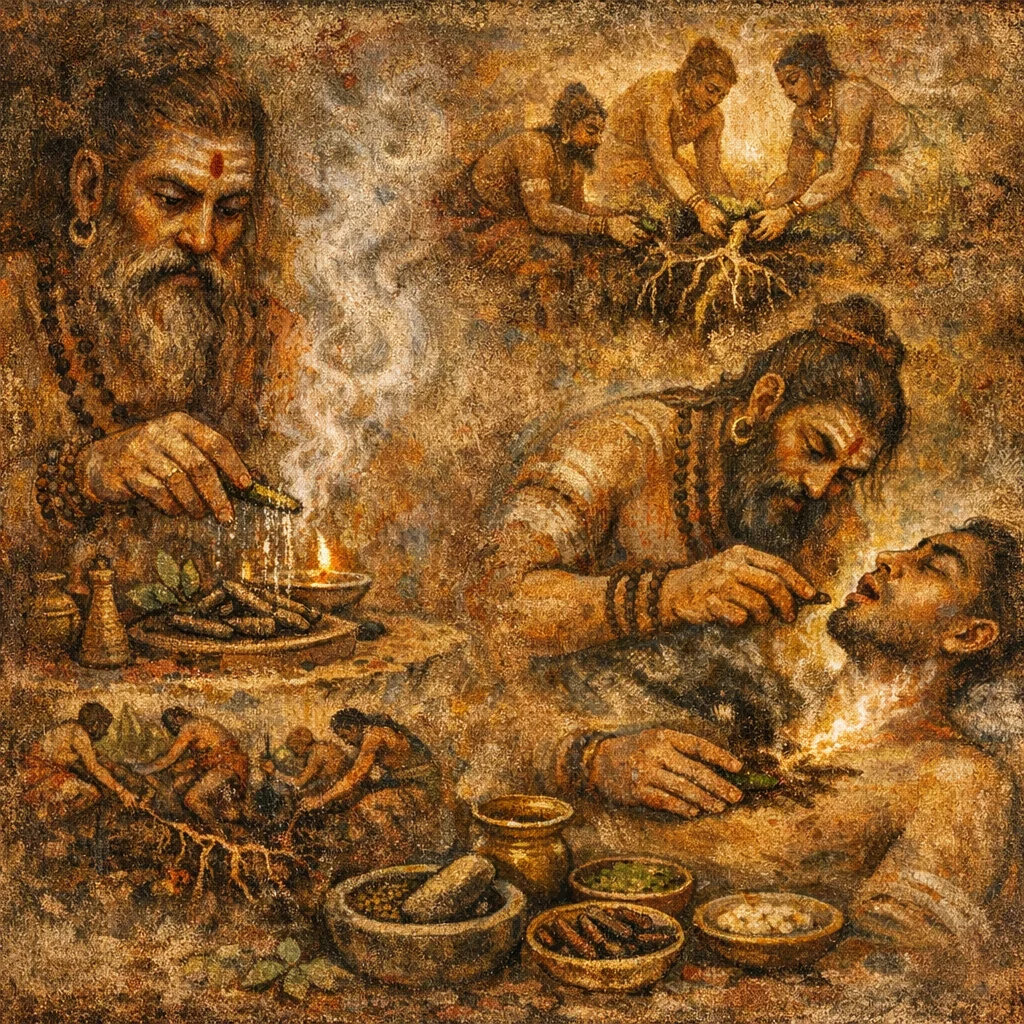
Sukta 109
Rishi: Atharvanic tradition (often transmitted under Atharvan/Angiras lineages for bhaiṣajya hymns; exact r̥ṣi ascription varies by anukramaṇī).
Devata: Pippalī as personified Bhaiṣajya; secondarily the Devas as ordainers of the remedy.
Chandas: Anuṣṭubh (probable; common for AV healing verses)
Mantras
Mantra 1
पिप्पली-भैषज्यम्। पिप्पली क्षिप्तभेषज्यू३तातिविद्धभेषजी। तां देवाः समकल्पयन्नियं जीवितवा अलम्
Pippalī is a medicament for him that is smitten down, yea, a medicament for him that is sorely pierced. Her did the Gods duly constitute: this one is sufficient, in very truth, for life.
Mantra 2
पिप्पल्यः१ समवदन्तायतीर्जननादधि । यं जीवमश्नवामहै न स रिष्याति पूरुषः
The Pippalīs, drawing nigh, have spoken in accord, even from a man’s birth: Whom, living, we may reach and win— that person shall not suffer harm.
Mantra 3
असुरास्त्वा न्यऽखनन् देवास्त्वोदवपन् पुनः । वातीकृतस्य भेषजीमथो क्षिप्तस्य भेषजीम्
The Asuras buried thee down; the Gods dug thee up again. A medicament for him whom the wind hath marred, and likewise a medicament for him that is smitten down.
Frequently Asked Questions
Both: Pippalī is the physical plant (long pepper) and is also spoken to as a personified Bhaiṣajya power whose healing is authorized by the Devas.
It targets sudden prostration or collapse (kṣipta), piercing or sharp pain (atividdha), and wind-type disturbance (vātīkṛta), while also protecting against further harm.
It ritualizes the idea that the cure can be obstructed (as if ‘buried’) by hostile forces, but is recovered and made effective again by divine order—strengthening confidence and protective intent.