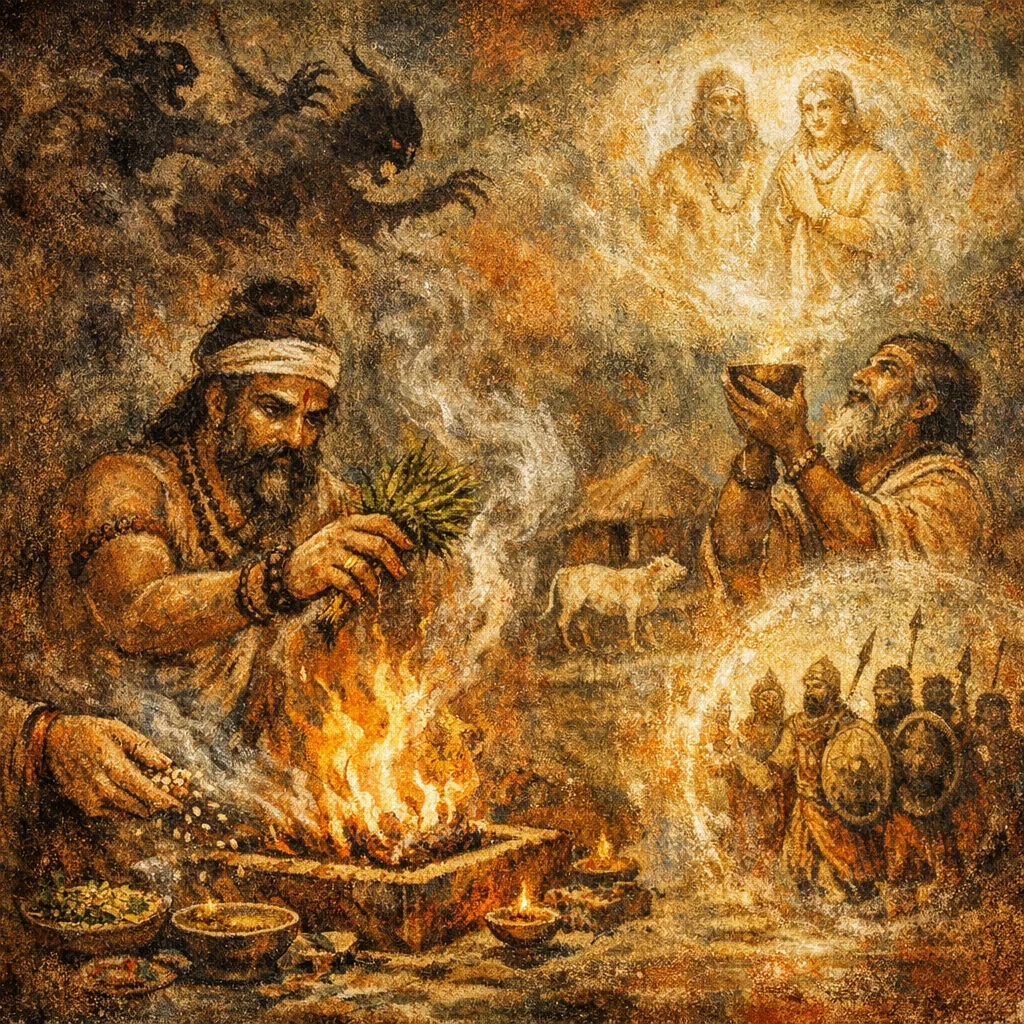
Sukta 97
Rishi: Atharvanic tradition (not specified in the provided excerpt)
Devata: Indra (with Agni, Soma, and Yajña personified as victorious powers)
Chandas: Mixed/Anuṣṭubh-like cadence (probable)
Mantras
Mantra 1
अभिभूर्वीरः अभिभूर्यज्ञो अभिभूरग्निरभिभूः सोमो अभिभूरिन्द्रः । अभ्यहं विश्वाः पृतना यथासान्येवा विधेमाग्निहोत्रा इदं हविः
Victorious is the hero; victorious the sacrifice; victorious Agni; victorious Soma; victorious Indra. Against all battles may I be (thus) victorious; so may we duly perform the Agnihotra: this is the oblation.
Mantra 2
स्वधास्तु मित्रावरुणा विपश्चिता प्रजावत् क्षत्रं मधुनेह पिन्वतम्। बाधेथां दूरं निरृतिं पराचैः कृतं चिदेनः प्र मुमुक्तमस्मत्
Let svadhā be (with you), O Mitra and Varuṇa, ye wise: with sweetness here make the royal power thrive, rich in offspring. Drive far away Nirṛti, backward to the distance; even committed sin do ye release from us.
Mantra 3
इमं वीरमनु हर्षध्वमुग्रमिन्द्रं सखायो अनु सं रभध्वम्। ग्रामजितं गोजितं वज्रबाहुं जयन्तमज्म प्रमृणन्तमोजसा
After this hero exult ye; this mighty Indra, O comrades, follow and together lay hold of him—village-winner, cattle-winner, thunderbolt-armed—conquering in the fray, smiting down with might.
Frequently Asked Questions
It is used to secure victory and dominance in conflicts, strengthen royal/warrior power (kṣātra), and protect the group by driving away misfortune (Nirṛti) and loosening the burden of guilt (enaḥ).
Because the hymn treats victory as a force rooted in correct ritual performance: when the sacrifice and its powers are ‘overcoming,’ the patron who offers and prays becomes ‘overcoming’ in battle and competition as well.
Traditionally it is paired with a simple oblation (havis) into fire; honey (madhu) is an auspicious addition for ‘sweetening’ kṣātra. For plain recitation, focused intent and respectful cleanliness are emphasized.