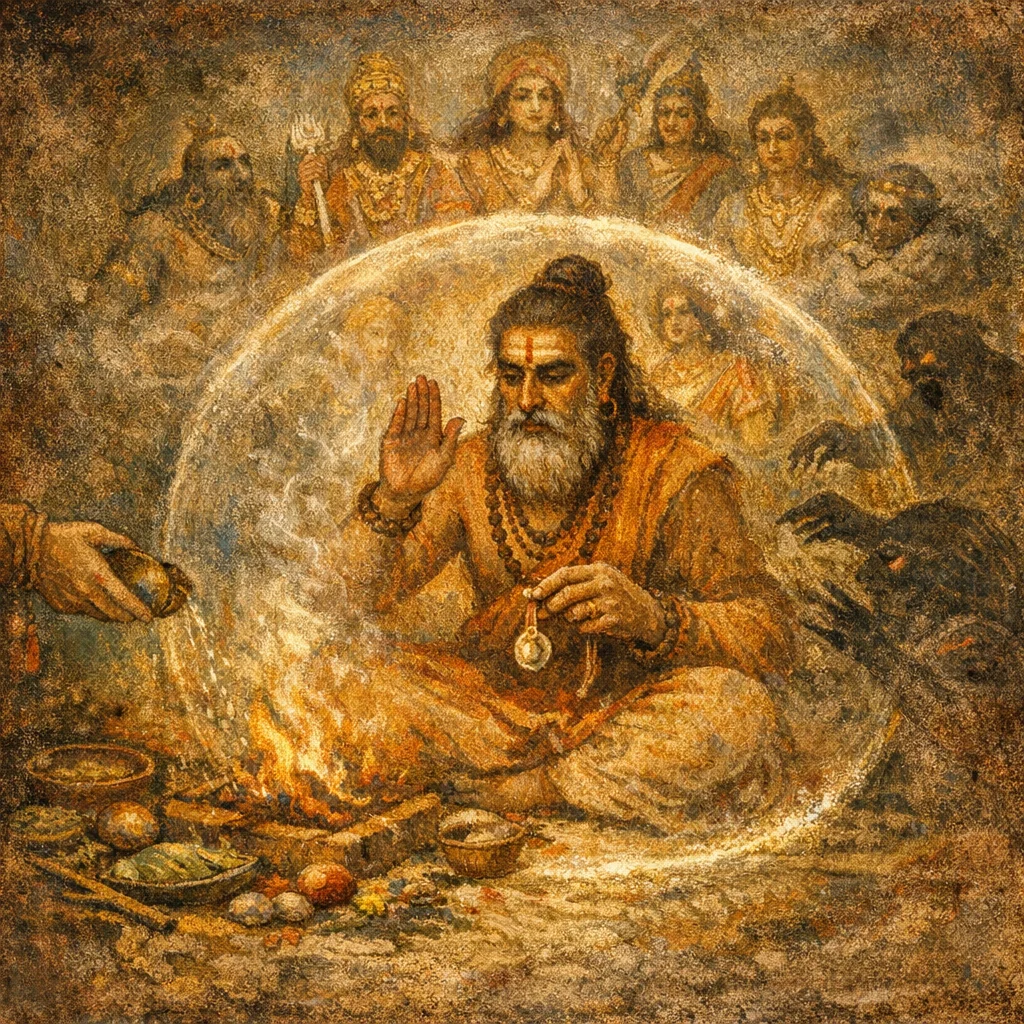
Sukta 3
Rishi: Atharvanic (protective litany; traditional attribution varies)
Devata: Multiple: Indra, Pūṣan, Aditi, Maruts, Apām Napāt, Seven Rivers, Viṣṇu, Dyauḥ
Chandas: Mixed/Anuṣṭubh-like litany (prose-rubric + metrical cola)
Mantras
Mantra 1
आत्मगोपनम्। पातं न इन्द्रापूषणादितिः पान्तु मरुतः । अपां नपात् सिन्धवः सप्त पातन पातु नो विष्णुरुत द्यौः
Self-guarding: Let Indra and Pūṣan protect us; let Aditi protect; let the Maruts protect. Let Apām Napāt protect; ye seven Rivers, protect! Let Viṣṇu protect us, and Heaven as well.
Mantra 2
पातां नो द्यावापृथिवी अभिष्टये पातु ग्रावा पातु सोमो नो अंहसः । पातु नो देवी सुभगा सरस्वती पात्वग्निः शिवा ये अस्य पायवः
Let Heaven and Earth protect us for succor; let the Pressing-stone protect; let Soma protect us from distress. Let the Goddess, gracious Sarasvatī, protect us; let Agni protect—(he) whose guardians are auspicious.
Frequently Asked Questions
It means “self-guarding.” The hymn is framed as a protective act where the reciter asks many cosmic and ritual powers to form a shield around them.
Because protection is sought from every realm—sky, earth, storms, waters, and the sacrificial fire. The ‘many protectors’ approach leaves no opening for harm or misfortune.
No. They can be symbolic: a clean stone can stand for grāvā, and a simple offering-intention (or milk/juice) can stand for Soma. The central practice is focused recitation with a protection intention.