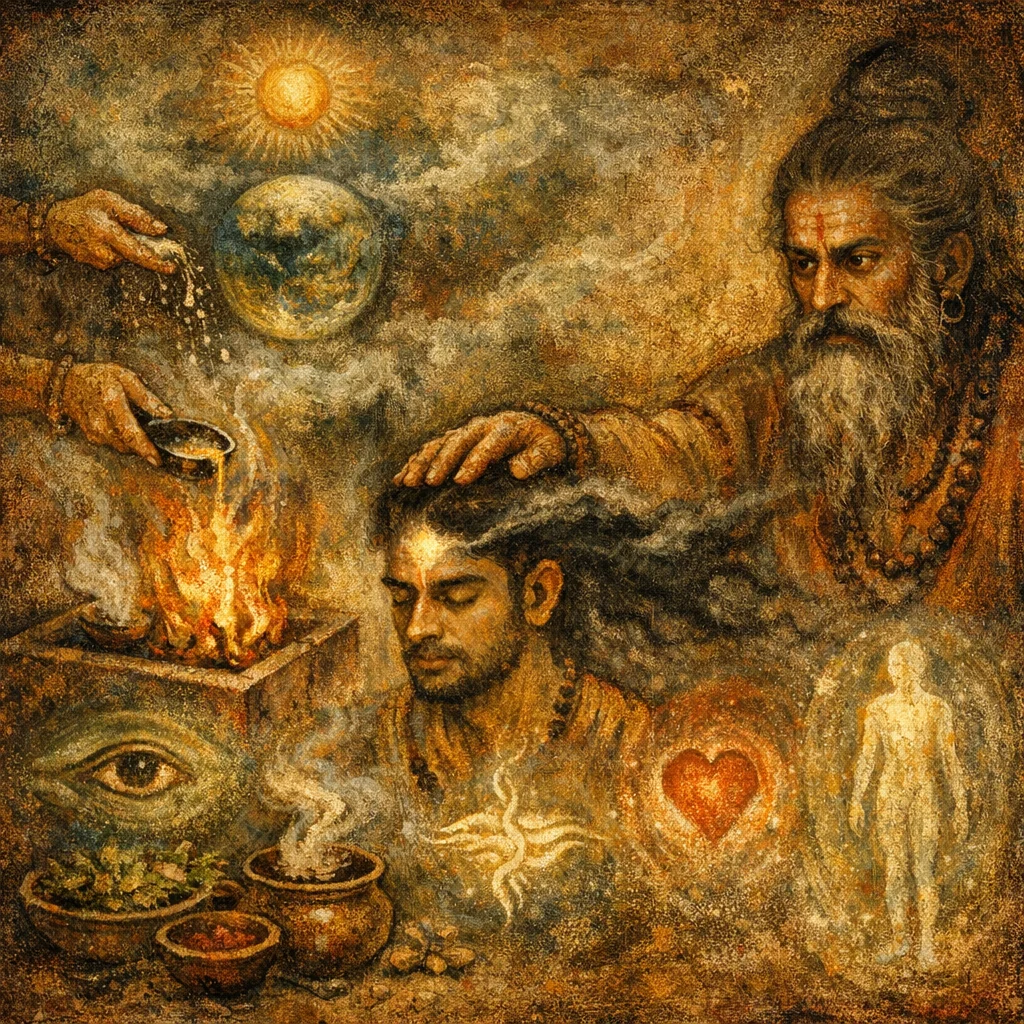
Sukta 9
Rishi: Atharvanic tradition (short svāhā formulas; specific r̥ṣi per anukramaṇī for AVŚ 5.9)
Devata: Dyaus/Heaven (cosmic region as recipient); svāhā as offering-power
Chandas: Not metrical in the strict sense; yajus-like offering formula
Mantras
Mantra 1
आत्मा दिवे स्वाहा
The self, to Heaven—svāhā!
Mantra 2
पृथिव्यै स्वाहा
To Earth—svāhā!
Mantra 3
अन्तरिक्षाय स्वाहा
To the Atmosphere—svāhā!
Mantra 4
अन्तरिक्षाय स्वाहा
To the Atmosphere—svāhā!
Mantra 5
दिवेस्वाहा
To Heaven—svāhā!
Mantra 6
पृथिव्यै स्वाहा
To Earth—svāhā!
Mantra 7
सूर्यो मे चक्षुर्वातः प्राणो३न्तरिक्षमात्मा पृथिवी शरीरम्। अस्तृतो नामाहमय मस्मि स आत्मानं नि दधे द्यावापृथिवीभ्यां गोपीथाय
The Sun is mine eye; the Wind my breath; the Mid-air my self; the Earth my body. By name I am Astṛta: this am I; and so I set my self fast in Heaven and Earth for guardianship.
Mantra 8
उदायुरुद् बलमुत् कृतमुत् कृत्यामुन्मनीषामुदिन्द्रियम्। आयुष्कृदायुष्पत्नी स्वधावन्तौ गोपा मे स्तं गोपायतं मा । आत्मसदौ मे स्तं मा हिंसिष्टम्
Up rise my life, up rise my strength; up go the harm that is done, up go the witchcraft; up rise my thought, up rise my vigor. Ye twain, Life-maker and Life’s Consort, endowed with svadhā—be ye my guardians; guard ye me. Ye that abide within my self, be ye mine; do me no hurt.
Frequently Asked Questions
For consecratory protection and vitality: it aligns the practitioner with Heaven through svāhā and culminates in lifting life-force and expelling kṛtyā (witchcraft) and harm.
A small homa with ghee fits the svāhā style, but the hymn also works as a spoken consecration with a symbolic offering and clear protective intention.
They are paired life-powers—"Life-maker" and "Life’s Consort"—invoked as guardians who increase vitality and dwell within the self without causing harm.