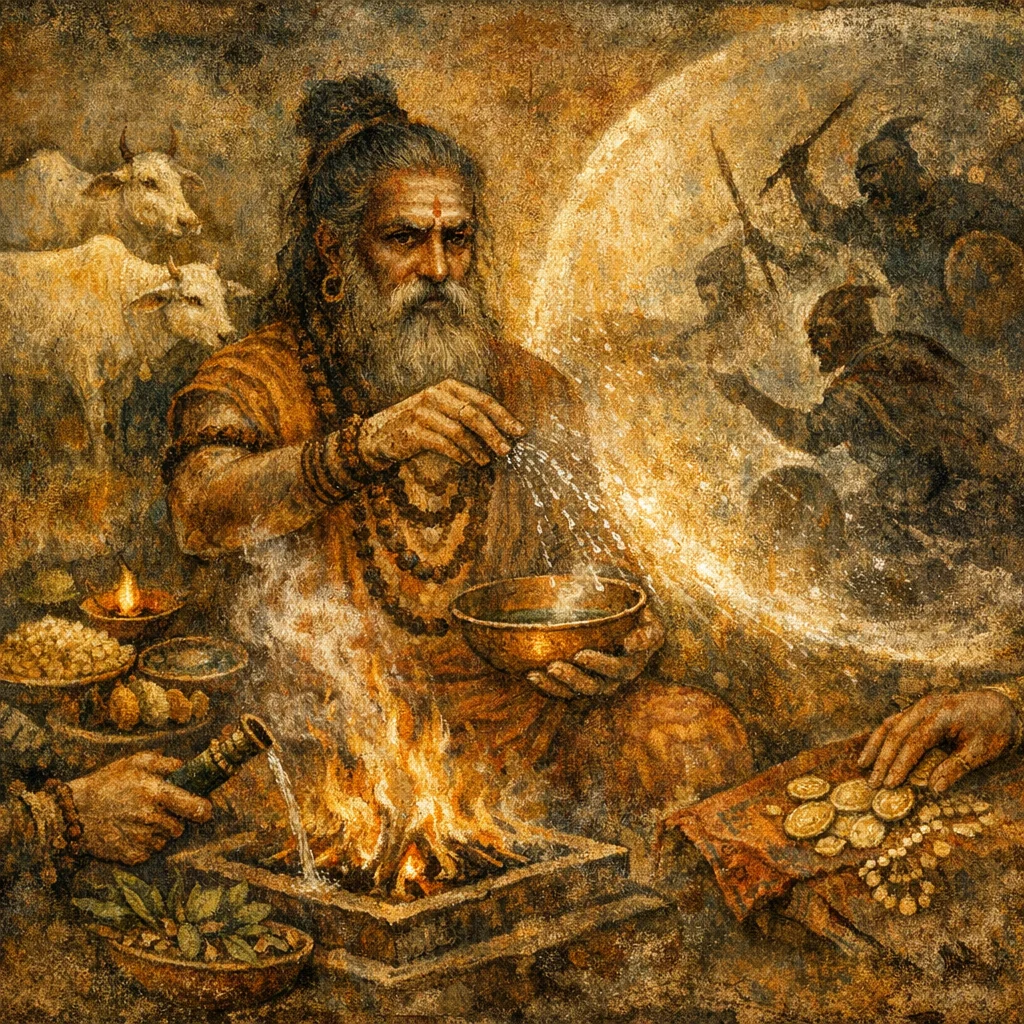
Sukta 78
Rishi: RV-derived Indra hymn seer (to be assigned by RV parallel for this stanza).
Devata: Indra (Puruhūta), in association with Soma
Chandas: Anuṣṭubh-like short stanza (to be confirmed by syllable count of the RV parallel).
Mantras
Mantra 1
तद् वो गाय सुते सचा पुरुहूताय सत्वने । शं यद् गवे न शाकिने
Sing ye that, in company with the pressed Soma, unto the Much-invoked for winning of strength—what brings good fortune for the cow, as to the Able One.
Mantra 2
न घा वसुर्नि यमते दानं वाजस्य गोमतः । यत् सीमुप श्रवद् गिरः
In no wise is the bounteous gift of cattle-rich prize held back, when he hearkens unto the songs that draw near to him.
Mantra 3
कुवित्सस्य प्र हि व्रजं गोमन्तं दस्युहा गमत्। शचीभिरप नो वरत्
Perchance may he, the Dasyu-slayer, come forth unto the cow-abounding pen; and with his powers may he avert from us (all harm).
Frequently Asked Questions
It is used to gain prosperity—especially cattle-wealth and prizes—and to ensure gifts are not withheld, by invoking Indra empowered by Soma.
Soma represents the energizing sacrificial force, and the approaching hymns are treated as the operative means that Indra hears—his hearing is said to unlock the flow of wealth and reward.
The final verse invites Indra as Dasyu-slayer to come to the cattle-pen (vraja) and asks him to avert harm from the household and herd through his effective powers (śacī).