Sukta 42
Rishi: As in RV source for AV 20: Indra-hymn tradition (ṛṣi per RV Anukramaṇī; commonly attributed within Indra cycles to Vasiṣṭha/Viśvāmitra line depending on the RV locus).
Devata: Indra (with Heaven-and-Earth as attendant cosmic powers)
Chandas: Triṣṭubh/Jagatī-type RV meter (as transmitted in AV 20 RV-collection; exact meter depends on RV original).
Mantras
Mantra 1
वाचमष्टापदीमहं नवस्रक्तिमृतस्पृशम्। इन्द्रात् परि तन्वं ममे
Speech—eight-footed, nine-garlanded, touching Order—this I encompass: from Indra I measure it round about my body.
Mantra 2
अनु त्वा रोदसी उभे क्रक्षमाणमकृपेताम्। इन्द्र यद् दस्युहाभवः
After thee the two Worlds, both of them, follow—while thou art roaring; let them not relent. O Indra, when thou becamest the slayer of the Dasyu.
Mantra 3
उत्तिष्ठन्नोजसा सह पीत्वी शिप्रे अवेपयः । सोममिन्द्र चमू सुतम्
Rising up with might and with force, having drunk, O Indra of the lips, thou madest them tremble—the Soma, pressed in the bowl.
Frequently Asked Questions
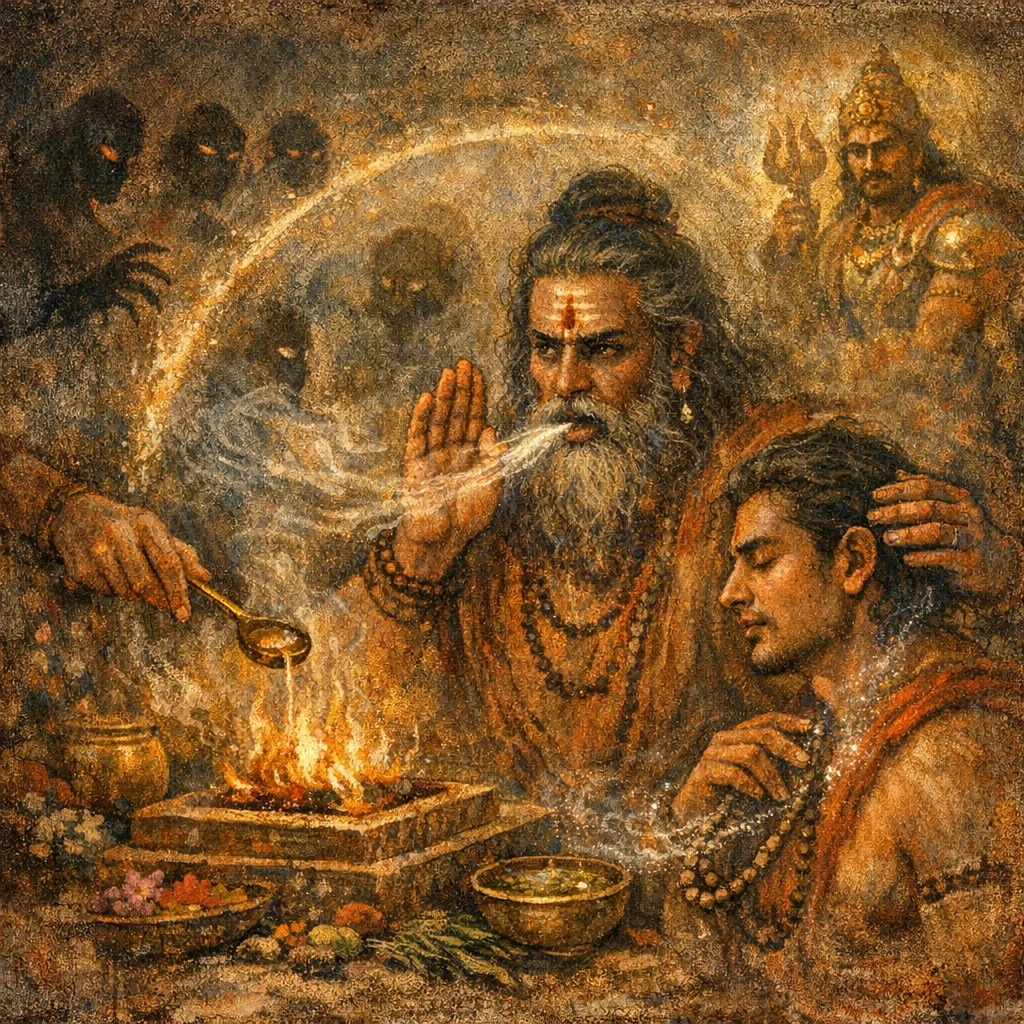
It is used as a victory-and-protection recitation: to strengthen one’s side with Indra’s ojas and to unsettle opponents through fear and trembling, while sealing the reciter with protective, truth-backed speech.
Their ‘following’ Indra signifies cosmic endorsement—Indra’s action is not merely personal force but a universe-supported movement, making the charm feel inevitable and unrelenting.
The text highlights Soma as Indra’s energizer, but AV-style practice often uses a symbolic substitute (water/milk/ghee) or purely mental offering; the essential instrument here is disciplined vāc (recited speech) and focused intention.